



Table Of Contents
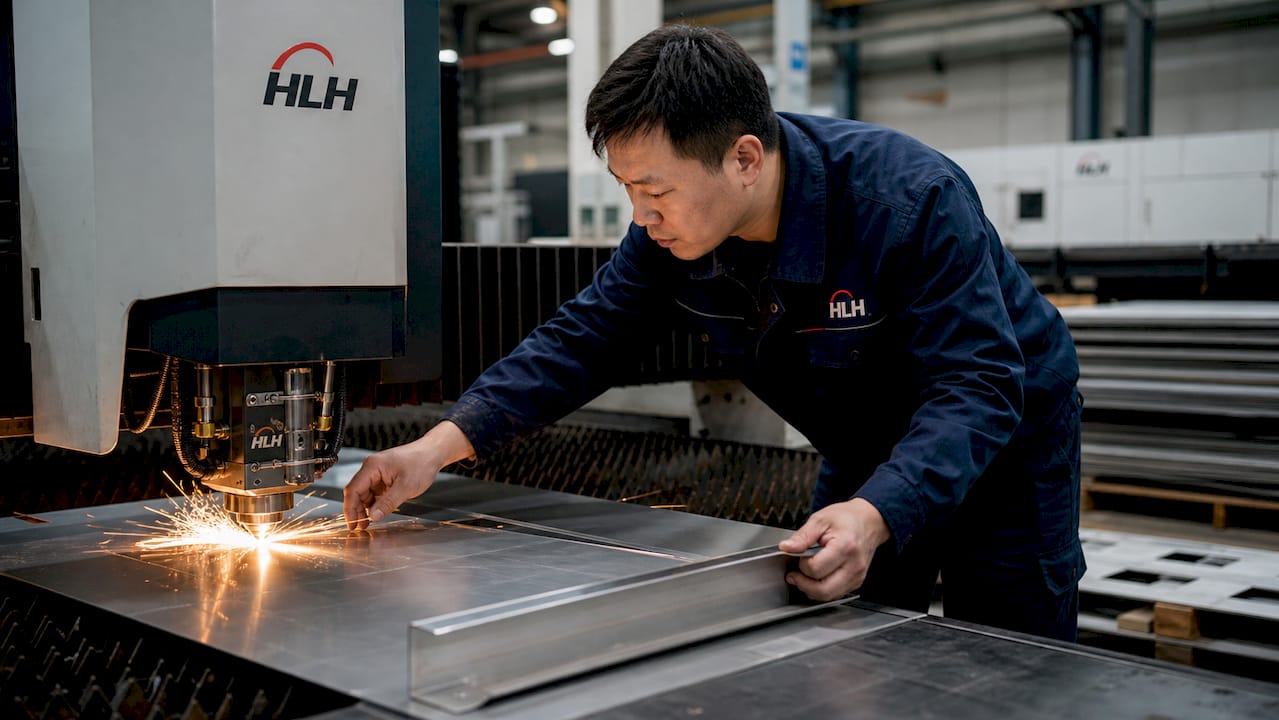
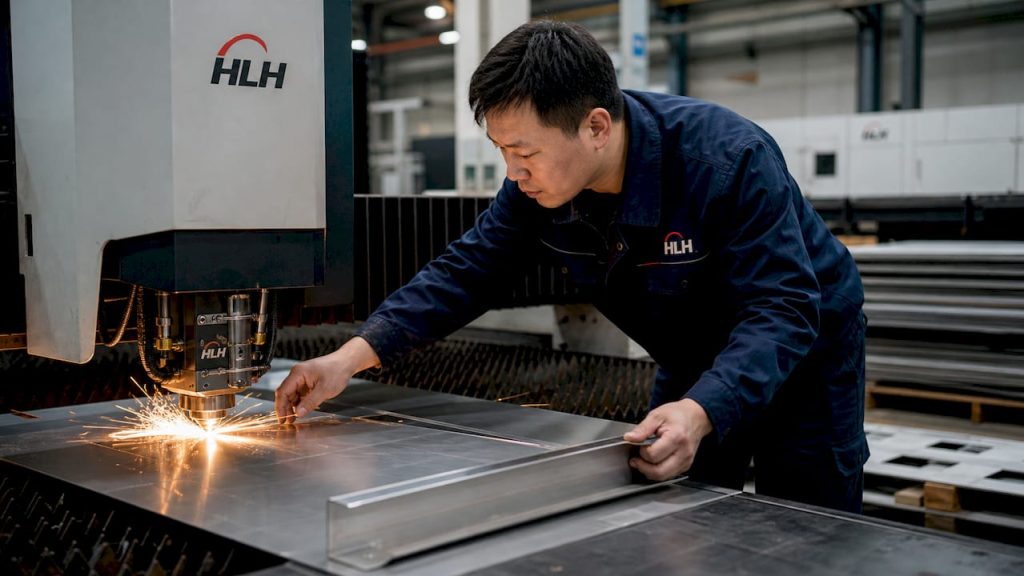
Sheet metal prototyping converts a CAD model into a physical metal part using the same laser cutting, press brake forming, welding, and finishing operations that production runs use. That process fidelity is the whole point: you get a part that behaves like a production part, not a plastic stand-in or a machined approximation. Use it when you need to validate form, fit, assembly clearances, or surface finish before committing to hard tooling. Simple parts made from stocked materials routinely ship in 2–5 business days, which makes it one of the fastest paths to a production-representative metal part.
- When to choose it: You need production-like material behavior and assembly validation at low quantities.
- When to skip it: Your design requires internal channels, topology-optimized geometry, or casting-specific properties that flat-stock processes cannot replicate.
- HLH SHEET METAL delivers ISO-certified sheet metal prototypes with English-speaking support and multi-plant capacity, typically in 2–5 business days for straightforward parts.
Key Takeaways
Sheet metal prototyping is the fastest path to a production-representative metal part when your design uses formed geometry, requires assembly validation, and needs to move from CAD to physical part in days rather than weeks.
| Point | Details |
|---|---|
| When to choose sheet metal | Use it when you need production-like forming behavior, assembly fit, or finish validation at low quantities. |
| Lead time benchmark | Simple stocked-material parts routinely ship in 2–5 business days when DFM rules are followed. |
| Top cost drivers | Welding, secondary machining, non-stock materials, and outsourced finishing add the most time and cost. |
| DFM before you quote | Mark critical datums, call out finish and hardware, and keep holes at least 1.5× material thickness from bend lines. |
| HLH SHEET METAL | ISO-certified, multi-plant capacity with DFM review included in the quotation process for fast, reliable prototypes. |
What Sheet Metal Prototyping Actually Does For Your Design
The goal is not a pretty model. It is a functional answer to a specific engineering question: does this part fit the assembly? Does the bracket clear the cable harness? Does the enclosure meet the EMI panel spec? Sheet metal prototypes answer those questions with the same material stack and the same bend geometry that production will use, which plastic or resin prototypes simply cannot do.
Best use cases cluster around enclosures, brackets, chassis, panels, and small weldments. Hardware-fit checks, access and clearance tests, and cosmetic or finish validation all benefit from a production-process prototype. If you are designing an electronics enclosure, a server rack chassis, or a medical instrument housing, a sheet metal prototype tells you what a machined block or a 3D-printed shell cannot: whether the formed flanges, the PEM hardware, and the powder coat finish all land where they need to.
The comparison with other metal prototyping methods comes down to one decision rule: choose the fastest method that still validates the specific engineering risk. CNC machining gives you tight datums and machined features but does not simulate formed geometry. Metal 3D printing gives you geometric freedom but not production-like material or process behavior. Casting gives you production-representative material properties but only becomes economical at higher quantities. Sheet metal prototyping sits in the middle: fast, affordable at low quantities, and genuinely representative of the production route.
Step-by-step Workflow From Quote To Delivery
Getting a prototype right starts before the shop touches any metal. Here is the sequence engineers should follow:
- Prepare your DFM package. Identify critical dimensions, tolerances, datums, hardware requirements, and finish specifications before you send anything. A drawing that marks “critical” features saves a round of clarifying emails.
- Send your request for quote. Include a STEP or IGES file for assemblies, a DXF flat pattern if you have one, a PDF drawing with critical tolerances, expected quantity, material call-out, and any inspection requirements. The more complete the package, the faster and more accurate the quote.
- Review the DFM feedback. A good fabricator will flag bend radii that are too tight, holes too close to a bend line, or features that require a special tool. Resolve those before approving the quote.
- Material selection and procurement. The shop confirms stock availability. Stocked alloys (5052 aluminum, 304 stainless, cold-rolled steel) move fastest. Custom or certified material adds lead time.
- Laser cutting or punching. The flat blank is cut from sheet stock. Laser cutting handles complex profiles and tight features; punching is faster for high-volume blanks with standard hole patterns.
- Press brake forming. Bends are formed in sequence. Bend order matters: a shop with the right tooling library can often form complex parts in a single setup, but multi-stage parts may require fixtures.
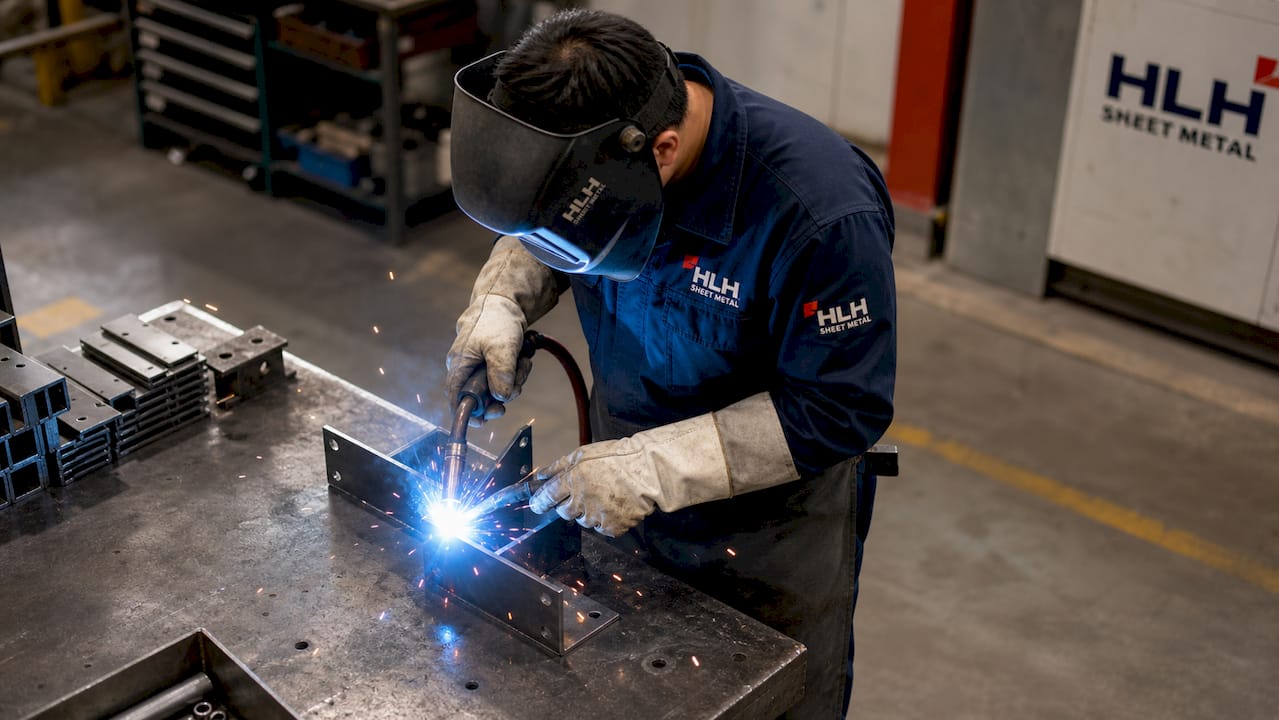
- Joining: welding or fastening. Structural prototypes get TIG or MIG welds; assemblies that need easy iteration often use rivets, screws, or PEM hardware instead of welding so parts can be disassembled and modified.
- Finishing and surface treatment. Powder coat, anodizing, passivation, or plating is applied per spec. Finishing is often the longest step in the schedule, so specify it early.
- Inspection and QA. Dimensional checks against the drawing, visual inspection for finish defects, and any first-article inspection (FAI) deliverables the customer requires.
- Assembly and shipping. Hardware is inserted, sub-assemblies are joined, and the part is packaged and shipped.
Materials And Fabrication Techniques For Prototype Sheet Metal Parts
Matching the right alloy and process to your design intent is where a lot of engineers lose time. The table below maps common materials to their typical prototype thickness ranges and primary use cases.
Primary operations map to the design’s complexity. Laser cutting handles intricate profiles and tight-tolerance holes quickly; punching is faster for simpler blanks. Press brake forming produces production-like bends; hemming creates safe, finished edges on panels. Welding (spot, TIG, MIG) builds structural assemblies; riveting and PEM hardware insertion allow easy disassembly during iteration. Secondary CNC machining adds precision-drilled holes or milled datums when the formed part needs features tighter than a press brake can hold.
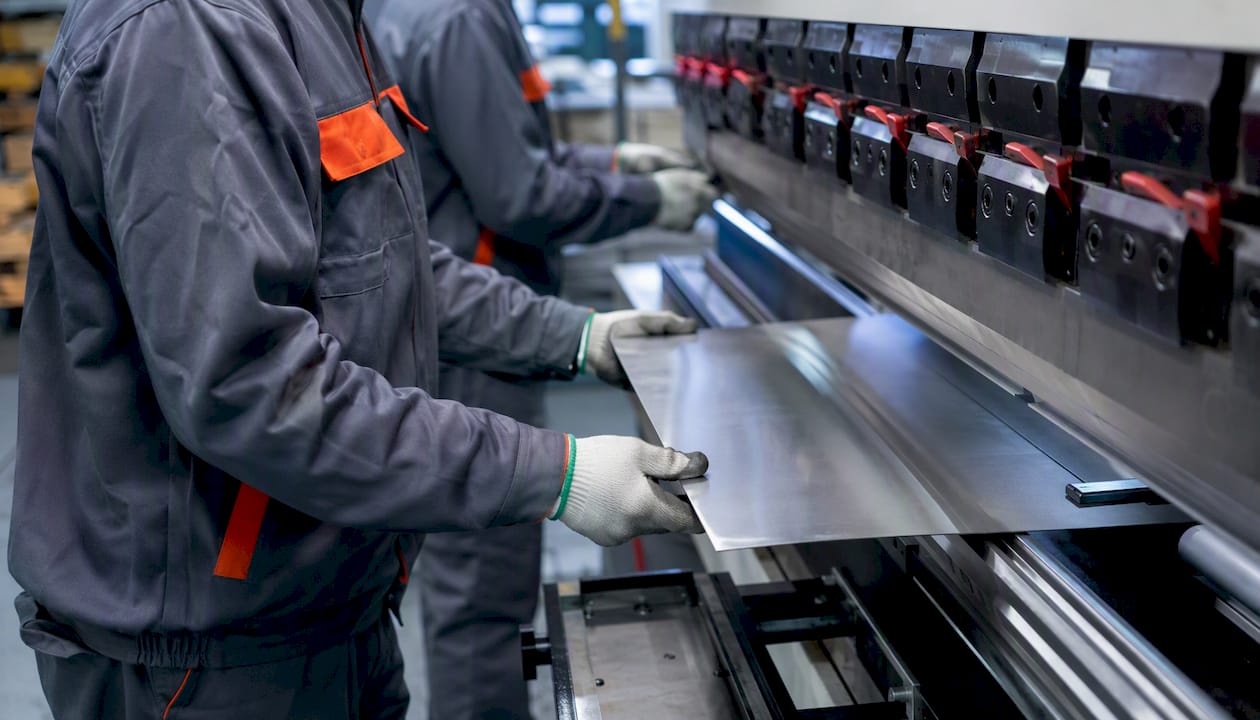
Process selection follows a simple logic: use laser or punch for fast blanks, press brake for production-representative bends, welded assemblies for structural prototypes, and mechanical fasteners when you expect to iterate on the design more than once.
What To Confirm With Your Sheet Metal Prototyping Supplier
Not every shop can handle every job. Before you commit a prototype to a vendor, run through this checklist:
- Sheet size and material stock: Confirm the shop stocks your alloy and thickness. Custom-order material adds days.
- Laser and punch capability: Ask about maximum sheet size, laser wattage (fiber vs. CO2), and minimum feature size. Fiber lasers cut stainless and aluminum faster and cleaner than CO2.
- Press brake tonnage and tooling library: Multi-bend parts need the right punch-and-die set. A limited tooling library forces workarounds that hurt accuracy.
- Welding types available: TIG for precision and aesthetics, MIG for speed and structural welds, spot welding for thin-gauge assemblies.
- Finishing capabilities: Powder coat, anodizing, passivation, plating, bead blast. Ask whether finishing is done in-house or outsourced, since outsourced finishing adds lead time.
- Inspection equipment: CMM, optical comparator, or hard gauges? Ask what inspection report you will receive with the parts.
- Assembly capacity: Can the shop insert PEM hardware, install fasteners, and ship a complete sub-assembly?
- Tolerances: Typical prototype shops hold ±0.005″ on laser-cut features and ±0.010″–0.030″ on formed dimensions, depending on material and part complexity. Tighter calls cost more and take longer.
- Certifications: ISO 9001 at minimum; AS9100 or ISO 13485 for aerospace and medical work. Ask for the certificate, not just the claim.
HLH SHEET METAL’s fabrication capabilities cover laser cutting, bending, welding, and finishing across multiple plants, which gives the shop flexibility to prioritize prototype runs without disrupting production schedules.
Pro Tip: Ask the shop for their standard tooling list before you finalize bend radii. Designing to a radius the shop already stocks eliminates a tooling charge and can cut a day off your lead time.
Sheet Metal DFM Rules And File Formats That Prevent Costly Rework
DFM mistakes are the single biggest cause of prototype delays. Most of them are avoidable.
Minimum bend radius should equal at least the material thickness for aluminum and 0.5× thickness for steel. Going tighter risks cracking on the outside of the bend, especially in 6061 or harder stainless alloys.
Hole-to-edge and hole-to-bend distances matter more than most designers expect. A hole closer than 1.5× the material thickness to a bend line will distort during forming. Keep holes at least 2× the material thickness from any bend.
Consistent material thickness throughout a part is a hard rule. Mixing gauges in a single part requires separate blanks and adds cost; it also complicates bend allowance calculations.
Reliefs and notches at bend intersections prevent material from tearing or bunching. Add a small relief cut (typically 0.030″–0.062″ radius) at every inside corner where two bends meet.
Springback is real and alloy-dependent. Aluminum springbacks more than steel; stainless springbacks more than both. A good shop accounts for this in the bend program, but calling out a tight angular tolerance without discussing springback compensation will get you a non-conforming part.
For file formats, send a STEP or IGES file for 3D geometry, a DXF flat pattern if your CAD tool generates one, and a PDF drawing with critical tolerances, datums, and surface finish callouts. Native CAD files (SolidWorks, CATIA, Inventor) are useful for DFM review but should accompany, not replace, the neutral-format files. The HLH SHEET METAL prototyping checklist walks through exactly what to include before submitting a quote.
Mark every critical dimension explicitly on the drawing. Features you leave open invite the shop to interpret them, which may or may not match your intent. If a dimension is truly non-critical, say so; it gives the shop room to optimize the process.
Lead Times And The Cost Drivers That Matter Most
Simple parts from stocked materials in a standard alloy can ship in 2–5 business days. Add welding, a non-stock material, a complex multi-bend geometry, or a finishing step that goes off-site, and you are looking at 1–3 weeks. Custom or certified material (aerospace-grade aluminum with MTRs, for example) can add another week on top of that.
The primary cost drivers, ranked roughly by impact:
- Material type and size. Stainless and titanium cost more per pound and are harder to cut and form than aluminum or CRS.
- Number and complexity of bends. Each bend is a press brake setup. More bends, more setups, more time.
- Welding and assembly. TIG welding is slow and skilled labor; it is often the largest single cost item on a complex prototype.
- Secondary machining. Drilling tight-tolerance holes or milling datum faces after forming adds CNC time.
- Finishing and surface treatment. Powder coat and anodizing add process steps and, if outsourced, transit time.
- Inspection and QA deliverables. A first-article inspection report with CMM data costs more than a visual check.
- Order quantity. Setup costs are fixed; spreading them over more parts drops the per-unit price quickly.
Design choices that reduce cost without sacrificing function: cut weld count by using formed flanges instead of welded gussets, standardize fastener sizes so the shop does not need to change tooling, optimize part nesting to reduce scrap, and avoid tight angular tolerances where a standard bend tolerance will do. Cost crossover between methods is worth understanding: CNC machining tends to be most economical for one or two parts with very high accuracy requirements, while casting often becomes more cost-effective beyond roughly 10–15 units.
Finishes, Coatings, And Secondary Services
Finishing is where a lot of prototype schedules slip, and where a lot of engineers underspecify. Call out your finish requirement on the drawing, not in a comment on the quote request.
Powder coat is the workhorse finish for steel and aluminum enclosures. It is durable, available in any RAL color, and relatively fast when done in-house. Expect 1–3 days added to the schedule.
Anodizing (aluminum only) builds a hard oxide layer that improves corrosion resistance and can be dyed. Type II anodize is standard; Type III (hard anodize) adds wear resistance for moving parts. Anodizing is almost always outsourced, which adds transit time.
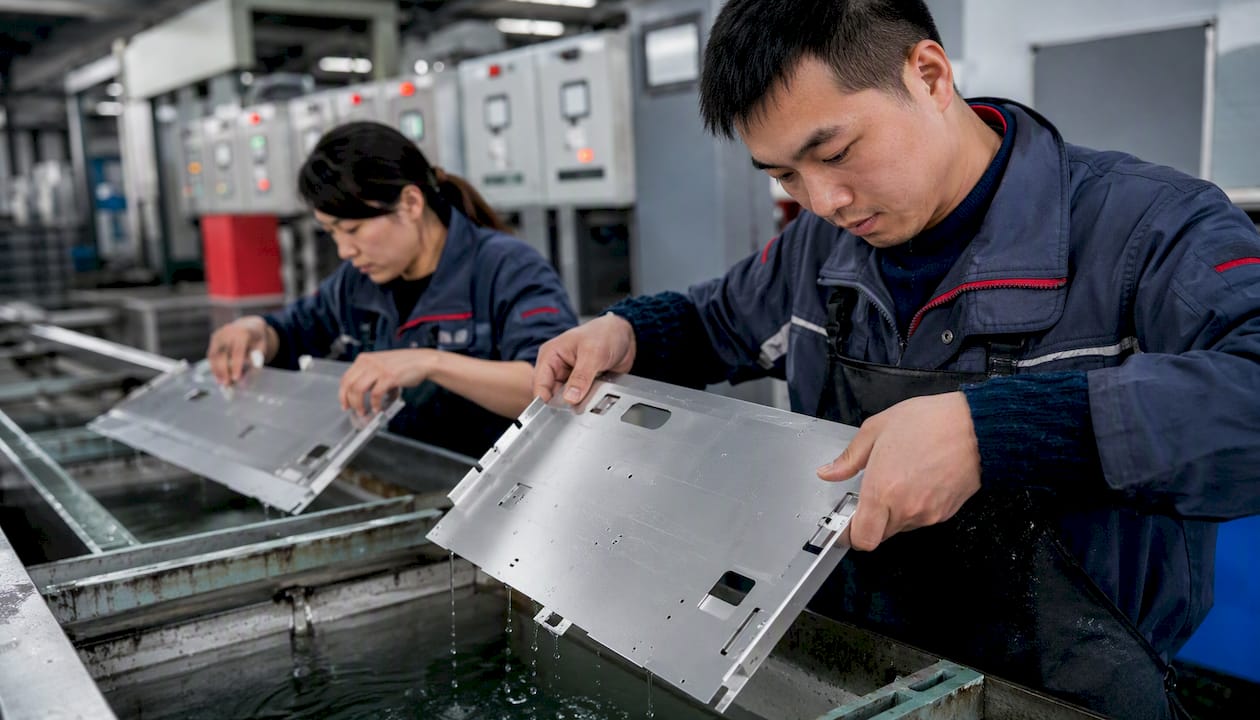
Passivation for stainless steel removes free iron from the surface and improves corrosion resistance. It is a chemical process, fast and inexpensive, and should be standard on any stainless prototype going into a corrosive or medical environment.
Zinc and nickel plating add corrosion protection and, in the case of nickel, a bright cosmetic finish. Both are outsourced processes.
Bead blasting gives a uniform matte texture and is often used as a pre-treatment before anodizing or as a standalone cosmetic finish on aluminum.
Secondary services that affect schedule most: hardware insertion (PEM nuts, standoffs, press-fit pins), sub-assembly, and any testing or certification work. Commercial finishing equipment can materially reduce finishing time and improve consistency, so ask your vendor whether they use automated finishing lines or rely entirely on manual processes. The answer tells you a lot about their throughput capacity.
When a finish affects dimensional tolerances (plating adds material; anodizing grows the surface by roughly 50% of the coating thickness), call that out on the drawing and confirm the shop accounts for it in their inspection criteria.
Industries That Rely On Sheet Metal Prototyping
Sheet metal prototyping shows up across a wide range of sectors, each with its own requirements.
Electronics and consumer products need enclosures and EMI panels that meet tight cosmetic and dimensional specs. Electronics enclosure prototypes often require specific surface finishes and shielding continuity checks before production release.
Data centers prototype server rack chassis and cable management panels. Rack-mounted gear has tight dimensional tolerances driven by EIA-310 rack standards; a prototype that doesn’t fit a standard rack is useless regardless of how well it was made.
Automotive and robotics use sheet metal prototypes for brackets, frames, and structural members. Automotive prototype parts often need material certifications and dimensional reports to satisfy PPAP or internal quality gates.
HVAC and appliances rely on galvanized steel and aluminum panels. Fit and finish validation is the primary goal; corrosion resistance and coating adhesion are secondary checks.
Medical devices require stainless 304 or 316 housings with passivation, traceability, and sometimes ISO 13485-compliant QA. Material test reports (MTRs) and lot traceability are non-negotiable for any part that enters a regulated product.
Aerospace demands material certifications, dimensional traceability, and often AS9100-compliant suppliers. Even a prototype bracket may need an MTR and a first-article inspection report to satisfy program documentation requirements.
Confirm supplier certifications before you place an order in any regulated industry. An ISO 9001 certificate is a starting point; medical and aerospace work typically requires more.
How To Choose Between Sheet Metal, CNC Machining, Metal 3d Printing, And Casting
The right method depends on what engineering question you are trying to answer, not on which process is fastest in isolation.
- Choose sheet metal prototyping when you need production-like material behavior, formed geometry, assembly validation, or finish verification at low quantities. It is the only method that directly simulates the production process for formed-metal parts.
- Choose CNC machining when you need tight datums, machined features, or very high dimensional accuracy (CNC routinely holds ±0.05 mm on critical features). It is most economical for one or two parts with complex machined geometry.
- Choose metal 3D printing (SLM or EBM) when your design has internal channels, lattice structures, or topology-optimized geometry that cannot be formed or machined. SLM and EBM achieve near-full density (>99.5%) and deliver wrought-like mechanical properties, but they are expensive per part and require post-processing. DMLS and binder jetting may need additional densification steps to reach comparable properties.
- Choose casting when you need production-representative material properties (grain structure, porosity behavior) or when quantities rise above roughly 10–15 units and casting’s economics improve.
Hybrid strategies often give the best validation coverage. A sheet metal enclosure with CNC-machined mating faces gives you both formed geometry and tight datum control. A sheet metal chassis with 3D-printed internal brackets lets you iterate on the internal geometry without re-cutting the enclosure. For aerospace applications, hybrid manufacturing approaches combining additive and traditional sheet metal processes are increasingly common.
Pro Tip: Before committing to a method, write down the one engineering question the prototype must answer. If the answer requires production-like forming behavior, sheet metal is the right choice. If it requires internal channels or topology freedom, metal additive is. Picking the wrong method gives you a fast sample that validates the wrong risk.
The comparison between CNC and additive manufacturing goes deeper on quality trade-offs if you need a more detailed breakdown.
Quality, Certifications, And What To Ask A Prototyping Partner
A supplier’s quality system is visible before you place an order if you ask the right questions.
Ask for the ISO certificate, not just the claim. ISO 9001 covers general quality management; ISO 13485 covers medical devices; AS9100 covers aerospace. A supplier who cannot produce a current certificate is not certified.
Ask what inspection deliverables come with the parts. A dimensional inspection report with actual vs. nominal values is the minimum for any prototype that will be used for engineering validation. CMM reports are better. First-article inspection (FAI) packages are required for regulated industries.
Ask for material test reports (MTRs). For any prototype going into a regulated product or a structural application, you need documentation that the material meets the specified alloy and temper. A supplier who cannot provide MTRs is sourcing material without traceability.
Ask about DFM review as part of the quotation process. A shop that reviews your design before quoting will catch problems that cost you a re-run. HLH SHEET METAL includes DFM review in its quotation process, which is documented in its prototyping checklist.
Common quality issues in sheet metal fabrication, including fitment problems, finish defects, and dimensional drift, can be mitigated by specifying inspection deliverables upfront and confirming material certifications before the order starts. The common quality issues guide covers the most frequent failure modes and how to prevent them through early DFM review and clear inspection specs.
When lot traceability or serialization matters (medical, aerospace, defense), specify it on the drawing and confirm the shop’s process for marking and documenting individual parts.
What Experienced Fabricators Know That Most Engineers Don’t
The biggest prototype delays are not caused by complex geometry. They are caused by incomplete information at the quote stage. A drawing that does not call out finish, hardware, or critical tolerances will generate a clarification request that adds 24–48 hours before the shop even starts cutting.
Three things that consistently improve prototype outcomes:
Standardize your hole sizes. Designing to standard drill sizes (rather than odd metric or fractional sizes) means the shop does not need to order special tooling. It sounds trivial, but a non-standard hole size on a rush prototype can add a day.
Keep holes away from bends. A hole within 1.5× the material thickness of a bend line will distort. Move it or add a relief slot. This is the single most common DFM error on first-time sheet metal designs.
Pre-specify your hardware. If you know you need M3 PEM nuts or 4-40 standoffs, call them out on the drawing. A shop that has to guess at hardware will either ask or make a choice you may not like.
One thing engineers rarely expect: bend sequence can eliminate the need for a fixture. A shop with deep press brake experience will often suggest a bend order that forms the part without custom tooling, saving both cost and lead time. Ask your fabricator to review the bend sequence before the job goes to the floor. For sheet metal forming processes and sourcing considerations, the technical background is worth reviewing before your first prototype run.
Manufacturing environments also carry real process risks worth managing systematically. Shops running prototype and production work simultaneously benefit from documented safety procedures; manufacturing safety management software helps larger facilities track and enforce those procedures across shifts.
Get Production-true Sheet Metal Prototypes From HLH SHEET METAL
Fast turnaround means nothing if the parts don’t validate your design. HLH SHEET METAL delivers both: ISO-certified sheet metal prototypes that use the same laser cutting, press brake forming, welding, and finishing processes your production run will use, backed by English-speaking engineering support and multi-plant capacity in China.
Capabilities include fiber laser cutting, CNC press brake forming, TIG and MIG welding, PEM hardware insertion, powder coat, anodizing, passivation, plating, and full dimensional inspection. Materials span aluminum, stainless steel, cold-rolled steel, galvanized steel, copper, brass, and titanium.
To get an accurate quote fast, send: a STEP or IGES file, a DXF flat pattern if available, a PDF drawing with critical tolerances and datums marked, material call-out and thickness, expected quantity, finish requirement, and any inspection deliverables you need.
Request a quote for your sheet metal prototype or review HLH SHEET METAL’s full fabrication capabilities to confirm the technical fit before you send files.
Sources
FAQ
What Is Sheet Metal Prototyping Used For?
Sheet metal prototyping validates form, fit, assembly clearances, and surface finish using the same laser cutting, forming, and welding processes that production will use. It is most valuable for enclosures, brackets, chassis, and any part where production-like material behavior matters.
How Fast Can A Sheet Metal Prototype Be Delivered?
Simple parts made from stocked materials typically ship in 2–5 business days when the design follows standard DFM rules. Complex assemblies, non-stock materials, or outsourced finishing steps extend lead time to 1–3 weeks.
What Files Should I Send To Get A Sheet Metal Prototype Quote?
Send a STEP or IGES file for 3D geometry, a DXF flat pattern if available, and a PDF drawing with critical tolerances, datums, material call-out, finish requirement, and expected quantity clearly marked.
When Should I Choose CNC Machining Instead Of Sheet Metal Prototyping?
Choose CNC machining when your part requires tight datums, machined features, or dimensional accuracy at the ±0.05 mm level, and when quantities are very low (one or two parts). Sheet metal prototyping is the better choice when formed geometry and assembly validation are the primary engineering goals.
Does HLH SHEET METAL Offer DFM Review With Prototype Quotes?
Yes. HLH SHEET METAL includes DFM review as part of its quotation process, flagging bend radii, hole placement, and feature issues before the job goes to the floor, which reduces rework and keeps lead times short.
