



Table Of Contents
For certified, fast-turnaround small-batch orders, HLH SHEET METAL is the recommended route. Three realistic paths exist for ordering custom sheet metal parts in small quantities:
- HLH SHEET METAL (direct B2B): ISO-certified fabrication across laser cutting, bending, welding, stamping, and finishing. Multi-plant capacity in China supports prototype-to-production runs with typical lead times ranging from a few days up to two weeks depending on finish and complexity. Best for procurement managers and engineers who need traceability, inspection reports, and reliable international shipping to US addresses.
- Cloud/instant-quote platforms: Services like Ponoko and Protolabs accept STEP and DXF uploads, return quotes in minutes, and can deliver simple parts in as few as 1–5 days. Best for rapid prototyping or one-off parts where DFM feedback and speed matter more than volume pricing.
- Local specialty contract shops: Useful for same-day prototype turnarounds or hands-on design iteration. Lead times vary widely, and quality controls are less standardized.
For file preparation guidance before you submit a quote, jump to the “How to prepare CAD files” section below.
Key Takeaways
Ordering custom sheet metal parts in small batches comes down to matching your quantity, quality requirements, and timeline to the right supplier route.
| Point | Details |
|---|---|
| Three ordering routes | HLH SHEET METAL for certified B2B orders; online platforms for instant quotes; local shops for same-day prototypes. |
| Small-batch quantity bands | 1–10 parts for prototypes, 10–100 for pilot runs, 100–500 for low-volume production. |
| Lead times by route | Online platforms: 1–5 days; B2B fabricators: 3–14 days; local shops: variable, sometimes same-day. |
| File prep speeds quoting | Submit STEP or DXF with bend notes, tolerances, finish spec, and a PDF cover sheet to avoid back-and-forth. |
| HLH SHEET METAL | ISO-certified, multi-plant fabricator covering laser cutting, bending, welding, stamping, and finishing for small-batch and production orders. |
What Does “small Batch” Actually Mean For Sheet Metal Orders?
The term “small batch” covers a wider range than most buyers expect. In practice, custom sheet metal ordering breaks into three distinct quantity bands, each with its own ordering logic.
1–10 parts is the prototype band. These are R&D samples, fit-check models, or first-article parts for design validation. No-minimum online platforms handle this range well. Expect individual part boxing, careful labeling, and higher per-part cost since setup time gets spread across very few pieces.
10–100 parts is the pilot run band. This covers limited-production assemblies, pre-series builds, and spare parts for field service. B2B fabricators like HLH SHEET METAL are well-suited here because they can schedule batch production, apply consistent QA across the lot, and ship on a coordinated timeline. Staggering deliveries across this range is a practical strategy to reduce inventory carrying costs while keeping production moving.
100–500 parts sits at the boundary between low-volume production and true mass manufacturing. At this scale, setup fees get amortized, per-part cost drops noticeably, and pallet shipping becomes standard.
A few packaging realities shift as batch size grows:
- 1–10 parts: individually wrapped, foam-lined boxes, part-by-part inspection tags
- 10–100 parts: grouped by part number, poly-bagged or bubble-wrapped, batch inspection report included
- 100–500 parts: bulk-packed on pallets with layer separators, consolidated shipping documentation
On minimum order quantities: most online instant-quote services advertise no minimums. Direct B2B fabricators typically negotiate MOQ based on material cost and setup time, though many will accept single-piece prototype orders with a setup fee applied.
Which Fabrication Processes And Materials Work Best For Small Batches?
Not every process scales down equally. Some shine at low volumes; others only make economic sense at higher quantities.
Process options for small-batch work:
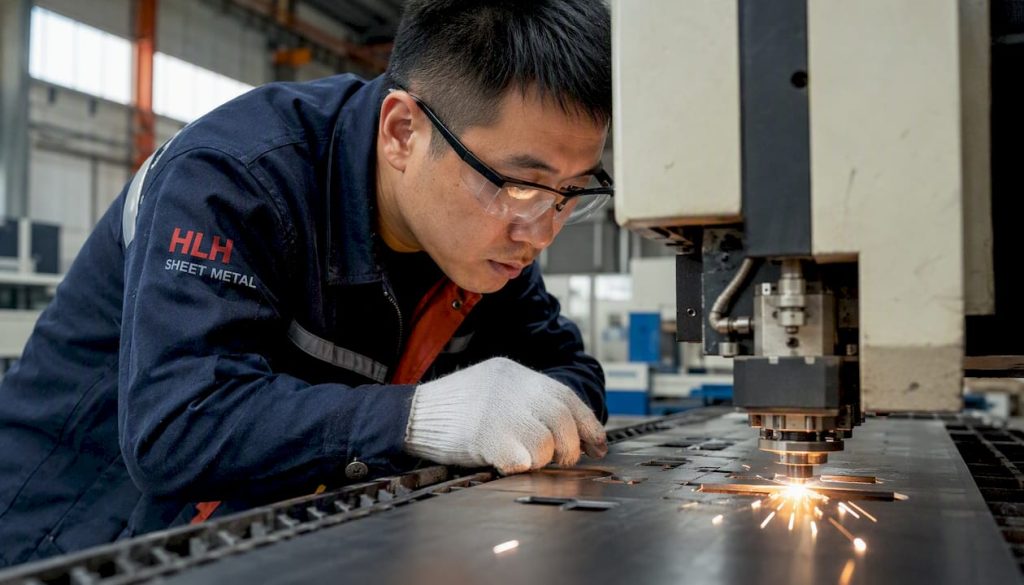
- Laser cutting: The go-to for 2D flat parts. Fast setup, no hard tooling, and excellent repeatability make it ideal for prototype and pilot runs in steel, aluminum, and stainless.
- Waterjet cutting: Best for heat-sensitive materials or thick stock where laser heat-affected zones are a concern. Slower than laser but handles a broader material range.
- CNC routing/machining: Suited for complex contours and pockets that laser cutting cannot produce cleanly.
- Press brake bending: Standard for adding bends to laser-cut blanks. Works across all common sheet metals and is cost-effective at any batch size.
- Welding (MIG/TIG): Used for assemblies. TIG welding is preferred for stainless and aluminum where appearance matters.
- Light stamping and piercing: Economical only when volumes justify a die. For small batches, laser cutting typically replaces stamping.
- Finishing (powder coat, anodize, passivation, plating): Each finish adds 1–5 days to lead time. Powder coat and anodize are the most common. Passivation is standard for medical-grade stainless.
Sheet metal forming processes used in small-batch fabrication include bending, deep drawing, and spinning. These join the cutting operations above.
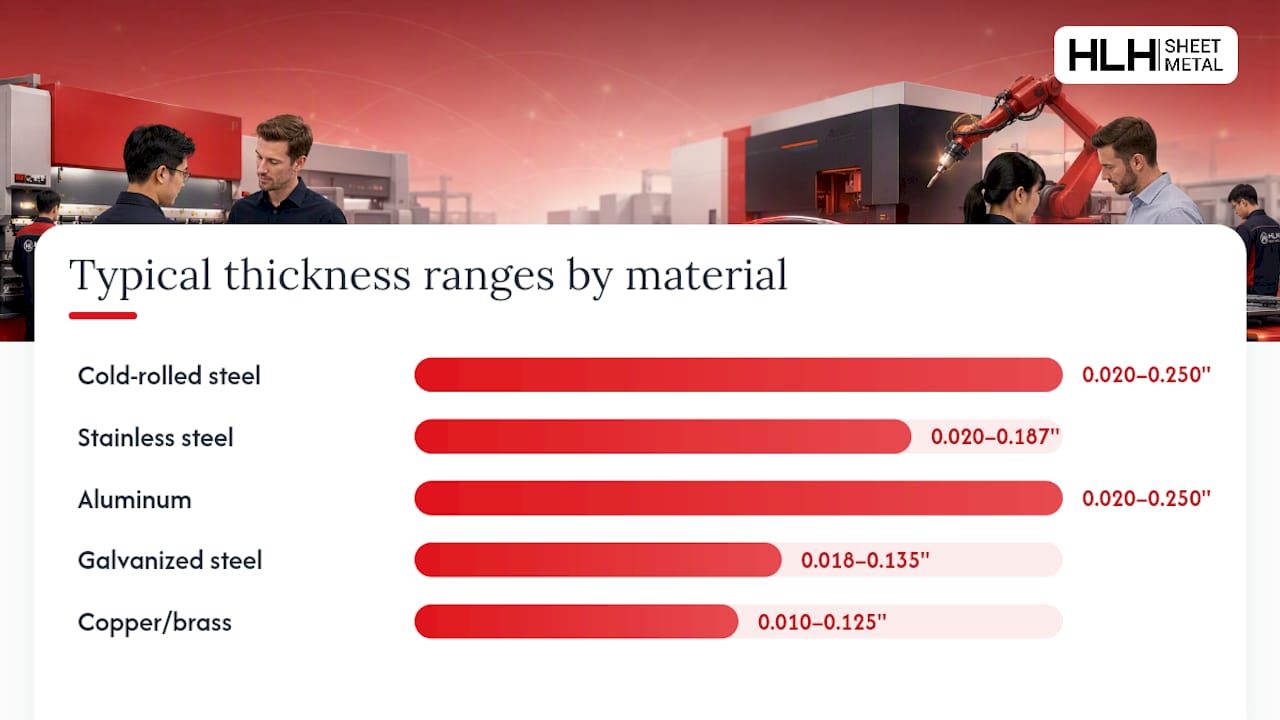
Common materials and typical thickness ranges:
| Material | Typical Thickness Range | Best-Fit Processes |
|---|---|---|
| Cold-rolled steel | 0.020–0.250 in | Laser cut, bend, weld |
| Stainless steel | 0.020–0.187 in | Laser cut, TIG weld, passivate |
| Aluminum | 0.020–0.250 in | Laser cut, bend, anodize |
| Galvanized steel | 0.018–0.135 in | Laser cut, bend, powder coat |
| Copper/brass | 0.010–0.125 in | Waterjet, bend, plate |
Achievable tolerances for small-batch sheet metal work typically fall in the ±0.003–0.020 in range depending on process and material. Laser-cut flat parts hold tighter tolerances than bent assemblies, where springback introduces variation. Specifying tolerances tighter than the process naturally achieves adds cost and lead time, so match your callouts to functional requirements rather than drafting habit.
How Pricing And Lead Times Work For Small-batch Orders
Cost on a small-batch sheet metal job is driven by more variables than most buyers realize upfront.
Primary cost drivers:
- Material type and thickness (stainless costs more than cold-rolled; thicker stock takes longer to cut)
- Part complexity and feature count (more bends, holes, and cutouts mean more machine time)
- Secondary operations (welding, finishing, hardware insertion each add cost)
- Lot quantity (per-part cost drops as quantity rises and setup gets amortized)
- Setup and tooling fees (some fabricators charge a flat setup fee per job regardless of quantity)
- Inspection and packaging requirements (first-article inspection reports, individual tagging, custom packaging all add cost)
- Shipping method and urgency (expedited freight to US addresses can equal or exceed fabrication cost on small lots)
Lead times by route:
Online instant-quote platforms like Protolabs can produce simple sheet metal parts in as fast as one day, with standard lead times measured in days. For most jobs, expect 1–5 business days from upload to shipment on these platforms.
Direct B2B fabricators, including HLH SHEET METAL, typically run 3–14 days depending on finish requirements, assembly complexity, and whether a first-article sample is required before batch production begins. Local contract shops are variable but can turn around a simple prototype the same day if capacity allows.
On payment: online platforms almost universally accept credit cards, which speeds ordering significantly. B2B fabricators like HLH SHEET METAL typically work on NET terms or wire transfer for established accounts, with credit card options available for first orders. NET terms require a brief credit approval process but give procurement teams the invoicing flexibility most accounting departments prefer.
Pro Tip: On small runs, finishing is often the longest lead-time item, not cutting or bending. If you need parts fast, ask your fabricator whether unfinished or deburr-only parts can ship first while the finishing batch follows.
How To Prepare CAD Files For Fast, Accurate Quotes
Getting a quote back in hours instead of days comes down almost entirely to what you send. Vendors who receive complete, unambiguous files quote faster and revise less.
Preferred file types:
- STEP or IGES for 3D assemblies. These let the vendor’s quoting system check wall thickness, bend radii, and feature geometry automatically.
- DXF for 2D flat patterns. The flat pattern should show the developed blank with bend lines marked. This is the fastest path to an instant quote on simple parts.
- Native CAD files (SolidWorks, CATIA, Inventor) for complex parts where the vendor needs to run DFM checks on the model directly.
Submission checklist:
- Flat pattern with all bend lines shown and labeled
- Bend notes: material spec, thickness, K-factor or bend allowance, bend direction
- Hole callouts with diameter and tolerance
- Surface finish specification (material, finish type, color if applicable)
- Quantity per part number
- Target tolerances for critical features
- Packaging and shipping instructions (address, carrier preference, any special handling)
Include a one-page PDF cover sheet with non-technical order details: purchase order number, delivery address, contact name, and any inspection or documentation requirements. This single step eliminates the most common back-and-forth delay.
Pro Tip: Use standard hole sizes that match common drill or punch sizes. Odd-diameter holes require custom tooling or slower laser paths, which adds cost and time on small batches. Consolidating similar parts into a family-of-parts sheet also cuts setup time significantly.
DFM feedback from your vendor is most valuable before you finalize the design, not after you’ve already submitted for production. Share preliminary files early.
How To Choose The Right Supplier For Small-batch Sheet Metal
Speed and price are obvious criteria. The ones buyers overlook are what cause problems.
Supplier evaluation checklist:
- Certifications: Does the vendor hold ISO 9001 or equivalent QA certification? For aerospace, medical, or defense parts, this is non-negotiable.
- Process capability: Does their equipment list match your required processes? A shop that only laser-cuts cannot handle a welded assembly.
- Thickness limits: Confirm the vendor can process your specific material and gauge. Not all shops cut thick stainless or thin copper.
- Minimums: Will they accept your quantity without a prohibitive setup fee?
- Finish options: Can they complete the full job in-house, or will finishing go to a subcontractor (which adds lead time and a handoff risk)?
- US shipping experience: Do they have established freight partnerships for delivery to US addresses, and can they provide tracking and customs documentation?
Questions to ask any supplier before ordering:
- What is your lead time for laser cutting plus powder coat on a 25-piece run?
- Do you offer first-article inspection reports and dimensional reports?
- What is your revision policy if parts arrive out of tolerance?
- Which shipping carriers do you use for US delivery, and do you handle customs clearance?
- Can you provide references or case studies for similar work in my industry?
Red flags to walk away from:
- No file upload or online quoting workflow for straightforward parts
- Vague or absent inspection documentation
- No references for work in your industry or at your required tolerance level
- Unwillingness to provide a sample or first-article part before committing to a full batch
When to choose which route: use an online instant-quote platform when you need a single prototype fast and DFM feedback matters. Use a direct B2B fabricator like HLH SHEET METAL when you need ISO-certified QA, inspection reports, traceability, and a vendor who can scale from prototype to production without switching suppliers. Use a local shop when you need to hand-deliver a drawing and pick up a part the same afternoon.
How HLH SHEET METAL Handles Small-batch Orders
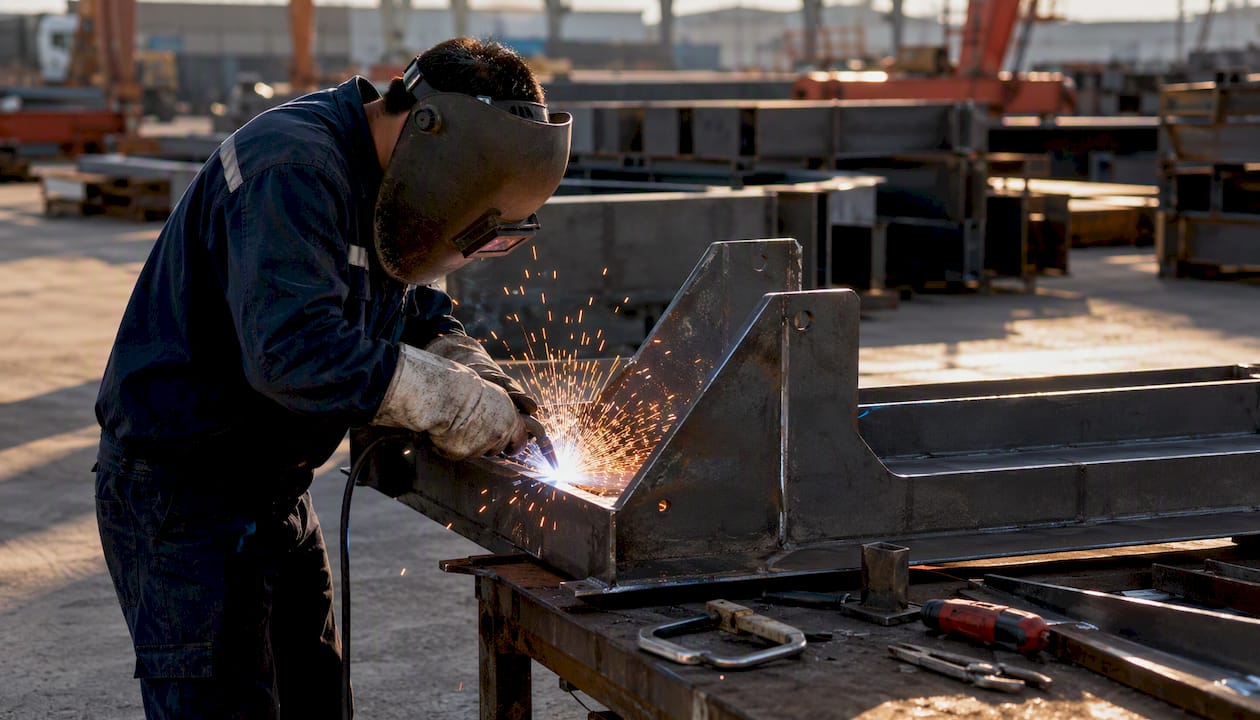
HLH SHEET METAL’s fabrication capabilities cover the full small-batch workflow: laser cutting, CNC bending, MIG and TIG welding, stamping, and a complete range of surface finishes including powder coat, anodize, passivation, and plating. Supported materials span cold-rolled steel, stainless steel, aluminum, galvanized steel, copper, brass, titanium, and magnesium, across thickness ranges suited to both thin-gauge enclosures and structural assemblies.
The multi-plant manufacturing model means capacity can flex across facilities to hit tighter deadlines, which is a real advantage when a single-plant shop is backlogged. HLH SHEET METAL holds ISO certifications and provides inspection reports and dimensional documentation as standard on production orders, not as an add-on. Industries served include aerospace, medical, automotive, and data center sectors, each with its own QA and traceability requirements.
Ordering steps with HLH SHEET METAL:
- Upload your STEP or DXF files and submit a quote request with material, quantity, finish, and tolerance requirements.
- Receive DFM feedback and a detailed quote. Flag any design changes before approving.
- Approve a first-article sample if required. HLH provides dimensional inspection reports with the sample.
- Confirm batch scheduling and delivery timeline.
- Parts ship to your US address with full customs documentation and tracking.
For the fastest quote turnaround, include: file type (STEP preferred), material and thickness, quantity, finish specification, target tolerances for critical features, and your delivery address. A complete submission gets a same-day quote response in most cases.
What Most Buyers Get Wrong About Small-batch Sheet Metal
The conventional advice is to shop around, get three quotes, and pick the lowest price. That works fine when you’re buying commodity parts. It fails badly when you’re ordering custom sheet metal in small quantities under time pressure.
Here’s what actually matters: the cost of a bad part on a 10-piece run is not the price of the part. It’s the two-week delay, the redesign cycle, and the missed product launch.
The other thing buyers consistently underestimate is the value of DFM feedback before fabrication starts. Most online platforms offer it automatically. Most B2B fabricators will provide it if you ask. Skipping it to save a day on the front end routinely costs a week on the back end when parts come back with a bend radius that cracks the material or a hole pattern that misses a mating feature.
For procurement managers and engineers who need certified parts with documentation, the math is straightforward. An ISO-certified fabricator with inspection reports and a multi-plant capacity buffer costs more per part than a no-frills online service. It also eliminates the supplier-qualification headache, the customs paperwork risk, and the “we can’t trace that lot” conversation with your quality team.
HLH SHEET METAL: Precision Small-batch Fabrication With Fast US Delivery
Procurement teams and engineers who need more than a fast quote need a fabricator who can back it up with documentation. HLH SHEET METAL delivers precision sheet metal fabrication across laser cutting, bending, welding, stamping, and finishing, with ISO-certified QA and inspection reports included on production orders. Multi-plant capacity means your small-batch order doesn’t compete with a large production run for machine time. Materials span steel, stainless, aluminum, galvanized, copper, brass, titanium, and magnesium. US shipping with full customs documentation is standard.
Submit your STEP or DXF files with material, quantity, finish, and tolerance specs to get a same-day quote. Request a quote from HLH SHEET METAL and get your small-batch order moving today.
Sources
FAQ
How Much Does Custom Sheet Metal Fabrication Cost?
Per-part cost on small batches depends on material, complexity, finish, and quantity. Simple laser-cut steel parts at low quantities cost significantly more per piece than the same part at 500 units, since setup fees are spread across fewer pieces. Finishing operations like powder coat or anodize add both cost and lead time.
Where Can I Find Online Sheet Metal Fabrication Services?
Ponoko and Protolabs both offer online quoting with DXF and STEP file uploads, no minimum order quantities, and lead times measured in days. For certified B2B orders with inspection documentation, HLH SHEET METAL handles small-batch fabrication with US shipping included.
Do Metal Fabricators Charge By The Hour Or Per Part?
Most fabricators quote per part for small-batch orders, with setup fees applied separately. Hourly rates are more common for custom repair work or highly complex one-off assemblies where scope is difficult to define upfront.
What Are Examples Of Sheet Metal Forming Processes?
Common sheet metal forming processes include bending (press brake), deep drawing, and spinning, as documented in technical forming process references. Cutting operations like laser cutting and waterjet are typically performed before forming to produce the flat blank.
