



Table Of Contents
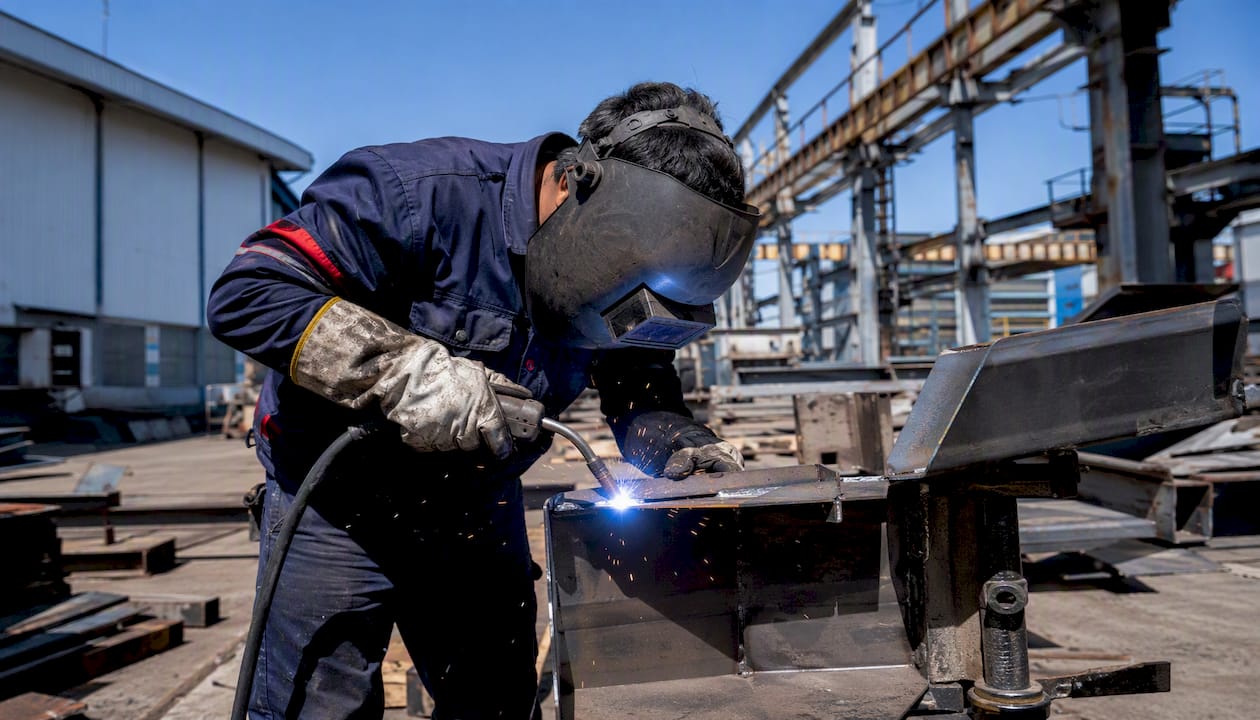
You have three real options for custom sheet metal welding and assembly services in the United States: online contract fabricators with instant quoting, local contract shops, and vertically integrated OEM/contract manufacturers. For fast prototypes, online platforms can turn parts in a short time. For complex welded assemblies heading toward production, a supplier like HLH SHEET METAL covers the full path from first article to volume run with ISO-backed quality assurance and English-speaking engineering support.
Before you contact anyone, prepare these files and details:
- STEP or IGES files for 3D assemblies; DXF or DWG for flat patterns
- A bill of materials (BOM) listing every part, material, and quantity
- Tolerances, weld callouts, and surface finish specifications
- Target quantity and required lead time
That package gets you a fast, accurate quote from any serious supplier.
Key Takeaways
Online contract fabricators, local weld shops, and vertically integrated manufacturers like HLH SHEET METAL each serve a distinct need, and matching your project to the right route is the single most effective way to cut lead time and cost.
| Point | Details |
|---|---|
| Three sourcing routes | Online platforms for speed, local shops for complex weldments, OEM manufacturers for production volume. |
| File prep is critical | Send STEP, DXF, BOM, tolerances, and weld callouts in the first submission to get accurate quotes fast. |
| Certifications to verify | Confirm ISO 9001, AWS-certified welders, and CMM inspection capability before placing production orders. |
| Pricing has multiple layers | Request line-item quotes covering material, weld labor, fixturing, finishing, and inspection separately. |
| HLH SHEET METAL | Covers laser cutting through final assembly with ISO-certified QA and prototype-to-production scaling. |
Where Can You Get Custom Sheet Metal Welding And Assembly Services?
Three sourcing routes cover the full range of custom welding and assembly needs. Which one fits depends on your timeline, volume, and how complex the weldment is.
Online contract fabricators are the fastest path for standard parts. Platforms like Xometry auto-quote directly from STEP or DXF files and can deliver single-part prototypes in days. They list tolerances, material options, and welding or assembly as add-on services. Some cloud-based laser-cutting suppliers, such as Ponoko, advertise same-day or next-day delivery for limited materials and local orders. The tradeoff: these platforms work best when your geometry is stable and your finish options are standard. Complex weldments with tight fixturing requirements often need a different route.
Local contract fabricators and regional weld shops handle the jobs that require hands-on iteration. When part geometry is complex, weld fixturing is custom, or you need on-site inspection during first-article runs, a local shop gives you something an online platform cannot: a conversation with the welder. Regional assembly specialists commonly offer complex welded assemblies, riveting, and subassembly services alongside on-site expertise. Lead times are longer than online platforms, but the back-and-forth on fit and function is faster.
OEM and contract manufacturers with vertical integration are the right call for high-volume welded assemblies, supply-chain management, and end-to-end production. These shops handle material sourcing, fixturing, multi-step assembly, finishing, and outbound logistics under one roof. HLH SHEET METAL operates across this tier, with multiple plants capable of scaling from prototypes to production runs while maintaining ISO-certified quality controls.
Pro Tip: For time-sensitive prototypes, use an online platform to validate geometry, then transition to a vertically integrated supplier for production. Splitting the work this way cuts your total development timeline without sacrificing production quality.
What Welding And Assembly Capabilities Should You Expect From Suppliers?
A complete custom fabrication supplier handles far more than welding. The process typically starts upstream with cutting and forming, then moves through joining and assembly, and finishes with surface treatment and inspection.
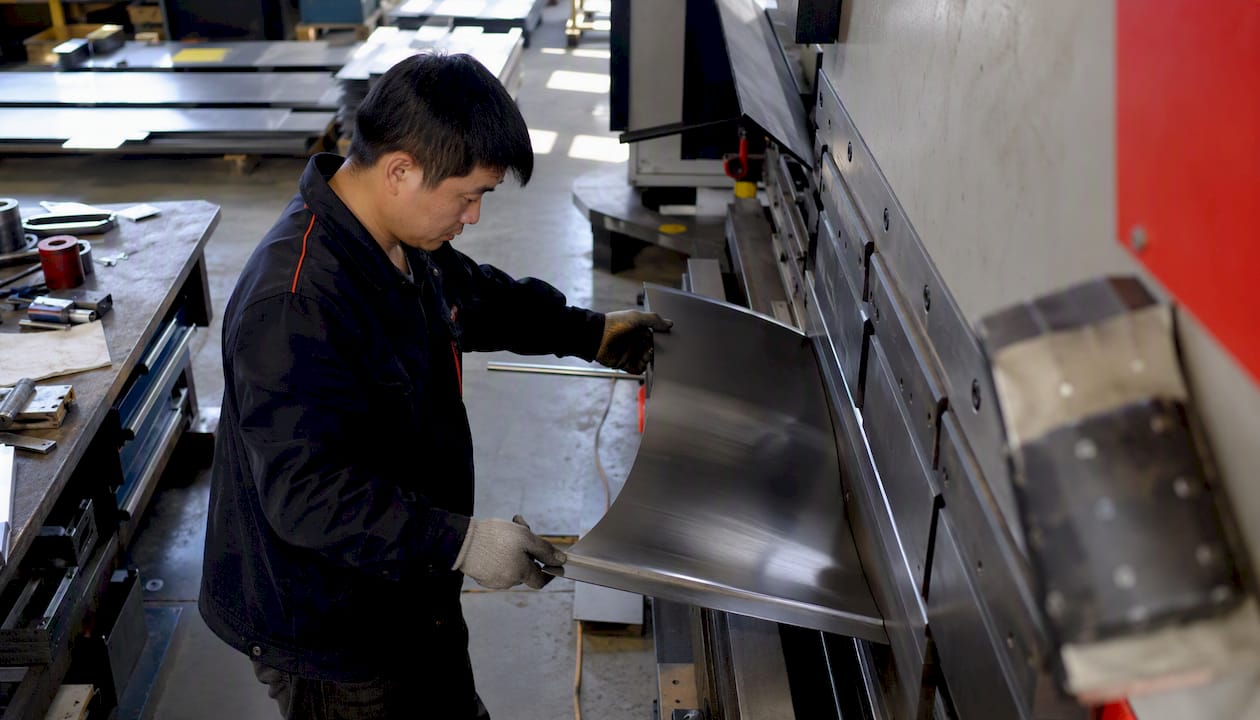
Cutting and forming feeds every downstream operation. Fiber laser cutting handles tight tolerances on thin sheet; CNC punching is efficient for high-volume flat patterns with standard hole geometries. CNC press brake bending and stamping complete the forming stage before any joining begins.
Welding processes vary by material and thickness:
- MIG (GMAW): fast, cost-effective, well-suited for steel and aluminum on thicker gauges
- TIG (GTAW): cleaner welds with tighter control, preferred for stainless steel, thin sheet, and cosmetic surfaces
- Spot and resistance welding: high-speed joining for thin sheet metal panels and enclosures
- Robotic welding: consistent quality at volume, especially for repetitive weld patterns on production assemblies
Assembly work goes beyond the weld itself. Tack welding holds assemblies in position before full weld passes. Hardware insertion, including PEM nuts, clinch studs, and rivet nuts, is standard at most full-service shops. Riveting, fastening, and subassembly work are common at shops that serve OEMs. Final assembly, where multiple subassemblies are joined into a finished unit, is a distinct capability worth confirming before you commit.
Secondary services close the loop: deburring, passivation for stainless steel, powder coating, liquid painting, plating, and material testing. Suppliers that handle finishing in-house reduce your logistics burden and cut lead time.
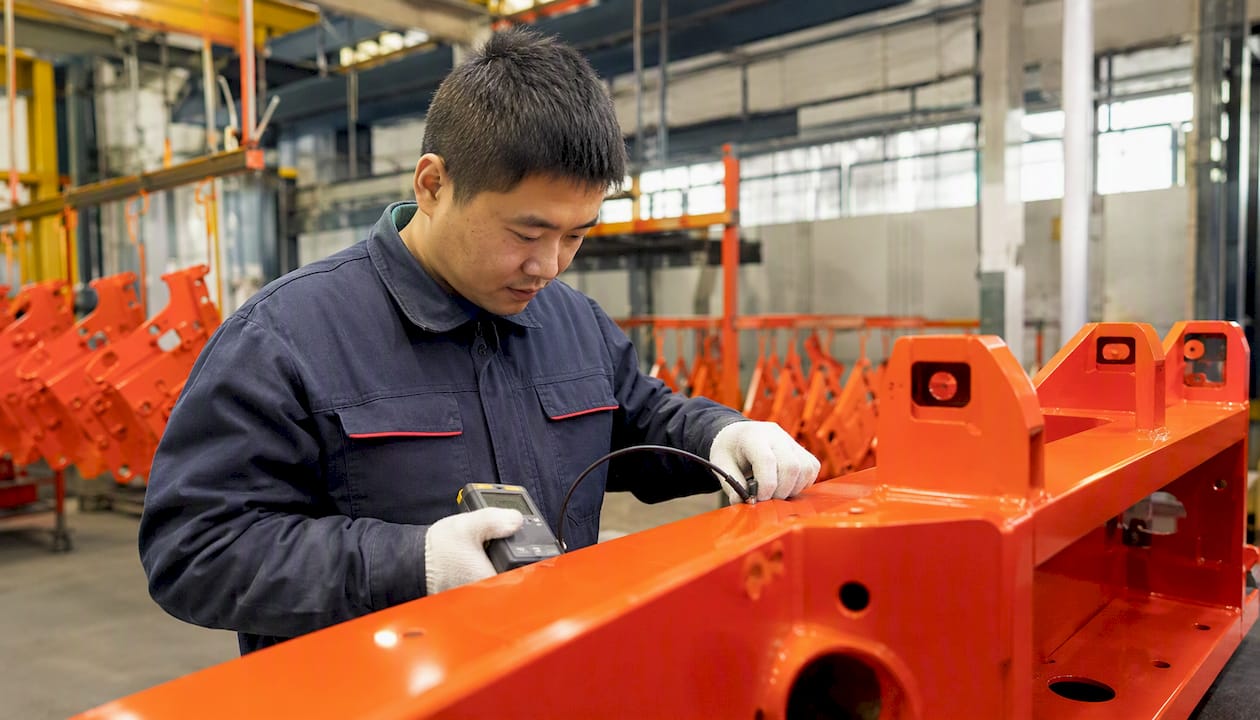
Pro Tip: Ask specifically whether robotic welding is available for your part. If your production volume justifies a fixture, robotic welding cuts per-part weld cost and improves consistency across a run.
Which Materials And Thickness Ranges Do Most Fabricators Support?
Most sheet metal fabricators work across a standard set of alloys and thickness bands. Knowing where your material sits in that range tells you quickly whether a supplier can handle your part without special processing.
A few design limits matter most when you’re preparing parts for welding:
- Minimum bend radius: typically 1× material thickness for steel; aluminum often requires 1.5–2× to avoid cracking along the grain
- Hole-to-edge distance: keep holes at least 2× material thickness from any edge to prevent distortion during punching or laser cutting
- Weld gap tolerance: a consistent gap of 0.010 in – 0.030 in between mating parts gives the welder room to create a full-penetration joint without burn-through
- Distortion risk: large, thin flat panels (especially aluminum) warp under heat; vendors may require weld sequencing plans or fixturing to hold flatness
When assemblies involve multiple parts, suppliers may require nested plates, custom weld fixtures, or tack-welding jigs to hold geometry during the weld pass. Budget for fixture cost in your first-article quote.
What Turnaround Times Should You Plan For?
Lead times vary more than most buyers expect, and the gap between “prototype” and “production” is wider than it looks on a schedule.
- Simple prototypes (online platforms): same-day to 7 days for standard laser-cut and bent parts; welding and assembly add time
- Complex welded assemblies (local shops): About one to a few weeks for first articles, depending on fixturing complexity and weld inspection requirements
- Short runs (5–50 pieces): Several weeks, driven by welding labor, finishing, and any required dimensional inspection
- Production runs: Multiple weeks to several months from purchase order to delivery, accounting for fixture fabrication, material lead time, process validation, and any required certifications
Pro Tip: Concurrent engineering cuts lead time. Share your CAD files with the supplier during design, not after. Catching a weld-access issue or a bend-radius problem in the design phase saves weeks compared to discovering it at first-article inspection.
The end-to-end sequence for a typical custom welded assembly order runs: inquiry and file submission → quote and DFM review → engineering sign-off → material procurement → cutting and forming → welding and assembly → dimensional inspection → finishing → final QC → packing and shipping. Each handoff is a potential delay, so clear specs from the start compress the timeline at every stage.
How Does Pricing Work For Custom Welded Assemblies?
Sheet metal welding and assembly quotes are not a single number. They are a stack of cost drivers, and understanding each one lets you compare bids accurately.
- Material cost: driven by alloy, thickness, and market price at time of order; stainless and aluminum cost more per pound than mild steel
- Cutting and forming time: laser cutting is priced by cut length and pierce count; bending is priced per hit
- Weld labor: the largest variable in most assembly quotes; driven by number of welds, weld length, joint access, and whether robotic or manual welding is used
- Fixture and setup costs: one-time charges for custom weld fixtures or jigs; these are non-recurring engineering (NRE) costs that amortize across a production run
- Finishing: powder coat, plating, and passivation add cost per square foot of surface area; multi-step finishing (prime, paint, topcoat) compounds quickly
- Inspection: CMM inspection, material test reports (MTRs), and first-article inspection (FAI) reports carry line-item costs at quality-focused shops
- Volume: per-part cost drops with quantity as setup and fixture costs spread across more pieces
For offshore orders, factor in shipping freight, import duties, and lead time buffer. For many mid-volume runs, domestic sourcing is cost-competitive once logistics and expedite risk are included in the comparison.
Always request line-item pricing. A quote that shows a single total number tells you nothing about where cost is concentrated or where you can reduce it.
What Files And Information Do Vendors Need For An Accurate Quote?
Getting a fast, comparable quote means giving suppliers everything they need in the first submission. Missing information forces a back-and-forth that adds days to your timeline.
- 3D assembly file: STEP or IGES format for assemblies; individual part STEP files for each component
- 2D drawings: DXF or DWG for flat patterns; PDF drawings with GD&T callouts, weld symbols, and critical dimensions
- Bill of materials (BOM): part numbers, descriptions, materials, quantities, and any purchased hardware
- Tolerances: general tolerance standard (e.g., ISO 2768 or ASME Y14.5) plus any critical dimensions called out explicitly
- Surface finish specification: coating type, color, texture, and any masking requirements
- Weld callouts: weld type, size, length, and location per AWS A2.4 symbols
- Inspection requirements: dimensional inspection, MTRs, FAI, or NDT requirements
- Quantity and target lead time: prototype quantity vs. production quantity, and your required delivery date
- Certifications required: ISO 9001, AWS, AS9100, or other standards the supplier must hold
| File Format | Best Used For |
|---|---|
| STEP (.stp, .step) | 3D part and assembly geometry |
| IGES (.igs) | Legacy 3D geometry exchange |
| DXF (.dxf) | Flat patterns for laser cutting and punching |
| DWG (.dwg) | 2D engineering drawings with dimensions |
| Annotated drawings, weld callouts, GD&T | |
| Native CAD | SolidWorks, CATIA, Inventor — share when possible |
What Certifications And QA Should You Verify Before Hiring A Supplier?
Certifications tell you what a shop has committed to maintaining. They do not replace your own due diligence, but they narrow the field fast.
- ISO 9001: the baseline quality management standard; confirms the shop has documented processes, traceability, and corrective action procedures
- AWS-certified welders or documented WPS/WPQ: Welding Procedure Specifications and Welder Performance Qualifications prove the shop’s welders are tested and their processes are controlled
- AS9100: required for aerospace applications; adds configuration management, risk management, and stricter traceability requirements on top of ISO 9001
- CMM and dimensional inspection: coordinate measuring machine capability confirms the shop can verify tight tolerances on complex assemblies
- Material test reports (MTRs): mill-certified documentation that the material meets the specified grade and chemistry
- NDT capability: dye-penetrant (PT) and ultrasonic testing (UT) for weld integrity on structural or safety-critical parts
- First-article inspection (FAI): a documented dimensional and functional check of the first production part before the full run ships
Industry rankings like The FAB 40 from The Fabricator serve as third-party indicators of shop capability and equipment investment. They are not a substitute for requesting certificate copies and sample inspection reports, but they speed up your shortlist.
Pro Tip: Ask for a sample MTR and a recent CMM report before placing a production order. A shop that hesitates to share these documents is telling you something about how seriously they treat traceability.
How Do You Choose The Right Vendor And Spot Red Flags?
A structured evaluation takes less time than recovering from a bad supplier choice.
Questions to ask in your RFP or first call:
- What welding processes do you run in-house, and do you have robotic welding capability?
- What is your typical lead time for a first-article welded assembly at our volume?
- Who owns the weld fixtures after the first run, and what is your rework policy?
- Can you provide ISO 9001 certificate copies and a sample inspection report?
- Do you have references or case studies for similar welded assemblies in our industry?
- What is your throughput capacity, and how do you handle schedule changes?
Red flags to walk away from:
- Vague answers about QA processes or refusal to share certificates
- No example assemblies or references in your part category
- Lead time estimates that shift significantly between the quote and the purchase order
- A single point of contact with no backup, especially for offshore suppliers
- No line-item pricing, only a lump-sum quote
Scoring framework: weight capability fit and quality assurance most heavily, then communication responsiveness, price transparency, and logistics support. A supplier that scores well on the first two but poorly on communication will cost you more in expedite fees and rework than the price difference suggests.
Independent review platforms can surface patterns in customer experience. Checking recent reviews as part of due diligence adds a useful data point alongside certifications and references.
HLH SHEET METAL: A Production-ready Option For Welding And Assembly
HLH SHEET METAL covers the full fabrication stack: fiber laser cutting, CNC bending, MIG and TIG welding, hardware insertion, subassembly and final assembly, powder coating, and finishing. Multiple manufacturing plants support both prototype quantities and high-volume production runs, with ISO-certified quality management across all facilities.
Key trust signals worth noting:
- ISO certifications across manufacturing operations
- English-speaking engineering support for direct communication on DFM, tolerances, and weld callouts
- Prototype-to-production scaling without switching suppliers mid-development
- Industries served include aerospace, medical, automotive, data center, and industrial equipment
To request a quote, send your STEP assembly files, individual part STEP files, 2D PDF drawings with weld callouts, BOM, target quantity, required lead time, and any certification requirements. HLH SHEET METAL’s welding services page details inspection procedures and what to include in your submission. For industry-specific projects, the industries page maps capabilities to sectors including aerospace, automotive, and robotics.
A Procurement Perspective On Getting This Right
The biggest mistake buyers make is treating the first quote as the final answer. Run at least two or three vendors simultaneously on the same package. What you learn from the spread is more useful than any single number: one shop prices weld labor high but has fast fixtures; another is cheap on material but slow on finishing. That spread tells you where your cost is actually sitting.
On first-article runs, accept minor cosmetic variation that does not affect function. Holding a supplier to cosmetic perfection on a first article burns time and goodwill before the relationship is established. Save the tight cosmetic spec for production sign-off.
The domestic-versus-offshore question is simpler than it sounds. For prototypes under 10 pieces with a two-week deadline, domestic is almost always faster when you include customs clearance. For production runs of 100+ pieces with a six-week window, offshore suppliers with strong QA and English-speaking support are genuinely competitive on total landed cost. The math changes at volume.
Get A Quote From HLH SHEET METAL In One Submission
For procurement teams and engineers who need welded assemblies done right the first time, HLH SHEET METAL delivers from prototype to production without the supplier handoff risk. The quote process is direct: attach your STEP files, 2D drawings with weld callouts, BOM, quantity, and target lead time, and the engineering team responds with a line-item quote and DFM feedback. No ambiguity, no back-and-forth to extract basic information.
Visit the custom fabrication page to submit your files and get a quote. If your project involves specific industry requirements, the capabilities overview details tolerances, processes, and materials in full.
Sources
- Custom Online Sheet Metal Fabrication | Ponoko
- Metal Components & Metal Assembly Services in Louisville
- The FAB 40 | The Fabricator
FAQ
How Much Does Custom Sheet Metal Fabrication Cost?
Cost depends on material, part complexity, weld labor, finishing, and quantity. Simple laser-cut and bent parts start at tens of dollars per piece; complex welded assemblies with finishing and inspection can run hundreds to thousands per unit. Always request line-item pricing to understand where cost is concentrated.
How Much Do Metal Fabricators Charge Per Hour For Welding?
Robotic welding reduces per-part cost at volume by replacing manual weld time with faster, consistent machine cycles.
What Is Custom Sheet Metal Fabrication?
Custom sheet metal fabrication is the process of cutting, forming, welding, and finishing metal sheet to produce parts or assemblies built to a buyer’s specific design. It covers everything from single prototype parts to high-volume production runs across materials like steel, stainless steel, and aluminum.
Where Can I Get Sheet Metal Welding And Assembly Services For Custom Orders?
Online contract fabricators, local weld shops, and vertically integrated manufacturers all offer custom welding and assembly. For production-ready orders with ISO-certified quality assurance, HLH SHEET METAL handles the full process from laser cutting through final assembly and finishing.
