



Table Of Contents
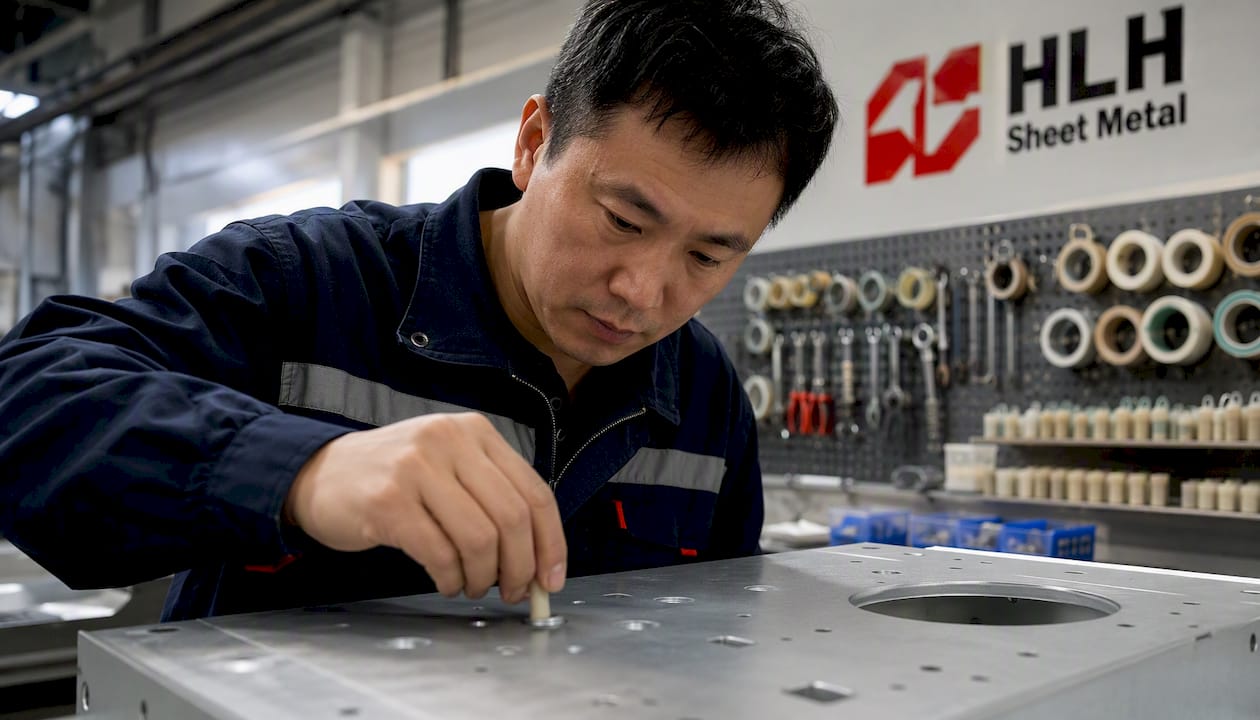
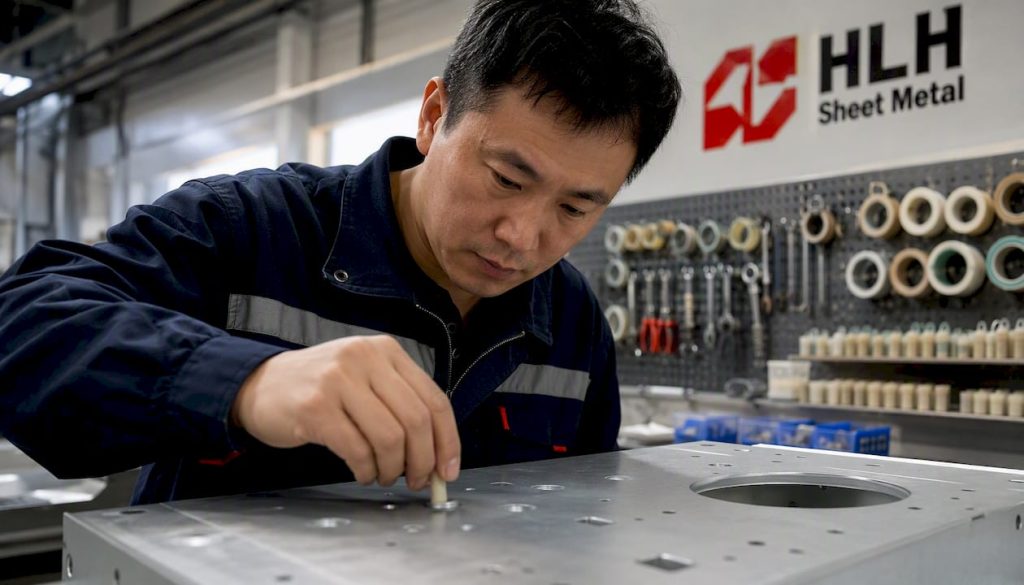
Yes, you can and should mask parts for powder coating, and the material choice comes down to geometry and cure temperature. Threaded holes, grounding points, bearing surfaces, and gasket faces all need protection from overspray, and effective masking removes the need to re-tap threads or chase bolt holes after the fact.
For most jobs, green poly tape rated to 400°F handles flat areas and general masking. Glass-cloth tape is used for hotter cure cycles or thicker builds requiring higher temperature resistance. Blind holes want silicone tapered plugs, through-holes want pull plugs, and studs or tube ends take EPDM caps with appropriate sizing.
Two important rules help avoid masking issues: match the masking material’s temperature rating to your cure temperature with a sufficient safety margin, and remove tape while the part is still warm to avoid adhesive residue and ragged edges.
- Green or blue poly tape, 400°F: general-purpose masking on flat and mildly contoured surfaces.
- Glass-cloth tape suitable for high-bake cycles, thicker powder builds, or repeated oven passes.
- Silicone tapered plugs: blind holes and press-fit bores.
- Silicone pull plugs: through-holes needing protection on both faces.
- EPDM caps fit threaded studs, tube ends, bolts with a snug fit following sizing guidelines.
Pro Tip: If a job involves complex nested geometry, tight tolerances, or a batch size that makes hand-masking a bottleneck, it’s often cheaper to hand the finishing step to a fabrication partner than to eat the labor cost yourself.
Key Takeaways
Effective powder coat masking pairs the right material (tape, plug, or maskant) to part geometry and cure temperature, then removes it during the warm window right after bake.
| Point | Details |
|---|---|
| Match temperature ratings | Choose 400°F poly tape, 500°F glass-cloth, or polyimide based on your actual cure cycle plus margin. |
| Size plugs correctly | Use caps with an inside diameter about 0.030 inches smaller than the part’s outside diameter. |
| Remove tape while warm | Pull masking around 200°F, right after cure, to avoid smearing or flaking edges. |
| Prevent contamination first | Blast and degrease before masking since oily surfaces cause most tape adhesion failures. |
| Outsource complex or high-volume jobs | HLH SHEET METAL integrates masking and finishing into ISO-certified fabrication runs for tight-tolerance parts. |
When Should You Design Around Masking Instead Of Masking?
Masking is labor. Every minute spent taping a hole or seating a plug is a minute that isn’t spent moving parts through the booth, so the smartest shops ask a design question before they ask a materials question: can this feature be eliminated instead of protected?
Larger clearances, sacrificial tabs, and modular mating surfaces that bolt on after coating all reduce the masking burden. The tradeoff is usually cost. Redesigning a bracket to avoid a threaded insert might mean an extra part, an extra fastener, or a slightly bulkier assembly.
Some features can’t be designed away. Grounding points, gasket faces, bearing bores, and anything with a tight fit tolerance still need masking no matter how clever the design. Selecting the right masking approach is a balance of geometry, cycle time, and total cost of application and removal, not a one-size answer.
Quick decision checklist:
- Production volume: is this a one-off prototype or a running production order?
- Tolerance criticality: does the feature need to mate precisely after coating?
- Rework cost: what does it cost if masking fails versus what masking costs upfront?
- Tooling availability: do you already have the right plugs and tape on hand?
Which Masking Materials Work Best For Powder Coating?
There’s no single correct tape or plug for every job. The right call depends on part shape, cure temperature, and how much rework you can tolerate.
High-temperature tapes are your first line of defense on flat and gently curved surfaces. Green polyester tape handles most standard cure cycles at around 400°F, and blue poly tape shares that same rating with slightly different tack and release characteristics depending on the brand. Glass-cloth tape steps up to roughly 500°F, useful for longer bake cycles or double-coat jobs. For anything hotter, polyimide tape resists the backing shrinkage that plagues polyester tapes at extreme temperatures, and 3M’s testing on its high-temperature masking line points to dimensional stability as the deciding factor above 400°F.
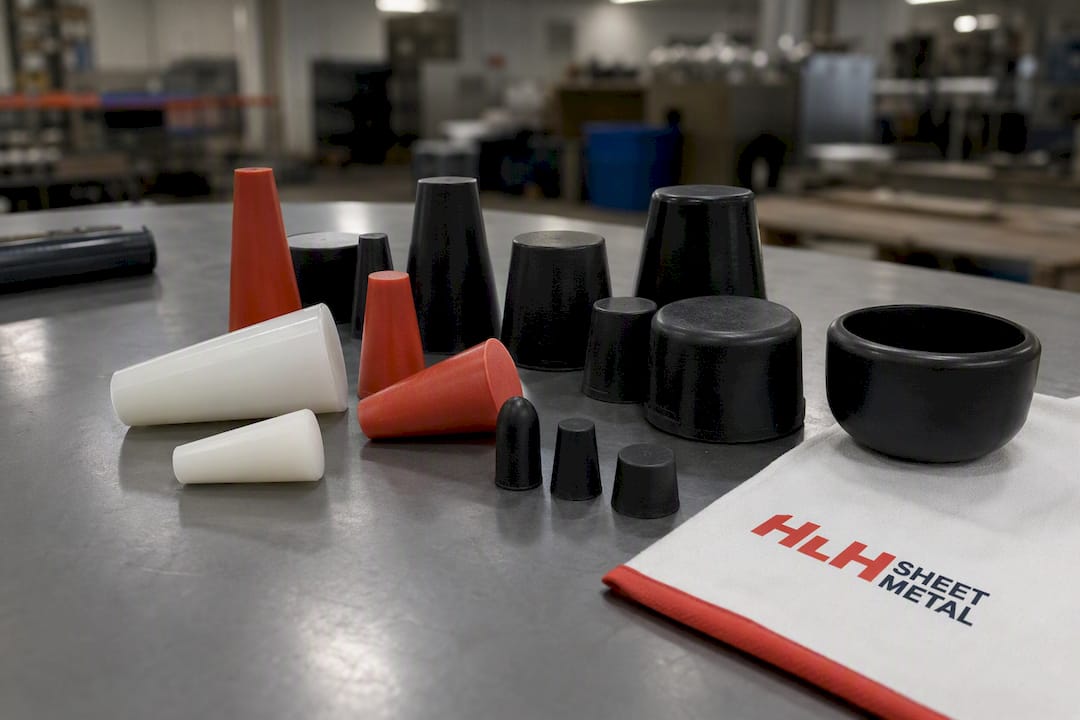
Plugs and caps handle the holes tape can’t reach cleanly. Silicone tapered plugs seat into blind holes and seal to the first thread. Pull plugs work through-holes, sealing both faces at once with a stem you pull tight from one side. For studs and tube ends, EPDM or silicone caps do the job, and the sizing rule that saves you a return trip to the supplier is simple: pick a cap with an inside diameter about 0.030 inches smaller than the part’s outside diameter for a snug press fit.
Die-cut masks and liquid maskants cover the odd geometry that tape and plugs can’t. Peelable and UV-curable masking liquids avoid the wicking that happens when tape edges lift on tight-clearance features, and they’ve proven useful in conformal coating masking on PCBs, a discipline that faces similar clearance problems to powder coating.
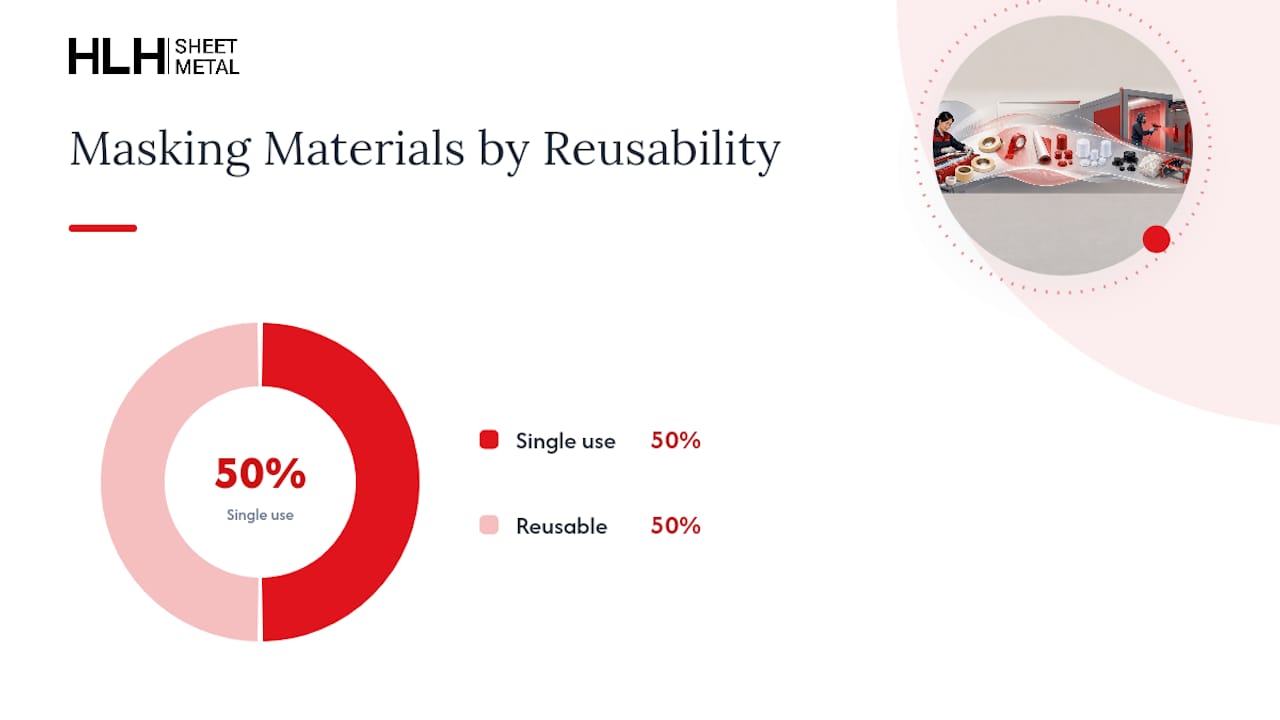
| Material | Best for | Max temp | Reusability |
|---|---|---|---|
| Green/blue poly tape | Flat surfaces, general masking | 400°F | Single use |
| Glass-cloth tape | High-bake cycles, thick builds | ~500°F | Single use |
| Polyimide tape | Extreme cure profiles | 500°F+ | Single use |
| Silicone tapered plugs | Blind holes | High temp tolerant | Reusable |
| Pull plugs | Through-holes | High temp tolerant | Reusable |
| EPDM/silicone caps | Studs, tube ends | High temp tolerant | Reusable |
Pro Tip: If a downstream process is sensitive to silicone contamination, such as certain paint or bonding operations, ask your tape supplier about non-silicone rubber adhesive instead of the standard silicone adhesive. It costs more to source but avoids a contamination headache later.
How Do You Mask Threaded Holes And Common Features?
Threaded holes fail masking jobs more often than any other feature, mostly because the wrong plug type gets used. Blind holes take a tapered plug pushed in until it seats against the first thread. Through-holes need a pull plug that seals both openings, since powder will find its way through an open bore otherwise.
Tube ends and studs follow the same 0.030-inch clearance rule as caps generally: undersize the cap ID slightly relative to the part OD so it grips without you needing tape to hold it in place. For long tube runs, silicone tubing slid over the end works better than individual caps.
Flat surfaces meant for sharp two-tone lines need real technique, not just tape stuck down by hand. Clean the surface, wear gloves so skin oils don’t transfer, then apply tape with a squeegee or roller and burnish the edges firmly.
A typical two-tone workflow runs like this:
- Blast and degrease the part.
- Apply the base coat and partially or fully cure it.
- Mask the areas that keep the base color.
- Apply the second color.
- Cure fully, then pull tape while the part is still warm, around 200°F, for clean edges.
- Inspect for bleed or lift before final QA.
Pro Tip: Pulling tape too early, while powder is still liquid, causes smearing. Pulling too late, after full cool-down, causes flaking along the tape edge. The warm window in between is narrow but forgiving if you time it right.
Why Does Masking Fail And How Do You Fix It
Most masking failures trace back to one of four causes: tape lifting off an oily surface, powder bridging around a cap that sits proud instead of flush, powder wicking under a tape edge that wasn’t burnished down, or trapped contaminants outgassing during cure and leaving voids.
Prevention beats rework every time. Blast and degrease before masking, not after. Wear gloves. Contaminated surfaces cause the majority of tape adhesion failures, so skipping prep to save five minutes usually costs an hour of rework later. Seat plugs firmly enough that oven convection currents don’t shift them mid-cure.
When a masked area fails and powder gets where it shouldn’t, the fix is rarely a quick touch-up. Blasting the affected area back to bare metal and remasking is often faster than trying to patch around a bad seal.
Some jobs need a harder call: retap the threads, replace the hardware, or send the part back through fabrication entirely. And if you’re working with Parylene or other vapor-deposited coatings, standard tape and plugs often aren’t enough. Those processes demand tighter barriers and more specialized masking know-how than typical powder work.
What Does Masking Cost And Where Should You Buy It?
Tape runs by the roll, plugs and caps by the dozen or by the bag, and prices climb fast once you move from standard poly tape into glass-cloth or polyimide. That premium usually pays for itself because higher-quality masking materials cut downstream rework costs, which tend to run far higher than the material savings from buying cheap tape.
Outsourcing makes sense once labor time outweighs material cost, which happens fastest on complex geometry or high-volume runs. A shop taping a hundred identical brackets by hand is burning labor a precision fabrication partner could absorb into an integrated finishing line.
Source supplies from industrial distributors, specialty masking suppliers, or OEM tape brands directly. Before ordering, verify:
- Temperature rating matches your cure profile with margin.
- Adhesive type fits any downstream sensitivity.
- Tape caliper (thickness) suits the edge sharpness you need.
- Die-cut services are available for repeat parts with the same mask pattern.
- Return policy covers reusable plugs that don’t fit as advertised.
Pro Tip: Order a small test batch of any new plug size before committing to a bulk order. A 0.030-inch miscalculation on your part’s OD means the whole batch fits loose or won’t seat.
How Experienced Finishers Think About Masking
The best finishers treat masking as a design problem first and a materials problem second. They standardize mask kits for parts they run repeatedly, train staff on the exact removal window instead of guessing, and keep a small stock of common plug sizes on hand so a missing part never stalls a batch. Rework cost, tracked over time, is what justifies spending more on better tape.
When Should You Outsource Masking And Finishing To HLH Sheet Metal?
Hand-masking makes sense for a one-off prototype or a small batch. It stops making sense once tolerances get tight, mating surfaces are mission-critical, or volume climbs high enough that masking labor becomes the bottleneck in your production line. That’s the point where an integrated fabrication and finishing partner earns its cost back fast.
HLH SHEET METAL builds masking and surface finishing into the same production flow as cutting, bending, and welding, backed by ISO-certified quality checks at every stage. Multiple manufacturing plants mean prototypes and full production runs move through the same pipeline without switching vendors mid-project, and an English-speaking support team keeps specification questions from turning into shipping delays. For gasket faces, grounding points, and other features where a bad mask means a rejected part, that consistency matters more than saving a few cents per plug.
If your next run involves parts where masking failure is expensive to fix after the fact, request a fabrication quote and talk through the part geometry before it hits the shop floor.
Sources
- Masking features before powder coating (Engineering Technology)
- Guide to high temperature masking (PCI Magazine)
- 3M Extreme Masking Tapes for high temperature powder coating (3M)
- A complete guide to masking in powder coating (Universal Powder Coating)
FAQ
Can Powder Coating Be Masked?
Yes. Masking is standard practice for protecting threads, grounding points, gasket faces, and bearing surfaces from overspray during the cure cycle.
What Is The Best Masking Tape For Powder Coating?
Green or blue polyester tape rated to 400°F covers most standard jobs, while glass-cloth tape rated near 500°F suits higher-temperature cure cycles or thicker powder builds.
How Much Does Powder Coating Masking Cost?
Costs vary by material and volume, with poly tape and standard plugs priced lowest and glass-cloth or polyimide tape carrying a premium that often pays for itself in reduced rework.
What Are The Downsides Of Powder Coating?
Powder coating requires careful masking of threaded and mating features since overspray on unprotected areas forces costly rework, and getting the process right often means either developing in-house expertise or working with a fabrication partner that already has it built into their finishing line.
