




Table Of Contents

For most engineering environments, titanium, nickel-chromium-molybdenum alloys, and 316/316L stainless steel top the list of corrosion resistance metals, with aluminum and copper-nickel alloys covering lighter and lower-cost needs. Titanium’s oxide film is so stable that its general corrosion rate in seawater runs around 0.8 nanometers per year, with no measurable pitting in ambient marine water.
None of that matters if you pick the wrong metal for the wrong environment. The rule that governs every material decision here is simple: match the metal’s chemistry and electrochemical behavior to the fluid, temperature, mechanical load, and any dissimilar metals it will touch. Get that wrong and even titanium can fail under the right (wrong) stress combination.
- Marine and seawater systems: titanium, copper-nickel (CuNi), or duplex/superaustenitic stainless steel
- Acids and aggressive chemical processing: nickel-molybdenum and nickel-chromium-molybdenum alloys (the Hastelloy class)
- General industrial and food-grade equipment: 304 or 316/316L stainless steel
- Lightweight structural parts: aluminum, anodized for extra protection
- Budget-conscious, moderate exposure: galvanized steel or painted carbon steel
Statistic to remember: Titanium’s near-zero corrosion rate in seawater is a materials science outlier. Most metals measure corrosion loss in micrometers per year, not nanometers.
Key Takeaways
Matching a metal’s passive film, alloy chemistry, and fabrication requirements to the actual service environment matters more than chasing the single “most resistant” material on paper.
| Point | Details |
|---|---|
| Titanium leads in seawater | Its oxide film gives it a corrosion rate near 0.8 nm/year with no ambient pitting risk. |
| Nickel alloys win on acids | Ni-Mo and Ni-Cr-Mo families outperform stainless steel in strong acid and chloride process streams. |
| Stainless grade choice matters | 316L’s added molybdenum resists chloride pitting far better than standard 304. |
| Coatings can rival alloy upgrades | Anodizing, galvanizing, and electroless nickel extend cheaper metals when specified with the right thickness and porosity limits. |
| HLH supports full-spectrum alloy fabrication | HLH SHEET METAL offers ISO-certified QA, NDT inspection, and rapid prototyping across stainless, titanium, aluminum, and specialty alloys. |
What Are The Most Corrosion-resistant Metals And Alloys?
Every metal on this list resists corrosion for a different reason, and that reason determines where it belongs and where it will let you down.
That extra molybdenum is why 316L shows up in medical implants, marine hardware, and chemical tanks where 304 would pit within months. The tradeoff is cost.
Titanium forms an oxide film so stable it behaves almost like a ceramic. That’s why its seawater corrosion rate is nearly immeasurable and why it dominates in ship components, desalination equipment, and marine heat exchangers. Commercially pure titanium (Grade 2) covers most corrosion-only applications; Ti-6Al-4V adds strength for aerospace and structural parts. The catch is machinability and price. Titanium work-hardens quickly, requires slower cutting speeds, and costs several times more than stainless steel per pound.
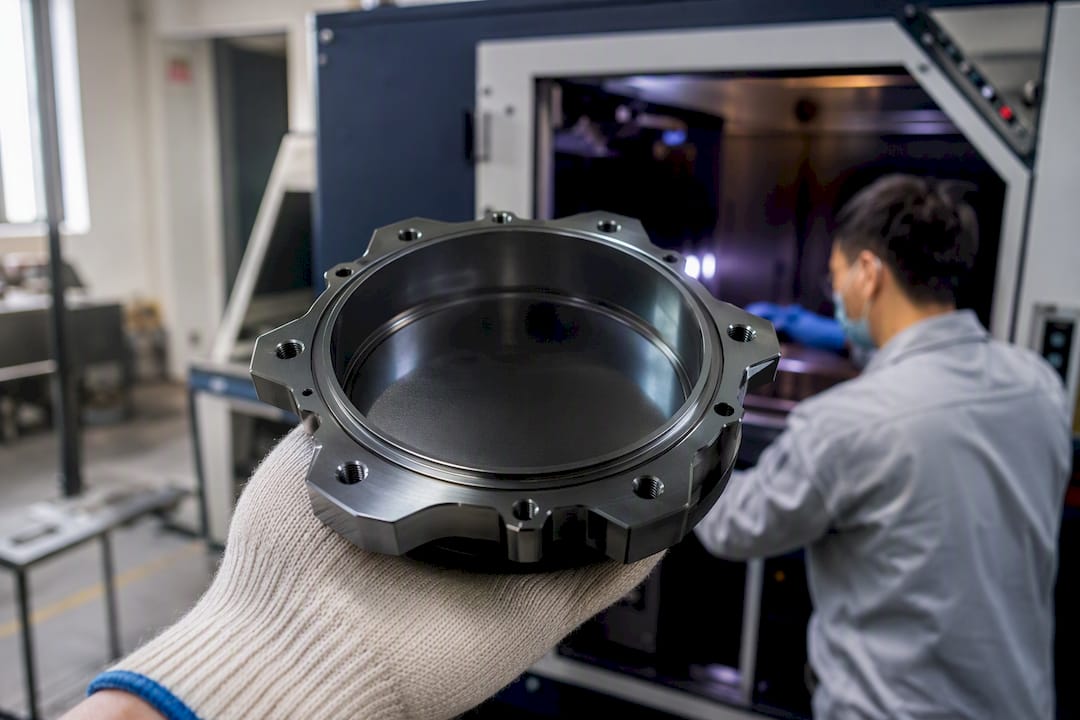
Nickel-based alloys, particularly the Ni-Mo and Ni-Cr-Mo families, outperform stainless steel against hydrochloric acid, sulfuric acid, and chloride-rich process streams. Haynes International’s corrosion data shows these alloys tolerating acid concentrations and temperatures that would destroy 316L in weeks. They’re the standard specification in chemical processing, flue-gas desulfurization, and pharmaceutical reactors. Expect a steep cost premium and design constraints around welding and thermal limits.
Aluminum relies on a passive aluminum oxide layer that forms almost instantly on exposure to air. It’s not as tough as titanium’s film, but anodizing thickens and hardens that layer artificially, which is why anodized aluminum shows up in architectural panels, aerospace skins, and enclosures that need to stay light. Raw aluminum still corrodes in salt spray and alkaline environments without protection.
Copper alloys, especially copper-nickel (CuNi 90/10 and 70/30), resist biofouling and seawater corrosion well enough that navies have specified them for piping and condenser tubes for decades. Brass and bronze cover lower-stress marine hardware and fittings. Pitting tendency is generally low for CuNi, though flow-induced erosion in high-velocity seawater is a real design constraint.
Magnesium is the outlier on this list: light, strong for its weight, and genuinely corrosion-prone without protection. It’s a poor default choice in humid or salt-exposed environments unless paired with coatings or alloying elements designed to slow attack.
Noble metals like gold and platinum resist corrosion almost completely, but nobody builds structural brackets out of them. Their role stays limited to plating contacts and connectors where conductivity and corrosion immunity both matter more than cost.
Pro Tip: Don’t default to the most corrosion-resistant metal available. Specifying titanium for a part that only sees occasional humidity wastes budget that could go toward better tolerances or faster turnaround elsewhere.
How Does Corrosion Resistance Actually Work?
Corrosion resistance mostly comes down to whether a metal can grow a protective film and keep it intact. Understanding the failure modes tells you more about material selection than any spec sheet alone.
- Passive film formation. Aluminum, titanium, and stainless steel all form thin oxide layers that block further oxidation. These films self-heal when scratched, provided oxygen is present, which is why coating microstructure and porosity matter as much as the base metal itself.
- Pitting and crevice corrosion. Chlorides attack weak points in passive films, creating localized pits, especially in stagnant or oxygen-starved crevices under gaskets and fasteners. Design cues that help: avoid tight crevices, specify molybdenum-bearing grades in chloride service, and keep flow moving.
- Galvanic corrosion. When two dissimilar metals touch in the presence of an electrolyte, the less noble one corrodes faster. Consult a galvanic series chart before pairing metals, and insulate contact points where possible.
- Stress-corrosion cracking (SCC). This needs three things at once: a susceptible alloy, tensile stress, and a specific corrosive chemistry. Remove any one factor and cracking stops.
- Environmental modifiers. Flow velocity, biofouling, deposits, and oxygen availability all shift how a metal performs in the field compared to a lab test.
Which Metal Fits Which Environment?
Selecting a corrosion-resistant metal starts with a short checklist, not a materials chart. Define the fluid chemistry, operating temperature, mechanical loads, any contact metals, expected service life, and budget before you even open a spec sheet.
Marine and seawater service rewards titanium for heat exchangers and critical components, copper-nickel for piping runs, and duplex or superaustenitic stainless steel where cost matters more than absolute immunity. Coatings can extend a cheaper alloy’s life here, but they add inspection and maintenance overhead that titanium simply avoids.
Chemical processing and acid exposure usually points toward nickel-molybdenum or nickel-chromium-molybdenum alloys. Iso-corrosion diagrams from alloy manufacturers map safe concentration and temperature combinations for specific acids, and checking those charts during selection beats guessing based on a generic resistance table.
High-temperature and oxidizing service shifts the priority toward oxidation resistance and creep strength rather than aqueous corrosion resistance alone. Standard 304 stainless can handle moderate heat; sustained high-temperature oxidation calls for higher-chromium or nickel-based grades.
Lightweight structural applications favor aluminum alloys in the 5000 and 6000 series, anodized where extra wear or salt exposure is expected. Magnesium belongs here only when weight savings justify the added protective coatings and process controls it demands.
- Define fluid chemistry and concentration ranges before shortlisting alloys
- Check operating temperature against both corrosion and mechanical property limits
- Map out every dissimilar metal contact point
- Set a realistic target service life, not just “as long as possible”
- Weigh material cost against fabrication and maintenance cost, not sticker price alone
Pro Tip: *When two candidate metals both technically survive your environment, choose based on weldability and lead time.
Which Coatings And Finishes Extend Corrosion Life?
A coating can outperform a metal upgrade for a fraction of the cost, but only if it’s specified correctly.
Galvanizing applies a sacrificial zinc layer that corrodes preferentially, protecting the base steel even where the coating is scratched. It’s inexpensive and effective outdoors but adds bulk and isn’t suited to tight-tolerance parts.
Nickel and chrome plating work as noble coatings, meaning they don’t sacrifice themselves. That makes them stronger barriers when intact but riskier once breached, since the base metal underneath corrodes faster than it would bare.
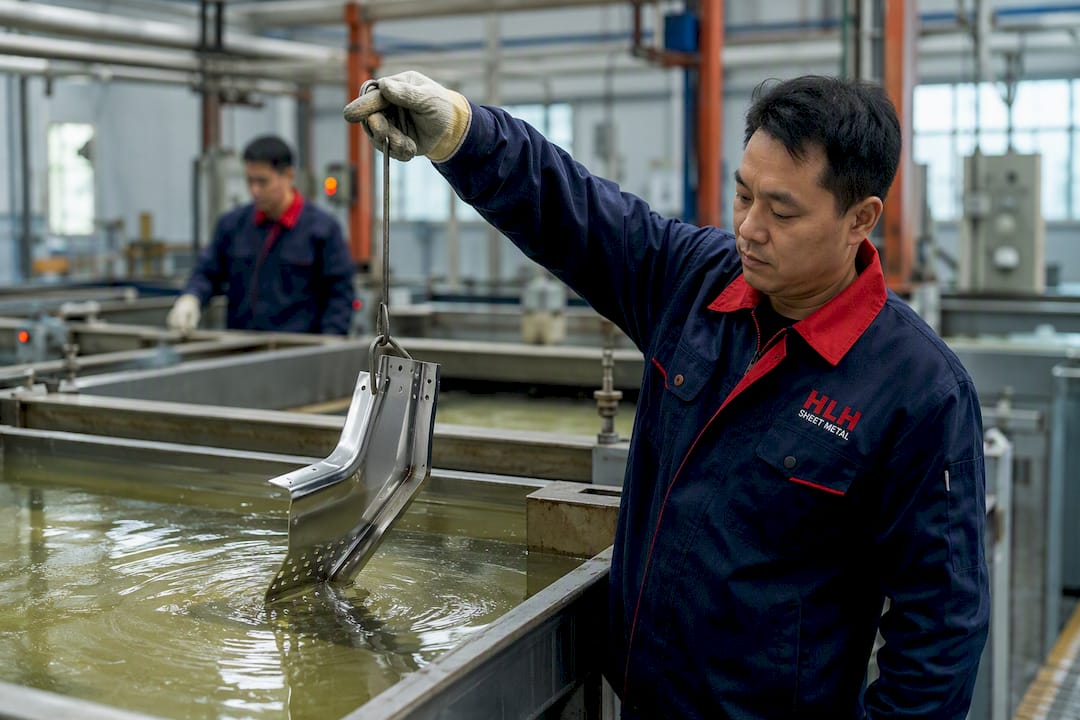
Anodizing thickens aluminum’s natural oxide layer electrochemically. Hardcoat anodizing specs typically range from 0.002 to 0.003 inches, and getting that thickness spec right matters as much as choosing anodizing at all.
Electroless nickel coatings offer uniform thickness even on complex geometries, but performance varies. Nickel-boron and nickel-phosphorus coatings show corrosion potentials that shift with heat treatment, so process control matters more than the coating name on the spec sheet.
- Specify coating thickness and porosity limits, not just coating type
- Require post-weld cleaning and passivation for stainless parts
- Ask about heat-treatment effects before finalizing electroless nickel specs
- Consider epoxy linings or diffusion coatings for buried or submerged steel
What Should You Require From A Fabricator?
Corrosion resistance on paper means nothing if the supplier’s process introduces contamination, sensitization, or porosity. Swagelok’s materials guidance stresses that material selection is a system problem involving chemistry, temperature, and fabrication together, not chemistry alone.
Require material certificates tied to ASTM or ISO specifications, and verify chemical composition against the cert rather than assuming the mill got it right. Welding is where a lot of corrosion resistance quietly disappears: heat-affected zones can locally deplete chromium in stainless steel, a process called sensitization, so qualified weld procedures and post-weld passivation aren’t optional for critical parts.
- Request certified mill reports for every corrosion-critical alloy
- Ask what NDT methods (ultrasonic, dye penetrant, visual) apply to your parts
- Confirm weld procedure qualifications for stainless and nickel alloys
- Specify passivation and cleaning steps in the RFQ itself, not as an afterthought
HLH SHEET METAL runs ISO-certified quality assurance alongside rapid prototyping, which shortens the number of iterations needed to catch a corrosion-related spec issue before a full production run.
How Long Do Corrosion-resistant Metals Actually Last?
Service life depends far more on environment matching than on the metal’s theoretical corrosion resistance rating. Titanium components in seawater heat exchangers routinely run for decades because the oxide film essentially stops degrading once formed. 316L stainless steel in mild atmospheric exposure can also last decades, but the same alloy in a stagnant, high-chloride crevice can pit through in a few years.
Coated carbon steel sits at the other end of the spectrum. Galvanized coatings typically protect steel for 20 to 50 years in atmospheric exposure, depending on coating thickness and local pollution levels, but that protection ends abruptly once the zinc layer depletes. Painted steel needs recoating on a much shorter cycle, often every 5 to 10 years in aggressive environments.
The honest answer for any specific part is that lab and table data are starting points, not guarantees. Real-world factors like deposits, flow patterns, and unplanned bimetallic contact change actual service life, which is why field trials or pilot runs matter for anything mission-critical. A part that’s expected to last 25 years deserves testing under conditions that resemble its actual service, not just a materials chart lookup.
Is The Cheaper Metal Actually Cheaper Long-term?
Upfront cost and life-cycle cost tell very different stories for corrosion-resistant materials, and the gap is largest exactly where engineers are most tempted to cut corners.
Carbon steel with a coating costs the least to buy and fabricate. Over a 20-year service life in a moderately corrosive environment, though, recoating cycles, inspection labor, and eventual part replacement can push total cost well past what a stainless or nickel-alloy part would have cost from the start. Nickel-molybdenum alloys sit at the opposite extreme: expensive to buy and machine, but in aggressive chemical service they can outlast three or four cycles of a cheaper alloy that needs periodic replacement.
Stainless steel and aluminum occupy the middle ground, where the calculation depends heavily on the specific environment. 316L in a well-designed, low-chloride application might need zero maintenance for 30 years. The same grade in a poorly designed crevice-prone joint might need replacement in five.
The practical takeaway: run the life-cycle math before defaulting to the lowest quoted material cost. Factor in expected maintenance intervals, downtime cost if the part fails, and replacement labor, not just the invoice for raw stock. For high-consequence parts, a nickel alloy or titanium component that costs three times more upfront can still be the cheaper choice once you price out 20 years of maintenance on the alternative.
What Engineers Get Wrong About Material Selection
Most corrosion failures I’ve seen discussed in industry forums trace back to two mistakes: over-specifying an exotic alloy where a coating would have solved the problem, and ignoring galvanic pairing until a part is already in service.
Bringing your fabricator in during the design phase, not after drawings are finalized, catches both. A fabricator who works across steel, aluminum, stainless, and specialty alloys daily can flag a galvanic mismatch or an unnecessary titanium spec before it becomes an expensive redesign. That conversation is cheaper than the fix.
— Nash
How HLH Sheet Metal Handles Corrosion-critical Fabrication
Specifying the right alloy only gets you halfway. The rest depends on a fabricator who can actually source and process it correctly. HLH SHEET METAL works across stainless steel, aluminum, titanium, copper, brass, and specialty alloys, with ISO-certified quality assurance and NDT inspection built into the production process rather than added as an afterthought. That combination matters most for corrosion-sensitive parts, where a rushed weld or an uncertified bar stock lot can undo a well-chosen material spec.
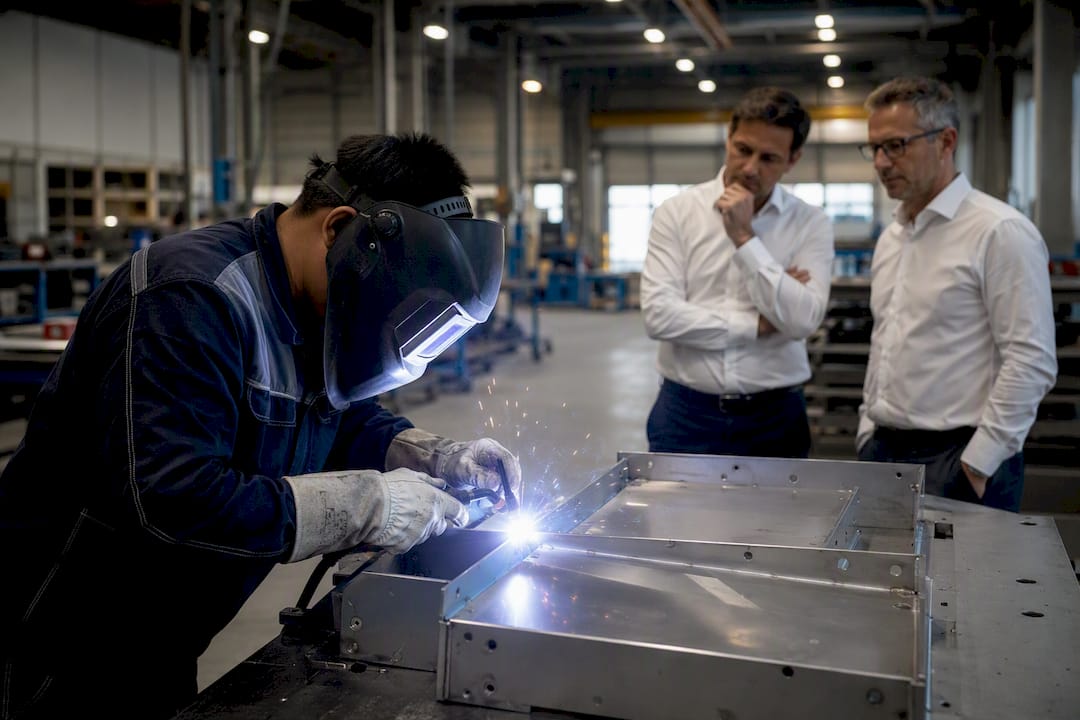
When you submit an RFQ, include the material grade and standard (ASTM or equivalent), the service environment, any required tests, and dimensioned drawings. That level of detail cuts down on revision cycles significantly. For readers ready to move forward, HLH’s precision sheet metal fabrication page covers current capabilities and next steps for requesting a quote.
Sources
For deeper technical detail, consult ScienceDirect’s corrosion resistance topics, Haynes International’s corrosion guide, Swagelok’s material selection guidance, and EngineeringToolbox’s corrosion resistance tables.
- Corrosion resistant material — ScienceDirect
- Selecting the right material for corrosion resistance — Swagelok
FAQ
What Metal Is Most Resistant To Corrosion?
Titanium is generally considered the most corrosion-resistant structural metal, with a seawater corrosion rate near 0.8 nanometers per year and no pitting under ambient marine conditions.
Which Metal Is Highly Resistant To Corrosion In Acidic Environments?
Nickel-molybdenum and nickel-chromium-molybdenum alloys, the Hastelloy class, resist strong acids far better than standard stainless steel and are the standard choice in chemical processing.
What Is Corrosion Resistance In Metals?
Corrosion resistance describes a metal’s ability to form and maintain a protective barrier, usually a thin oxide film, that slows or stops chemical attack from its surrounding environment.
Which Metal Is Not Prone To Corrosion?
No metal is entirely immune, but gold and platinum come closest structurally, while titanium and high-nickel alloys come closest among practical engineering materials.
Does HLH Sheet Metal Work With Corrosion-resistant Alloys?
Yes. HLH SHEET METAL fabricates parts in stainless steel, titanium, aluminum, copper, brass, and specialty alloys, backed by ISO-certified quality assurance and NDT inspection.
