




Table Of Contents
Specify GB/T 9791-2025, GB/T 47038-2026, and JB/T 10581-2006 on any drawing calling out chromate conversion coating from a Chinese supplier, and pair them with numeric acceptance criteria, not just a process name. “Chromate conversion coating” alone tells a supplier nothing about pass or fail.
Your purchase order or drawing note should specify:
- Hexavalent chromium presence and, where regulations require it, a quantified limit
- Total chromium mass per unit area, measured gravimetrically
- A named coating weight class matched to the base metal and end use
- Adhesion criteria with a defined wipe or tape-pull outcome
- Neutral salt spray hours with explicit defect-counting rules
Naming the standard gets you in the door. Naming the test method and the numeric threshold is what actually gets you a conforming part.
Key Takeaways
Compliant chromate conversion finishing in China depends on naming GB/T 9791-2025, GB/T 47038-2026, or JB/T 10581-2006 with numeric acceptance criteria, not the process name alone.
| Point | Details |
|---|---|
| Name the right standard | Use GB/T 47038-2026 for aerospace aluminum, JB/T 10581-2006 for general aluminum, GB/T 9791-2025 for test methods. |
| Specify testable thresholds | Require hexavalent chromium presence, gravimetric coating mass, adhesion pass criteria, and salt spray hours in writing. |
| Control the process, not the recipe | Ask for bath analysis frequency, drying temperature limits below 70 to 85°C, and batch traceability records. |
| Handle with a 24-hour buffer | Defer adhesion and corrosion testing until the film has fully hardened to avoid misleading results. |
| Choose a certified, documented supplier | HLH SHEET METAL provides ISO-certified QA reporting, test coupons, and batch traceability for compliant finishing. |
Chromate Conversion Coating: China Finishing Specifications And Standards
Three documents govern almost every chromate finishing conversation in a Chinese supply chain, and each covers different ground.
GB/T 9791-2025 is the test methods standard. It covers presence tests for the chromate film itself, hexavalent chromium detection, determination of total chromium per unit area, gravimetric coating mass, adhesion wiping, and corrosion resistance testing. It replaces the older GB/T 9791-2003 and adds new reagent options and spectrophotometer calibration requirements for hexavalent chromium determination.
GB/T 47038-2026 targets aerospace aluminum and aluminum alloys specifically. It splits conversion coatings into Type I (containing hexavalent chromium) and Type II (hexavalent chromium free), and it defines water-break test criteria and batch or lot definitions that affect how you sample. If your part flies, this standard belongs on the drawing, not GB/T 9791 alone.
JB/T 10581-2006 is older and narrower: it governs rinsed and non-rinsed chromate coatings on aluminum alloys, including film-forming method, classification, and sampling. It’s still widely cited for general industrial aluminum work where aerospace-grade documentation isn’t required.
For export or cross-reference, these map roughly to ISO 3613 and to MIL-DTL-5541 conductive chromate films, so a supplier compliant with the Chinese standards can usually demonstrate equivalent performance against those international references.
What Measurable Criteria Belong On The Drawing?
A drawing note that says “chromate conversion coating per applicable standard” invites a dispute the first time a part fails salt spray. Put numbers on it instead.
- Hexavalent chromium presence. Require a qualitative presence test as a minimum gate. If the end market restricts hexavalent chromium (common for consumer electronics and some export markets), require quantification rather than a simple pass/fail presence check.
- Total chromium per unit area. This is a gravimetric or spectrophotometric measurement, and it’s the number that actually separates a marginal film from a robust one. Reference the coating class your part needs, since thin, conductive chromate films for EMI shielding or grounding applications run in the 0.25 to 1.0 micron range typical of specifications like MIL-DTL-5541, while heavier corrosion-focused classes carry more mass per area.
- Adhesion. Specify a wipe or tape-pull method with a clear pass criterion (no removal of film, no exposure of base metal).
- Neutral salt spray hours. State the hours, the specimen size, and how defects get counted (pit count per unit area, percent of surface affected, or first-appearance-of-red-rust timing).
- Sampling. Define specimens per batch and an acceptance sampling plan, not “representative samples,” which means nothing on a supplier audit.
Pro Tip: Ask for the coating mass range in writing, not just a class name. Two suppliers can both claim “Class 2” coverage and land at opposite ends of the weight range, and only one of them will survive your salt spray spec.
How Do Process Parameters Affect Coating Performance?
Bath chemistry, temperature, pH, and immersion time control the final film’s color, thickness, and corrosion performance, and small drifts in any of them show up as inconsistent results downstream. Because most bath formulations are proprietary, you can’t audit the chemistry directly. What you can and should audit is the outcome: specify performance targets like salt spray hours and electrical contact resistance rather than trying to dictate the bath recipe itself.
A few process realities worth building into your supplier requirements:
- Final rinsing should be short and controlled. A water-break test (does water sheet evenly or bead up) is a fast, useful proxy for surface cleanliness before conversion.
- Avoid hot-water rinses that can crack or degrade a freshly formed film before it has hardened.
- Heat curing speeds up dehydration and hardening, but temperatures above roughly 70 to 85°C can over-dehydrate the film and actually reduce corrosion protection. Ask suppliers what drying temperature their line runs and whether it’s monitored, not just set.
- Batch traceability matters. Every panel should trace back to a bath lot number and a processing date, especially for aerospace work where GB/T 47038-2026 defines batch and lot terms that affect sampling decisions.
Request bath analysis frequency, replenishment schedules, and filtration records from your supplier’s quality documentation. Suppliers who monitor and log active bath species on a set schedule produce measurably more consistent film weight than those who top off chemistry reactively.
What QA Test Sequence Confirms Compliance?
A logical test order saves time and avoids destroying a specimen you still need for a later test.
- Non-destructive presence check first, to confirm a chromate film exists at all before spending time on anything else.
- Hexavalent chromium test, if your contract or export market requires quantification rather than a simple presence flag.
- Gravimetric coating mass, weighing before and after film removal to calculate mass per unit area against your specified class.
- Adhesion wipe test, checked after mass determination since it can mark the surface.
- Neutral salt spray, run last and for the full specified duration, since it’s the slowest test and the one most likely to catch a marginal film.
Define your batch before testing starts: how many panels represent a lot, what dimensions each specimen carries, and how many panels get pulled per batch for destructive testing versus retained as reference samples.
Every supplier report should name the exact standard clause tested (not just “GB/T 9791”), the equipment used, its calibration date, and the numeric pass/fail threshold applied. GB/T 9791-2025 lists specific reagent options and calibration requirements for hexavalent chromium determination, so a report that doesn’t specify which reagent and calibration method it used is incomplete. Require retained test coupons for any lot supplying flight hardware or medical parts, in case a failure surfaces after the parts have shipped.
Common Failure Modes And How To Prevent Them
Mottling and iridescent blotching usually trace back to alloy inconsistency or inadequate surface prep before the part ever touches the chromate bath, not the bath chemistry itself.
- Handle freshly coated parts gently for the first 24 hours. Chromate films harden through dehydration over that window, and premature handling or testing during that period can produce misleading adhesion or corrosion results.
- Pack and transport parts to avoid abrasion contact during that same window, before the film has fully cured.
- Ask suppliers for safety data sheets, worker PPE protocols, and emissions/disposal documentation for hexavalent chromium processes. This is baseline supplier due diligence, not an optional extra.
- Build rework rules and contractual acceptance criteria into the purchase order up front, so a failed salt spray test has a predefined remedy instead of a negotiation.
Pro Tip: If a supplier can’t produce a rework policy before you place the order, assume you’ll be writing one for them after the first failed batch.
What Standards-first Sourcing Actually Gets You
The conventional advice on chromate finishing is “find a supplier who does chromate conversion.” That advice is close to useless. Two suppliers can both claim the process and produce parts a full class apart in coating mass, because the standards leave enough interpretation room that a vague purchase order lets weak QA slide through unnoticed.
What the standards actually reward is specificity. GB/T 9791-2025 gives you test methods you can name on a report. GB/T 47038-2026 forces a Type I/Type II decision that most buyers never make explicitly, which means most buyers never find out which one they got. JB/T 10581-2006 draws a rinsed/non-rinsed line that changes both appearance and performance, and it rarely appears on a drawing at all.
Prioritize the numbers, not the paperwork. A supplier who hands you a certificate but can’t produce a gravimetric coating mass reading, or a salt spray report with defect-counting rules spelled out, hasn’t actually demonstrated compliance. They’ve demonstrated they own the right stamp. Certified production capability, documented QA protocols, and traceable batch records are what separate a real conforming part from a lucky one.
Sourcing Compliant Chromate Finishing From HLH Sheet Metal
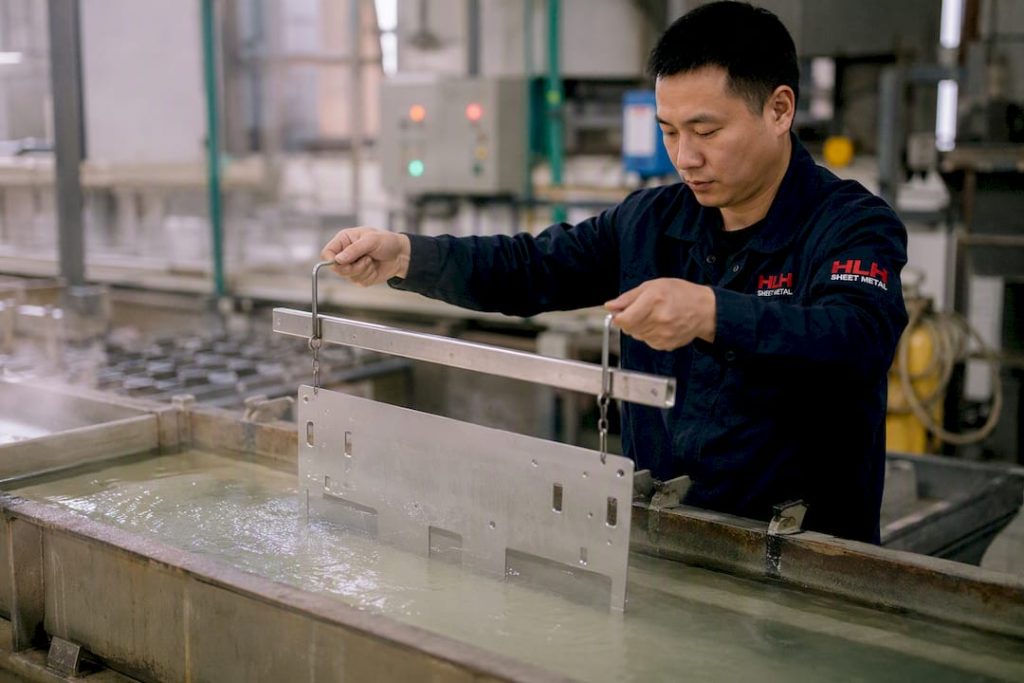
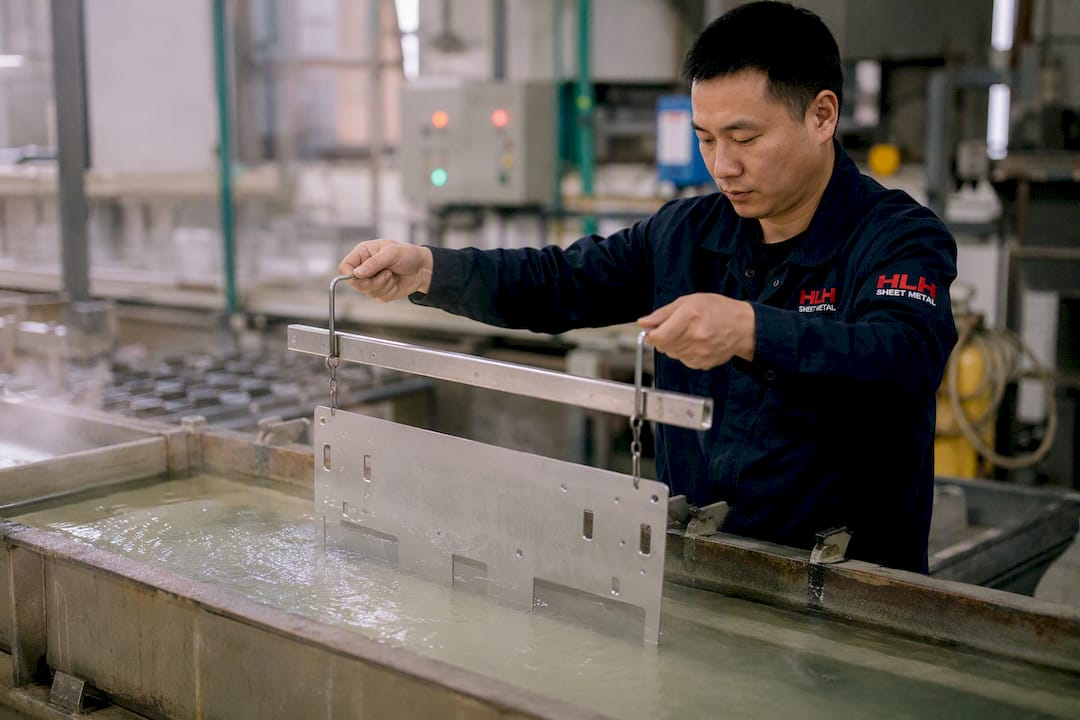
HLH SHEET METAL runs ISO-certified production plants in China with QA processes built around the exact test sequence this article describes, including gravimetric coating mass verification, adhesion testing, and neutral salt spray reporting tied to batch lot numbers. Engineers working on aerospace sheet metal fabrication or aluminum parts requiring rinsed versus non-rinsed chromate treatment get process documentation, test coupons, and English-language support without the back-and-forth delay that usually comes with cross-border technical sourcing. If you need a supplier who can produce a compliant test report against GB/T 9791-2025 or GB/T 47038-2026 rather than just a certificate, request a capability quote and ask for a test coupon before committing to a production run.

Standards To Procure For Contractual Reference
Buy the official documents rather than relying on summaries when writing supplier contracts.
- GB/T 9791-2025 for test methods, reagent lists, and calibration clauses.
- GB/T 47038-2026 for aerospace aluminum Type I/Type II classification and water-break criteria.
- JB/T 10581-2006 for rinsed and non-rinsed aluminum chromate requirements.
Procure the official PDFs directly for contractual language. A summarized version won’t hold up in a supplier dispute the way a cited clause number will.
Sources
- GB/T 9791-2025: Metallic and other inorganic coatings – Chromate conversion coatings on zinc, cadmium, aluminium-zinc alloys and zinc-aluminium alloys – Test methods
- Chromate coating overview (ScienceDirect topic page)
FAQ
What Is The Difference Between Type I And Type II Chromate Coatings?
Type I coatings contain hexavalent chromium; Type II coatings do not, per the classification in GB/T 47038-2026 for aerospace aluminum applications.
Which Standard Applies To Non-aerospace Aluminum Parts In China?
JB/T 10581-2006 covers rinsed and non-rinsed chromate conversion coatings on general industrial aluminum alloys, distinct from the aerospace-specific GB/T 47038-2026.
How Long Should I Wait Before Testing A Freshly Coated Part?
Wait roughly 24 hours before adhesion or corrosion testing, since chromate films continue hardening through dehydration during that window.
What Salt Spray Duration Should I Specify?
There’s no single universal number. It depends on your coating class and end-use environment, so specify hours and defect-counting rules explicitly rather than citing a generic figure.
Can HLH Sheet Metal Supply Parts Finished To These Standards?
Yes. HLH SHEET METAL’s ISO-certified plants provide documented test coupons, gravimetric coating mass verification, and batch-traceable QA reporting aligned with GB/T 9791-2025 and GB/T 47038-2026.

