




Table Of Contents
For most importers buying manufactured goods from China, FOB is the safer default, because it hands you control over freight and insurance instead of leaving those decisions to the seller. The catch that trips up even experienced buyers: risk transfers to you at the same point under both terms, the moment goods cross the ship’s rail at the origin port. Before you sign anything, confirm the insurance clause on any CIF quote or push the supplier toward FOB pricing with a broken-out freight line.
TL;DR:
- FOB generally allows importers to control freight routing and insurance coverage, reducing dependence on seller arrangements and improving dispute resolution.
- Both FOB and CIF transfer risk to buyers when goods are loaded at the port, but CIF often involves bundled freight markup, insufficient insurance, and hidden destination fees.
- CIF’s minimum insurance can leave cargo inadequately protected, excluding common damages, and its freight costs are typically inflated with seller margins that buyers cannot see upfront.
- Building thorough pre-shipment inspections and clear contractual clauses on insurance, demurrage, and freight breakout minimize risks regardless of Incoterm choice.
- FOB remains the preferred default unless shipment size, cargo value, or logistics capability strongly favor the seller handling freight and insurance under CIF.
What Are Incoterms, And Why Does Incoterms® 2020 Matter For China Shipments?
Incoterms are standardized trade terms published by the International Chamber of Commerce that define who pays for what and who bears risk at each stage of a shipment. Always write “Incoterms® 2020” in your purchase contract, not just “FOB” or “CIF,” because older versions define the same terms differently and vague wording invites disputes when something goes wrong.
FOB and CIF are sea-and-inland-waterway terms only. If your cargo moves by air, rail, or a mix of modes, or if you’re shipping in a shared container rather than chartering space, the correct terms are usually FCA or CIP, not FOB or CIF.
The most misunderstood part of Incoterms is the split between who pays and who bears risk:
- Cost obligation determines who writes the check for freight, insurance, and handling.
- Risk transfer determines who eats the loss if the cargo is damaged, lost, or delayed.
These are separate questions. Paying for freight does not mean you’re covered for transit risk, and that gap is exactly where CIF buyers get burned.
CIF Vs FOB: Who Controls What?
Here’s the part that catches new importers off guard: under both FOB and CIF, risk passes to you the buyer when the goods are loaded on board the vessel at the Chinese port. The seller’s insurance obligation, or lack of one, has nothing to do with when you become responsible for the cargo.
What actually changes between the two terms is who arranges and pays for freight and insurance from that point forward:
- Export clearance and inland trucking to port: seller’s responsibility under both terms.
- Loading onto the vessel: seller’s responsibility under both terms; risk transfers here.
- Ocean freight: seller pays and books under CIF; buyer pays and books under FOB.
- Cargo insurance: seller arranges minimum cover under CIF; buyer arranges (or skips, at their own peril) under FOB.
- Destination handling and import clearance: buyer’s responsibility under both terms.
The freight and insurance line is where FOB earns its reputation for transparency. Under FOB, you nominate your own freight forwarder, which means you control routing, carrier selection, and who you call when a shipment gets stuck. Under CIF, the seller nominates the forwarder, and that forwarder answers to the seller first, not you. If a container gets rolled to a later sailing or a claim needs filing, you’re negotiating through an intermediary who has no direct relationship with you.
That control gap shows up hardest in disputes. An importer using FOB with their own forwarder can escalate directly. An importer on CIF terms often has to go back through the seller to reach the shipping line, which slows resolution when time is the thing you don’t have.
Hidden CIF Traps Importers Must Watch For
CIF looks simpler on paper. One number, one invoice, seller handles the logistics. In practice, three traps routinely turn that simplicity into a more expensive, more exposed shipment.
- Minimum insurance, not real coverage. CIF’s insurance obligation defaults to Institute Cargo Clauses C, the narrowest tier available, covering named catastrophic events like sinking or fire but excluding a long list of common damage causes, including many types of handling damage and water ingress. Buyers who assume “insured” means “covered” find out otherwise at claim time.
- Freight markup baked into the price. Sellers who arrange freight under CIF routinely add a margin on top of the actual carrier rate, and because it’s bundled into one landed price, you have no way to see it unless you ask.
- Destination charges that arrive after the invoice. Terminal handling, nominated agent fees, and documentation charges at the destination port are rarely included in a CIF quote, and buyers who budgeted off the CIF number alone get surprised at pickup.
- Container yard and stuffing window risk. Cargo waiting in a crowded yard or sharing an LCL container with other shippers’ goods faces more handling touches, and each touch is a chance for damage that Clause C won’t pay for.
Pro Tip: Ask every CIF supplier for the Institute Cargo Clause letter on their policy before you order. If they can’t produce it, assume Clause C and price your risk accordingly.
A single missed rollover or port congestion event can trigger real detention and demurrage charges that stack fast, and proactive freight visibility catches those risks before they become invoices.
Landed-cost Checklist And A Worked Example
A quote that only compares CIF price to FOB price plus estimated freight is comparing the wrong numbers. Build your landed cost from these line items every time:
- Freight (actual carrier rate, not a bundled estimate)
- Insurance premium and coverage tier
- Import duties and applicable taxes
- Destination terminal handling and nominated agent fees
- Customs brokerage
- Last-mile trucking to your facility
- Demurrage and detention exposure if delays occur
When you request a CIF quote, ask the supplier to break out freight and insurance as separate line items rather than folding them into one number. Suppliers resist this less often than buyers expect, and the ones who refuse outright are usually the ones marking up freight the most.
Here’s how the gap shows up in practice. Say a supplier quotes CIF at a price that includes a freight component marked up over the actual carrier rate. That markup alone can materially widen the gap versus a buyer-managed FOB shipment, before you even add the destination handling fees and nominated agent charges that typically show up after the CIF invoice is paid. Run both scenarios side by side using the checklist above, and the “simpler” CIF number often turns out to be the more expensive one once every charge lands.
When Should You Choose FOB, And When Is CIF Acceptable?
Match the Incoterm to your shipment profile, not to whichever term the supplier quotes first. Work through these criteria in order:
- Shipment size and value. High-value or full-container loads justify the extra effort of arranging your own freight and insurance under FOB. Small, low-value trial orders may not.
- Your logistics capability. If you or your forwarder already have Chinese port relationships, FOB is straightforward. If this is your first China shipment, CIF removes one operational headache, at the cost of control.
- Insurance needs. If your cargo is fragile, high-value, or sensitive to handling damage, insist on all-risks coverage under Institute Cargo Clauses A, which usually means arranging it yourself rather than trusting a seller’s Clause C minimum.
- Container vs. bulk. Full-container shipments give you cleaner control boundaries; shared or LCL cargo carries more handling risk regardless of the Incoterm.
- Willingness to select your own forwarder. If you want a direct line to the shipping line for tracking and claims, FOB is the only way to guarantee it.
CIF is reasonable for small, low-value trial orders where the seller agrees to Clause A coverage and provides a transparent freight breakout. For containerized or multimodal cargo, consider FCA with your own forwarder, or CIP if you want the seller to arrange freight but insist on all-risks insurance. Treat DDP cautiously. It shifts import clearance and duties onto the seller, but Chinese sellers vary widely in how well they handle destination customs, and a badly executed DDP shipment can sit in customs limbo longer than a straightforward FOB one.
Pro Tip: If a supplier pushes hard for CIF and resists any freight breakout, that resistance is itself useful information about their margin structure.
Manufacturing Controls That Reduce Freight Risk
Freight risk starts before the container ever reaches the port. Weak quality control at the factory turns ordinary transit vibration into cracked welds, scratched finishes, or misaligned brackets that show up as claims later, and pre-shipment quality checks tailored to the cargo type materially cut claim rates.

HLH SHEET METAL builds pre-shipment inspection into staged payment schedules, so a portion of payment releases only after inspection confirms parts match specification, which limits your financial exposure before goods ever leave the factory floor. ISO-certified process controls catch dimensional and finish defects during production, not after they’re buried inside a sealed container.
Whatever Incoterm you land on, write these clauses into your purchase contract:
- Insurance level required (specify Institute Cargo Clauses A, not “insured” left undefined)
- A policy that’s assignable to you as buyer, so you can file claims directly
- Mandatory freight breakout on any CIF or CIP quote
- Your right to nominate the freight forwarder, or at minimum approve the seller’s choice
- Clear demurrage and detention liability language specifying who pays for delays outside your control
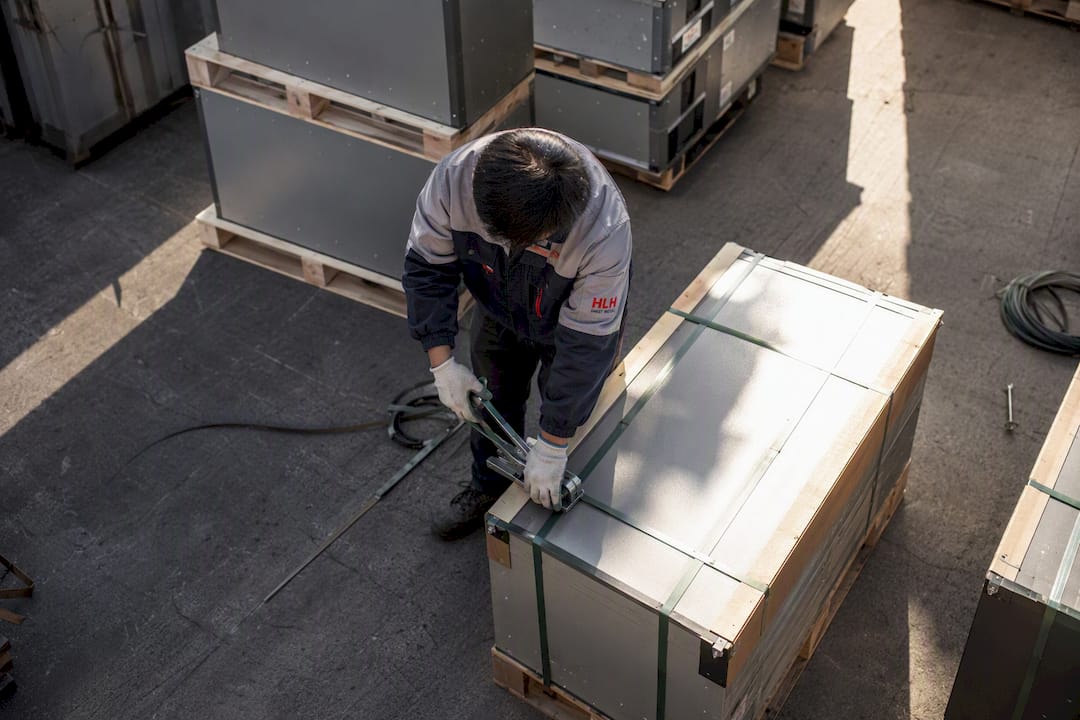
For fabricated metal parts specifically, stowage matters more than shippers assume. Sharp edges and formed panels need dunnage and blocking that prevents shifting, corrosion-sensitive finishes need moisture barrier wrap, and every crate needs clear orientation labeling so port handlers don’t stack it wrong. Careful packaging choices head off a meaningful share of transit damage claims before they ever reach an insurer.
Why FOB Should Be Your Default, Not Your Fallback
The recommendation here isn’t complicated: FOB should be your starting position for anything beyond a small trial order, because it puts freight selection, insurance level, and forwarder choice in your hands instead of a seller’s. CIF isn’t wrong, it’s just a trade of control for convenience that only makes sense when the shipment is small enough that the downside of underinsurance or a freight markup won’t hurt much.
What experienced importers get right that new ones miss: they treat Incoterm choice as one part of a bigger risk picture that includes inspection timing, payment staging, and insurance clause wording. Picking FOB and then skipping pre-shipment inspection solves half a problem. Align all three, and the Incoterm decision stops being the single point of failure it often becomes for first-time buyers.
— Nash
How HLH Sheet Metal Supports Safer China Sourcing
Freight risk management starts on the factory floor, not at the port, and that’s where HLH SHEET METAL’s process controls do the heavy lifting. ISO-certified quality assurance and staged, inspection-gated payments catch dimensional and finish problems before parts are ever crated, which means fewer damage disputes for you to untangle after the container sails, regardless of which Incoterm you choose. HLH SHEET METAL’s team also brings direct experience coordinating export clearance and pre-shipment inspection on fabricated metal parts, which is exactly the kind of upstream control that reduces claims under FOB or CIF alike.
If you’re sourcing custom metal parts, server rack enclosures, or precision components from China and want a supplier that builds these risk controls into the production process from day one, request a quote on HLH’s fabrication services and ask directly about inspection scheduling and freight documentation for your next order.
Authoritative Resources To Verify Incoterms And Cargo Insurance
For contract wording, check the ICC’s own Incoterms® 2020 guidance directly rather than a secondhand summary. For freight and delay risk, Portcast’s breakdown of demurrage and rollover exposure and Inbound Logistics on end-to-end risk mapping are both worth a read before your next shipment.
Sources
- Freight risk management: dealing with delays, rollovers and demurrage losses | Portcast
- Logistics risk management: what it is, types and implementation | Inbound Logistics
- Incoterms® 2020: CIP or CIF? | ICC Academy
- Risk management in logistics | DP World
FAQ
What Are The Disadvantages Of Using CIF Incoterms?
CIF’s main disadvantages are the minimum insurance requirement (Institute Cargo Clauses C, which excludes many common damage causes), a freight cost you can’t independently verify since the seller books it, and destination charges that often aren’t disclosed in the original quote.
How Does Risk Transfer Under CIF Incoterms?
Risk transfers to the buyer when goods are loaded on board the vessel at the origin port, the exact same point as under FOB, even though the seller pays for freight and insurance after that point under CIF.
What Is The Difference Between FOB, CIF, And DDP?
FOB means the buyer arranges and pays for freight and insurance from the origin port onward; CIF means the seller arranges and pays for freight plus minimum insurance to the destination port; DDP means the seller handles everything including destination import clearance and duties, which shifts the most responsibility onto the seller but requires trusting their customs handling.
Is FOB Or EXW Better For Importing From China?
FOB is generally better than EXW for most importers, because under EXW the seller does not even handle export clearance or loading, leaving the buyer to manage far more of the origin-side logistics with far less local leverage than a Chinese factory has in its own country.

