




Table Of Contents
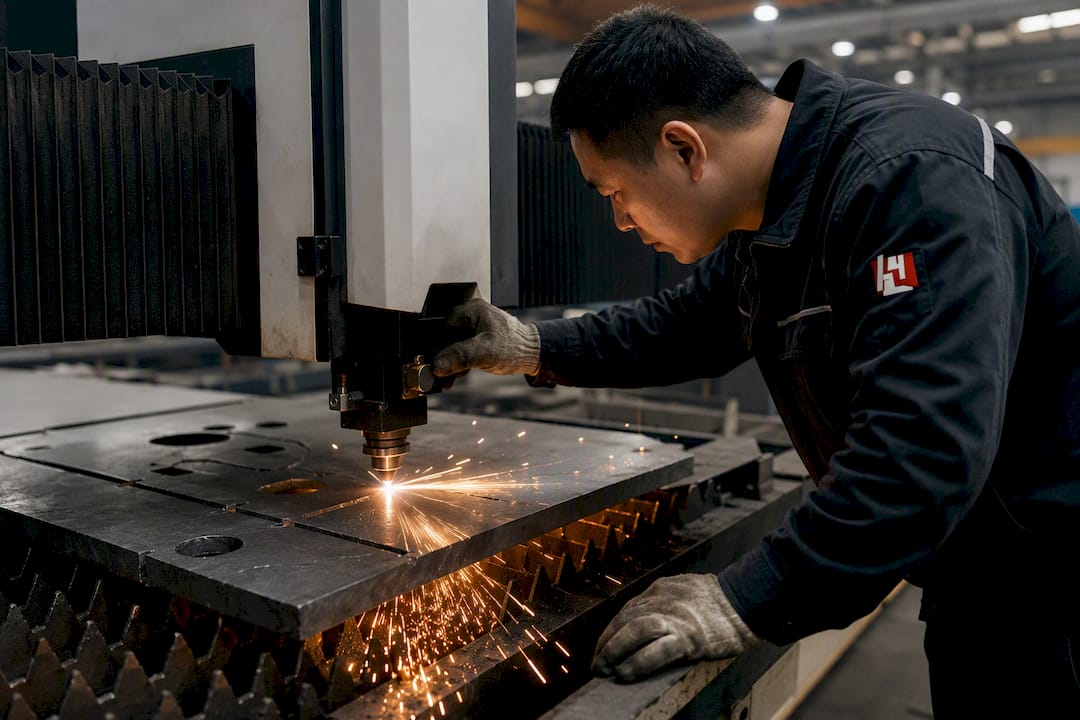
Thickness is the single biggest lever on your laser cutting quote: cutting speed drops, pierce time climbs, assist gas use jumps, and secondary finishing gets added, all at once, once you cross about 6mm. Expect non-linear price jumps rather than a straight line. The fix is procedural, not magical: request itemized quotes at prototype, pilot, and production quantities so you can see exactly which line items move and by how much.
TL;DR:
- Cutting speed drops sharply beyond 6 to 8mm in ferrous metals, causing non-linear increases in machine time and cost, especially on complex parts with many features.
- Material costs increase with thickness, with steel surcharges and higher gas and consumable expenses, while machine time becomes the dominant cost driver at thicker gauges.
- Expect significantly longer pierce times and reduced nesting efficiency for thick materials, leading to higher per-part costs at each volume tier.
- Use itemized, multi-tier quotes to compare true costs accurately, as lump-sum estimates often hide hidden charges or process limitations.
- Thicker materials, especially above 12mm, often require higher-power lasers or alternative cutting methods like waterjet or plasma for cost-effective production.
Laser Cutting Cost In China: How Thickness Changes Cutting Mechanics And Machine Time
A 1mm mild steel sheet cuts fast enough that machine time barely registers in the final price. Push that same alloy to 12mm and the story flips completely. Cutting speed does not decline in a straight line as thickness increases. It falls off a cliff past certain thresholds because the laser has to spend more time melting and blowing out material per linear inch, and the assist gas needs more pressure and volume to clear the kerf.
A rough real-world pattern: cutting speed for 1mm mild steel might run 8 to 10 times faster than the same laser cutting 10mm mild steel, not the roughly proportional 10x you’d expect from thickness alone, because thicker cuts also demand slower entry speeds to avoid dross and heat distortion. That compounding effect is why shops price thick-material jobs so much higher per linear foot than thin ones.
Pierce time follows the same pattern. Piercing a thin sheet takes a fraction of a second. Piercing 12mm plate can take several seconds per hole, and a part with 40 holes racks up real machine time before a single cut line even starts. Pierce count and cut length are cost drivers as fundamental as thickness itself, and complex parts with many small features punish thick-material budgets harder than simple geometric shapes.
Machine class matters too. Fiber lasers have mostly displaced CO2 machines for metal cutting because they handle reflective and thick material better, but even among fiber lasers, power output sets a hard ceiling. A 1kW fiber laser struggles past 6mm on mild steel; a 6kW or higher machine cuts 20mm or more with reasonable speed.
Copper and brass need special handling. Their reflectivity can damage certain laser optics at high power, so shops either run specialized fiber lasers with back-reflection protection or slow the process down considerably, and both routes push cost per part upward regardless of thickness class.
- Feed rate drops sharply above roughly 6 to 8mm on most ferrous metals.
- Pierce time per hole can multiply five-fold or more between thin and thick bands.
- Reflective metals often require dedicated equipment, not just more power.
Cost Components That Change With Thickness
Every laser cutting quote breaks into the same handful of buckets, but thickness does not weigh on them evenly. Understanding which line items are elastic and which stay fixed lets you spot a padded quote instantly.
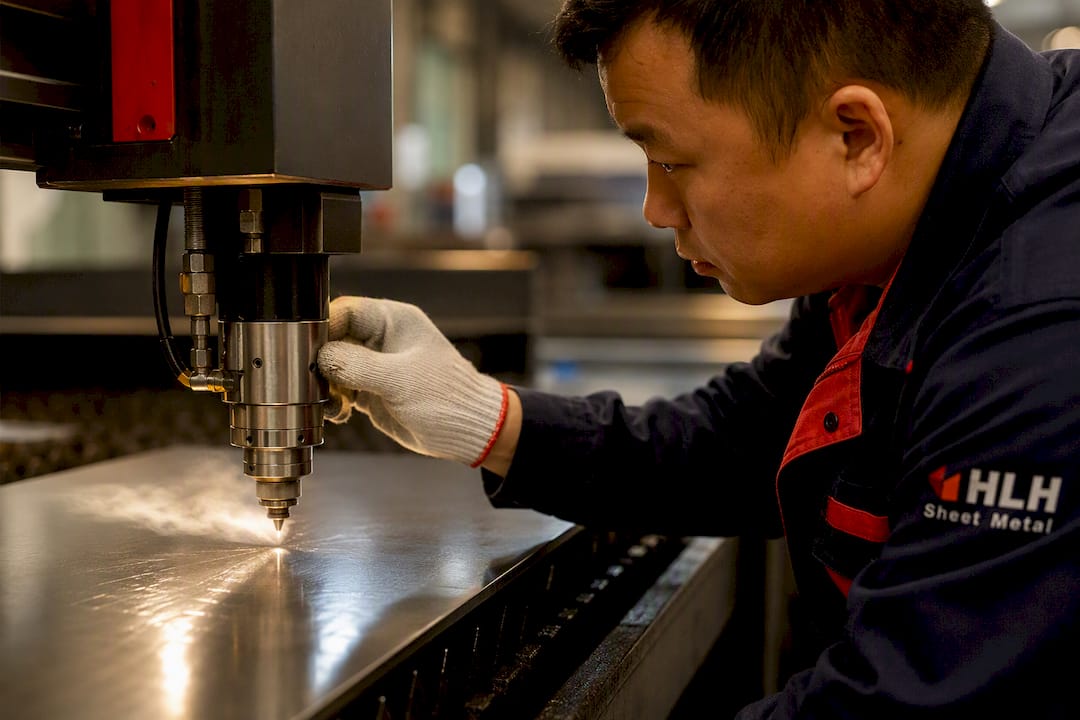
Material cost moves almost linearly with thickness, since you’re buying more mass per square foot, but material typically accounts for more than half of a laser-cut part’s total price, so even small thickness increases show up fast in the bottom line. Steel mills also apply thickness-based price extras, meaning some gauge and width combinations carry surcharges beyond the base per-pound rate, as published steel price schedules show.
Machine time cost is where thickness does the most damage, since shops typically bill per minute of laser-on time, and slower feed rates at higher thickness directly inflate that number regardless of part complexity.
Assist gas shifts in two ways: consumption per linear inch rises with thickness, and the gas type itself may change. Oxygen assist is cheaper and works well on carbon steel up to moderate thickness, but many shops switch to nitrogen for cleaner edges on stainless or aluminum, and nitrogen costs considerably more per cubic foot, especially at the higher pressures thick cuts demand.
Consumables wear faster on thick-material jobs. Nozzles and lenses degrade quicker under the higher gas pressures and longer dwell times thick cuts require, so shops factor more frequent replacement into their per-minute rate for thick-material work.
Secondary operations often become mandatory rather than optional once you cross into thicker gauges. Dross removal, edge grinding, and deburring add per-part labor that thin sheet metal rarely needs.
- Material: scales with weight, plus possible thickness surcharges from the mill.
- Machine time: scales with slower speed, the fastest-growing cost bucket.
- Assist gas: scales with volume and sometimes gas type.
- Consumables: scales with wear rate under higher pressure.
- Finishing: often shifts from optional to mandatory above 6 to 8mm.
Pro Tip: Ask your supplier to quote gas type separately from the per-minute machine rate. A shop quoting nitrogen for a job that could run on oxygen assist is padding the bill without telling you.
Thickness Bands And Practical Pricing Rules Of Thumb
Rather than treating thickness as a continuous variable, think in bands. Each one maps to a different machine class, speed profile, and cost behavior, and knowing which band your part sits in tells you what kind of quote to expect before a supplier even runs the numbers.
- Under 1mm. Extremely fast cutting, minimal pierce time, and material cost dominates the quote almost entirely. A 1kW or even sub-1kW fiber laser handles this easily.
- 1 to 5mm. The sweet spot for most job shops. Mild steel, stainless, and aluminum all cut efficiently here on 1 to 3kW machines, and pierce time stays reasonable even on complex parts.
- 5 to 12mm. Speed drops noticeably, pierce time per hole climbs, and you generally need a 3 to 6kW machine to keep cycle times reasonable on mild steel. Stainless steel and aluminum in this range often need more power than steel at the same thickness because they conduct heat differently.
- 12 to 20mm. Only higher-power fiber lasers, typically 6kW and above, handle this range without excessive cycle times. Expect cut-speed multipliers of several times slower than the 1 to 5mm band, and pierce time per hole can stretch into multiple seconds.
- Above 20mm. Very few shops run laser here economically. This is where comparing laser against waterjet, plasma, or stamping on total cost, especially for high-volume runs, becomes worth the extra sourcing step.
Waterjet handles thick plate without heat distortion but runs slower and costs more per part at low volume. Plasma cuts thick steel fast but sacrifices edge precision. Stamping wins decisively at high volume once tooling cost gets amortized, but the crossover point depends entirely on part quantity and geometry complexity.
How Quantity And Nesting Spread Costs Across Thicknesses
Setup and programming are fixed costs. A supplier spends the same time importing your CAD file, setting cutting parameters, and staging the machine whether you order 10 parts or 10,000. Spread across a small prototype run, that fixed cost dominates the per-part price. Spread across a production run, it nearly disappears.
Thicker sheets compound this because fewer parts fit per sheet, which lowers nesting efficiency and raises the effective material cost per part. A 4×8 sheet of 1mm steel might nest 200 small brackets efficiently with minimal scrap; the same sheet in 12mm plate might fit only 40 of the same part, with thicker offcuts wasted as scrap that still cost full price per pound.
Realistic tier savings tend to follow a pattern: moving from prototype quantities (1 to 10 units) to pilot runs (50 to 200 units) often cuts per-part price by a meaningful margin as setup amortizes, and moving from pilot to full production (1,000-plus units) captures further savings from better nesting and volume material pricing. The exact percentage varies by part complexity and thickness, which is exactly why you should ask for numbers rather than assume them.
- Request quotes at three volume tiers: prototype, pilot, and production.
- Ask suppliers directly for their material-utilization or nesting-efficiency percentage.
- Compare how much the per-part price drops between tiers, not just the tier prices in isolation.
- Remember thicker sheets amplify scrap cost more than thin ones, since scrap is billed by weight.
Getting Comparable, Itemized Quotes From Chinese Laser Shops
A lump-sum quote tells you nothing about where your money goes or whether one shop is genuinely cheaper than another. Comparable quotes require a spec sheet detailed enough that every supplier is pricing the identical job.
- Lock the material spec. State the exact alloy or grade (304 stainless, 6061 aluminum, A36 steel), the thickness in millimeters, not a rounded gauge number, and attach a CAD file or dimensioned PDF.
- Define tolerances and features. List hole sizes, tolerance bands, and any edge-quality requirements up front, since tighter tolerances on thick material often force slower cutting or secondary passes.
- Ask for the full line-item breakdown. Material cost, cut time in minutes, pierce count, assist gas type and its cost, setup fee, finishing charges, packing, and shipping should each appear as separate numbers.
- Request proof, not promises. Ask for sample cuts, photos, or short videos of the same material and thickness the supplier has actually run, along with lead time at each quantity tier.
Treat vague material descriptions, single lump-sum totals with no breakdown, and quotes missing pierce count or cut-length figures as red flags. A detailed cost breakdown covering material, machine time, pierce count, setup, and finishing is the industry-standard format, and any supplier unwilling to provide it is either hiding margin or hasn’t actually costed the job properly.
Pro Tip: Send the identical spec sheet to three suppliers and compare their pierce-count estimates against each other. A wide spread usually means at least one shop is misreading your drawing, not offering you a better process.
HLH Sheet Metal’s Approach To Thickness-sensitive Laser Cutting
HLH SHEET METAL runs multiple manufacturing plants across China, which matters directly for thickness-sensitive parts: different plants carry different machine power classes, so a job needing a 6kW-plus fiber laser for 15mm plate gets routed to equipment that can actually hit target speeds instead of struggling on underpowered gear.
Consider a 6mm stainless-steel enclosure panel with tight tolerance holes for hardware mounting. The typical workflow looks like this:
- Quote issued at prototype (1 to 5 units), pilot (50 to 100 units), and production (1,000-plus units) tiers, with material, cut time, pierce count, and finishing broken out separately.
- Sample panel cut and approved before the pilot run proceeds, catching tolerance or edge-quality issues while the fix is cheap.
- In-process inspection checkpoints tied to ISO-certified quality assurance protocols, verifying dimensions against the CAD spec at defined intervals.
- Deburring and edge finishing applied as a standard step for stainless at this thickness, since raw laser-cut edges on 6mm stock rarely meet enclosure-grade quality without it.
English-fluent support staff manage the back-and-forth on spec clarification and sample approval, which removes the translation friction that often stalls thickness-sensitive jobs where tolerance details matter.
Shipping And Lead Time Considerations For China Production
Lead time on Chinese laser cutting jobs breaks into two phases that buyers frequently conflate: production time and freight time. Production time for prototype quantities often runs a matter of days once the quote is approved and material is in stock. Production runs at volume take longer, partly because thicker material orders may require the supplier to source specific gauge stock rather than pull from standard inventory.
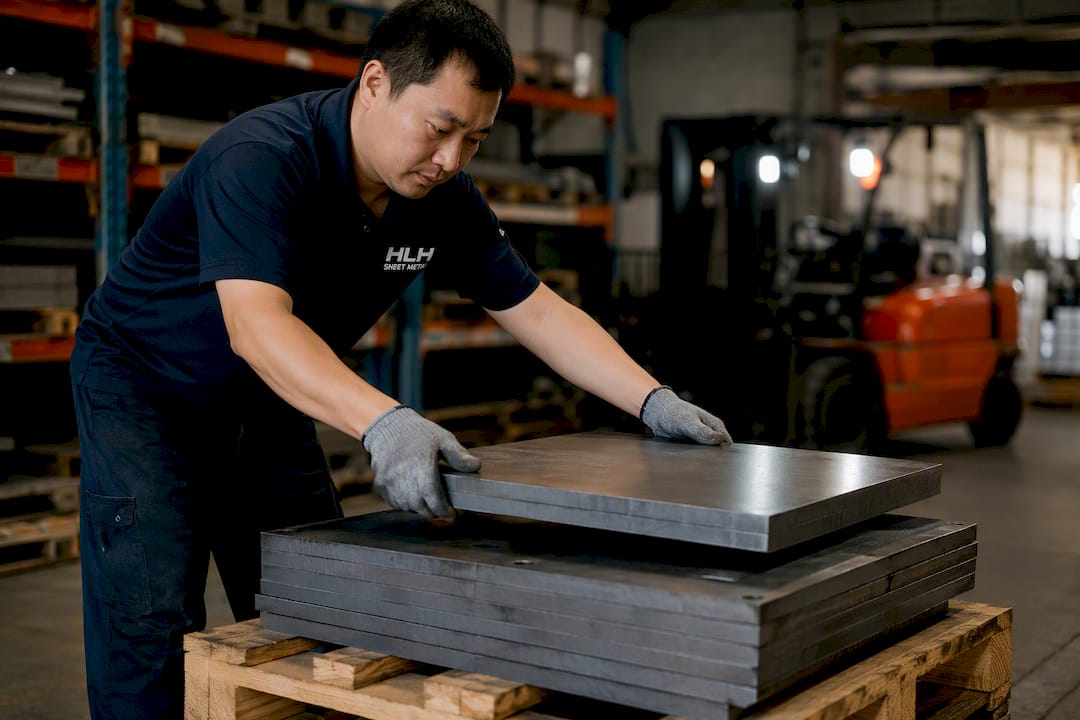
Freight is where most surprises happen. Air freight moves parts in days but costs considerably more per kilogram, which matters more on thick, heavy parts than thin ones since you’re paying by weight. Sea freight costs far less but adds weeks to your timeline, and customs clearance on the receiving end adds further variability depending on your country’s import procedures.
Thicker parts compound the freight cost question directly: a pallet of 12mm steel brackets weighs dramatically more than the same pallet of 1mm brackets, so air freight on heavy-gauge production runs can erase much of the savings you gained from a competitive per-part quote. Factor freight weight into your total landed cost comparison, not just the ex-works quote.
Ask suppliers for a realistic combined estimate covering production plus transit, not just production time in isolation, since a quote that only states “10 days” without specifying whether that includes shipping is incomplete. Comparing total landed cost against domestic or nearshore options is worth doing whenever timeline pressure is high, since the labor savings from China sourcing can be offset by freight cost on very heavy, thick-material orders.
Pricing Models: Per Minute, Per Meter, And Per Pierce
Chinese laser shops typically quote using one of three underlying models, and knowing which one a supplier defaults to tells you where their pricing is most sensitive to thickness.
Per-minute machine time is the most common approach for complex or custom parts. The shop calculates estimated cutting time based on your CAD file, factoring in the actual feed rate for your material and thickness, then multiplies by their per-minute machine rate. This model captures thickness impact most accurately, since slower speeds on thick material translate directly into a higher time estimate.
Per-meter cut length pricing works well for simpler parts with predictable, mostly straight cuts. A rate per linear meter is set for a given material and thickness combination, and total cut length from the CAD file determines the price. This model can undercharge on parts with many short cuts and overcharge on parts with a few long ones, since it doesn’t account for pierce count separately.
Per-pierce plus per-meter is a hybrid that many shops use for parts with numerous holes or complex internal features. A flat charge per pierce point gets added to the linear cut-length charge, which more fairly captures the cost of feature-dense parts, especially at higher thickness where each pierce takes meaningfully longer.
None of these models is inherently better. The right question is whether the model matches your part geometry. A part with 60 small holes and short cut paths will price very differently under per-meter versus per-pierce-plus-per-meter, and asking your supplier which model they use, then checking it against your part’s actual geometry, is how you catch a mismatched quote before you commit.
Comparing Laser Cutting Costs Across Materials And Thickness
Material choice changes the cost curve at every thickness band, not just the baseline price. Mild steel is generally the cheapest material to cut at any given thickness because it responds well to oxygen-assist cutting, which is both fast and inexpensive compared to nitrogen.
Stainless steel costs more than mild steel at equivalent thickness for two reasons: it typically requires nitrogen assist gas for a clean, oxide-free edge, and it conducts heat differently, which can slow cutting speed even before thickness becomes a factor. The gap between mild steel and stainless cost widens as thickness increases, since nitrogen consumption scales with thickness too.
Aluminum sits in an unusual position. It’s lighter than steel, which helps material cost, but it’s also more reflective and a better heat conductor, both of which can slow cutting speed relative to steel at the same thickness on lower-power machines. On adequately powered fiber lasers this gap narrows considerably.
Copper and brass are consistently the most expensive metals to laser cut at any thickness, driven by their high reflectivity, which demands either specialized equipment or slower, more conservative cutting parameters regardless of gauge.
As a rough pattern across a mid-thickness band like 5mm: mild steel tends to be the cheapest baseline, stainless typically costs noticeably more due to gas choice, aluminum lands close to stainless depending on machine power, and copper or brass command the highest premium of the group. These relative gaps hold roughly steady as thickness increases, though the absolute dollar difference between materials grows wider at greater thickness because every cost driver scales up together.
Why Reflectivity And Hardness Matter As Much As Thickness
Thickness gets the most attention in cost discussions, but two other material properties shape price just as directly: reflectivity and hardness.
Reflectivity determines how much laser energy actually gets absorbed into the material versus bounced back toward the optics. Copper, brass, and to a lesser extent aluminum reflect a meaningful portion of laser energy, which is why cutting them efficiently either requires higher power to compensate or specialized fiber laser configurations built to tolerate back-reflection without damaging the cutting head. At low power, highly reflective metals can be effectively uncuttable regardless of thickness.
Hardness and alloy composition affect cutting speed independent of thickness too. Hardened tool steels or high-carbon alloys can cut slower than mild steel at identical thickness because the material resists the melt-and-blow mechanism the laser relies on. Some hardened alloys also risk edge cracking or heat-affected zone issues that force slower, more conservative cutting parameters.
Coatings and surface treatments add another layer. Galvanized steel, for instance, releases zinc fumes during cutting that require additional ventilation handling, and the coating itself can affect edge quality in ways bare steel doesn’t. Pre-coated or painted material sometimes needs the coating stripped near the cut line first, which adds a labor step most people don’t budget for.
The practical takeaway: when comparing quotes across materials, ask specifically whether reflectivity or hardness has changed the supplier’s assumed machine, gas, or speed setting, since these properties can shift cost as much as an extra few millimeters of thickness would.
Batch Size And Volume Discounts On Laser Cutting Price
Volume affects laser cutting price through three separate mechanisms, and understanding which one is doing the work in a given discount helps you judge whether it’s genuine or just marketing.
Setup amortization is the most straightforward. Programming, machine staging, and initial calibration cost the same regardless of order size, so spreading that fixed cost across more units mechanically lowers per-part price as volume rises. This effect is strongest moving from single-digit prototype quantities into low hundreds.
Material purchasing power kicks in at higher volume too. Suppliers buying full sheets or coil stock in bulk for a large order typically get better per-pound material pricing than they would sourcing smaller offcuts for a one-off job, and some of that savings gets passed through.
Nesting efficiency improves with volume independent of the other two factors. A single prototype part might waste substantial sheet area as unusable scrap. A production run of the same part, nested across many sheets, wastes proportionally less because the supplier can optimize sheet layout across the whole batch rather than around one lonely part.
All three effects compound, which is why the jump from prototype to production pricing often looks dramatic on paper. But the effects interact with thickness: thicker material amplifies the nesting-efficiency gain from volume, since scrap on thick plate is expensive scrap, while the setup-amortization gain is largely thickness-independent since it’s driven by part count, not material.
Cost-saving Strategies For Thicker-material Laser Cutting
Cutting thick material expensively is often a design and sourcing problem, not just a physics problem. Several tactics reliably lower cost without compromising the part.
Reconsider whether you need the thickness at all. Designers sometimes specify thickness for perceived strength when a thinner gauge with added ribbing or a folded flange would meet the same structural requirement at meaningfully lower material and machine-time cost.
Batch thick-material parts together. Since setup cost and machine-time cost both compound at thick gauges, consolidating multiple thick-material designs into a single production run spreads the highest-cost line items across more parts.
Choose oxygen assist over nitrogen where edge quality allows. Nitrogen produces a cleaner, oxide-free edge but costs considerably more, especially at the higher flow rates thick cuts require. If your application doesn’t need a weld-ready edge, oxygen assist can meaningfully cut gas expense.
Ask about waterjet or plasma crossover for very thick, simple-geometry parts. Above roughly 20mm, alternative processes sometimes beat laser on total cost, particularly for parts without tight tolerance requirements.
Push for tighter nesting on thick sheet orders. Since scrap on thick plate carries real weight and real dollars, ask your supplier directly what utilization percentage they’re achieving and whether combining your order with a compatible part improves it.
Negotiate secondary operations separately. Deburring and edge grinding are sometimes bundled into a padded flat fee; asking for that line item broken out can reveal room to negotiate or skip steps your application doesn’t strictly need.
Typical Laser Cutting Cost Ranges By Thickness And Material In China
Exact pricing varies by supplier, quantity, and part complexity, but the relative cost pattern across thickness and material bands holds consistently across the industry.
| Thickness band | Mild steel | Stainless steel | Aluminum |
|---|---|---|---|
| Under 1mm | Lowest cost tier | Moderate premium over steel | Comparable to stainless |
| 1 to 5mm | Baseline “sweet spot” pricing | Noticeable premium, mainly gas cost | Similar to stainless, power-dependent |
| 5 to 12mm | Meaningful step up from thin band | Wider gap from mild steel | Gap narrows on higher-power machines |
| 12 to 20mm | Requires higher-power machine, premium pricing | Highest relative premium of the group | Comparable to stainless at this band |
| Above 20mm | Laser cost climbs steeply; compare alternatives | Often impractical on laser alone | Rarely specified at this thickness |
Copper and brass sit outside this table entirely, commanding the highest premium at every thickness band due to reflectivity, and buyers working with these metals should expect quotes well above the equivalent stainless price regardless of gauge. The safest way to pin down actual numbers for your specific part is still the itemized, multi-tier quote request described earlier, since published ranges can’t account for your exact geometry, tolerance, and finish requirements.
What Procurement Teams Consistently Get Wrong About Thickness Pricing
Most procurement guidance treats thickness as a simple multiplier: double the gauge, expect roughly double the price. That framing undersells how non-linear the real cost curve is, and it leaves buyers unprepared when a quote for 12mm plate comes back three or four times higher than the 6mm version rather than double.
The bigger gap I see in conventional advice is the assumption that a lower per-part number automatically means a better deal. A supplier quoting an aggressive flat rate on thick material is often cutting corners somewhere that only shows up later: skipped deburring, oxygen assist where nitrogen was actually needed, or a slower machine class that blows your delivery timeline. The itemized quote isn’t bureaucratic overhead. It’s the only tool that reveals whether a cheap number is genuinely efficient or just missing a line item you’ll pay for eventually.
If you take one thing from this guide, make it the three-tier quote request. It costs you nothing, takes a supplier an afternoon to prepare, and tells you more about real thickness-driven cost behavior than any general pricing chart ever will.
— Nash
Get An Itemized Laser Cutting Quote From HLH Sheet Metal
HLH SHEET METAL runs multiple ISO-certified plants across China with English-fluent support staff, built specifically to handle the quote-comparison problem this article covers: itemized pricing across material, machine time, gas, and finishing, at prototype, pilot, and production tiers, so you’re never left guessing which line item moved when thickness changed.
If you have a thickness-sensitive part, whether it’s 1mm sheet or 20mm plate, the practical next step is straightforward: send your CAD file and material spec and request an itemized quote for sheet metal fabrication in China, including a sample cut before committing to a production run. That single step catches tolerance and edge-quality issues while they’re still cheap to fix.
Sources
For deeper reference on the standards and pricing mechanics covered here: ISO manufacturing and quality standards outline the QA framework suppliers should evidence. US Steel’s price book shows how thickness extras get applied to raw material pricing. For IT and process-control considerations when sharing CAD files with overseas suppliers, see this manufacturing compliance guide.
- US Steel price book — thickness/width extras (2026)
- Laser cutting services in China: when to skip the mold
FAQ
How Thick Of Material Can A Laser Cut?
Fiber lasers commonly cut mild steel up to roughly 20mm and stainless steel or aluminum somewhat less, with the practical ceiling set by the machine’s power output rather than the laser technology itself.
How Thick Of Steel Can A 1000w Laser Cut?
A 1kW fiber laser typically handles mild steel up to around 6mm efficiently, with cutting speed dropping sharply if pushed beyond that, which is why thicker jobs get routed to higher-power machines.
How Thick Can A 3000w Laser Cut?
A 3kW fiber laser generally cuts mild steel in the 10 to 12mm range at reasonable speed, and somewhat less for stainless steel or aluminum due to their different heat and reflectivity behavior.
What Thickness Can A 20kw Laser Cut?
High-power fiber lasers in the 20kW class can cut mild steel plate beyond 20mm, though at that thickness range buyers should compare total cost against waterjet or plasma cutting, since laser isn’t always the most economical choice at extreme thickness.
Does HLH Sheet Metal Quote Thickness-sensitive Parts At Multiple Volume Tiers?
Yes, HLH SHEET METAL provides itemized quotes broken out by material, machine time, and finishing across prototype, pilot, and production quantities, which lets buyers see exactly how thickness and volume interact on their specific part.

