




Table Of Contents
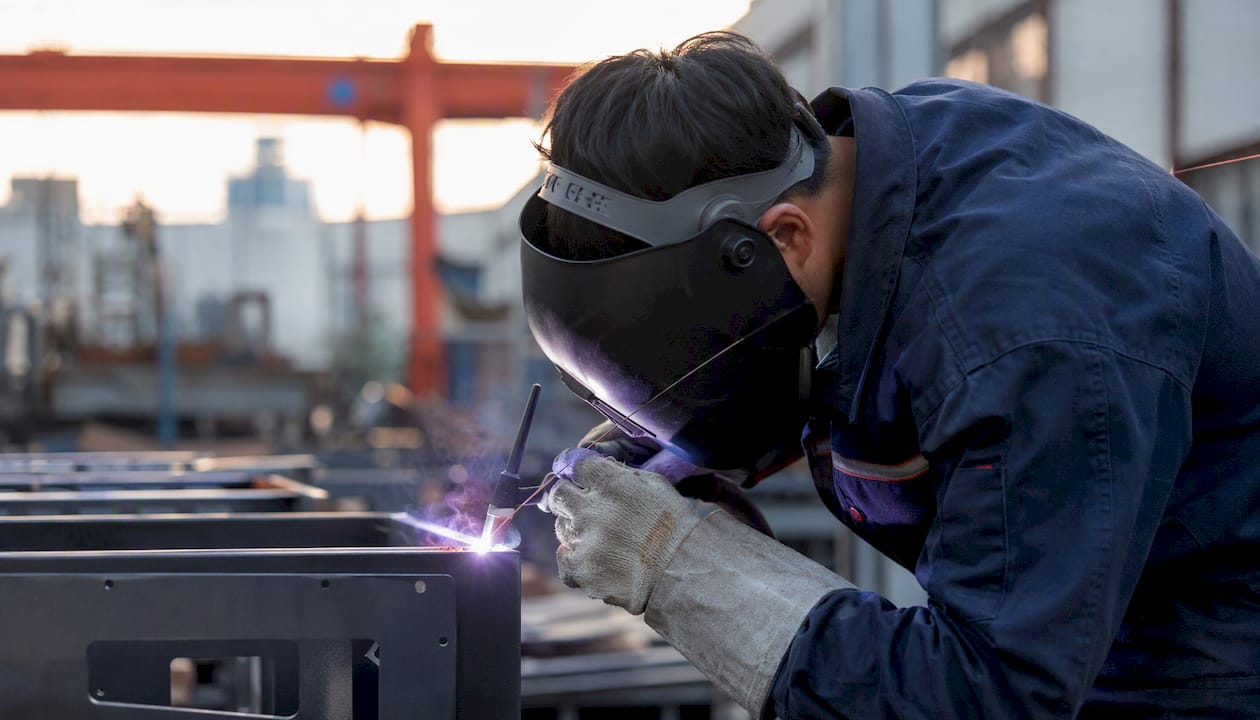
Custom sheet metal enclosures come from three practical channels: local contract fabricators, regional or global contract manufacturers, and Chinese factories working direct or through an agent. For most product teams outside a tight regulatory box, China is the default choice once quantities climb past a handful of units. The reason is simple: cost per part drops, factory capacity scales without a queue, and clustered supply chains handle cutting, welding, and finishing under one roof.
That doesn’t mean skipping quality controls. A supplier should carry ISO 9001 at minimum, and AS9100 or IATF 16949 certification if you’re in aerospace or automotive. HLH SHEET METAL runs ISO-certified plants built around exactly this kind of buyer. The catch with any overseas order: protect your IP with a signed agreement, set inspection checkpoints before parts ship, and confirm communication happens in your language before you commit a dollar.
Key Takeaways
Sourcing custom sheet metal enclosures from a vetted Chinese fabricator with ISO certification and documented QA checkpoints delivers the best balance of cost, capacity, and quality control.
| Point | Details |
|---|---|
| Choose your channel by project stage | Match local shops to prototypes and Chinese factories or agents to production volume. |
| Cost hinges on material and finish | Steel costs less than stainless, and powder coating or anodizing adds processing time. |
| Vet before you scale | Request ISO 9001 (or sector-specific certifications), samples, and documented inspection reports first. |
| Manage China-specific risk directly | Use NDAs, staged inspections, and third-party QC to protect IP and catch defects early. |
| HLH SHEET METAL fits regulated and industrial buyers | ISO-certified, multi-plant capacity with bilingual support for prototype-to-production orders. |
Useful Sources And Next-step References
Before contacting any supplier, gather your CAD files, quantity, material spec, and finish requirement. These HLH SHEET METAL pages cover the technical detail behind this guide: the capability overview for process specifics, the quality control walkthrough for inspection standards, and the common defects guide for what to screen out early.
Where Can I Get Custom Sheet Metal Enclosures Fabricated?
Five channels cover almost every sourcing scenario, and picking the wrong one wastes both time and margin.
- Local contract fabricators handle rush jobs and one-off prototypes well, but their per-unit pricing rarely survives contact with production volume.
- Regional contract manufacturers sit in the middle: faster communication than overseas, still pricier than Asia-based shops at scale.
- Direct factories in China cut out the markup of a middleman and give you the most control over specs, provided you can manage the relationship yourself.
- Trading companies and agents absorb that management burden. You pay a commission, but you get a single point of contact who speaks your language and knows the local factory landscape.
- Online manufacturing marketplaces quote fast and list certified suppliers, which suits teams that want speed over relationship depth. Xometry, for instance, generates instant estimates and handles everything from a single prototype to production runs.
There’s also a channel worth naming that isn’t fabrication at all: off-the-shelf enclosures. Polycase stocks over 200 American-made SKUs with in-house customization, which beats custom tooling entirely when a stock size fits your product.
| Channel | Best for | Tradeoff |
|---|---|---|
| Local fabricator | Rush prototypes, tight iteration | Highest cost per unit at volume |
| Regional CM | Mid-volume, easier oversight | Limited capacity ceiling |
| Direct China factory | High volume, cost control | Requires hands-on vendor management |
| Trading company/agent | Language and logistics support | Added commission on unit price |
| Online marketplace | Fast quotes, standard processes | Less flexibility for complex custom work |
Pro Tip: Match the channel to your project phase, not your final volume. A trading company that’s overkill for a 20-unit prototype run becomes essential once you’re placing a 5,000-unit purchase order across two factories.
What Should You Expect On Cost, Lead Time, And Moqs?
Material choice drives more of your quote than any other factor. Cold-rolled steel runs cheapest, aluminum costs more but weighs less, and stainless steel adds a premium for corrosion resistance. Part complexity compounds from there: every bend, weld, and stamped feature adds labor time, and tight tolerances force slower, more careful machining.
Finishing changes the number too. Powder coating and anodizing both add a processing step and a few days to the schedule, but they’re often non-negotiable for enclosures headed into visible or outdoor use. HLH SHEET METAL’s capability page lists laser cutting, bending, welding, stamping, and finishing as standard processes, which covers most enclosure builds without subcontracting a single step elsewhere.
| Stage | Typical timeline | What drives it |
|---|---|---|
| Rapid prototype | Days | Simple tooling, single-unit runs |
| Pilot run | 1 to 3 weeks | Fixture setup, first-article inspection |
| Mass production | 3 weeks | Tooling amortization, material lead time |
Minimum order quantities at Chinese fabricators tend to track tooling cost. A factory that just cut a custom die wants enough units to make that investment worthwhile. You can reduce that risk by sharing tooling runs with a supplier who batches similar jobs, staging your order in smaller tranches, or working with a multi-plant supplier who can shift a small run to a line that already has capacity open.
Shipping adds its own lead time. Ocean freight typically adds several weeks on top of production, and tariffs or incoterms decisions (FOB versus DDP) shift who owns customs risk and when duties get paid.
Pro Tip: Ask for a DFM review before tooling starts. HLH SHEET METAL offers free DFM feedback on steel projects, and catching a manufacturability problem before the die is cut is far cheaper than reworking it after.
How Do You Vet A Chinese Sheet Metal Fabricator?
Skipping vetting is how procurement teams end up with a container of parts that fail inspection. Work through this sequence before you commit real volume.
- Request documentation first. Ask for ISO 9001 certification, IATF 16949 or AS9100D if your industry requires it, recent third-party inspection reports, and photos of the actual production floor, not stock images.
- Run a sample process. Order samples before any production commitment, define your acceptable tolerance range in writing, and confirm the finish matches your spec under normal lighting, not just factory lighting.
- Hold an audit call. Ask about total capacity, whether they operate multiple plants for overflow, whether you’ll get a dedicated bilingual contact, and what their standard lead-time guarantee looks like in writing.
- Check their QA checkpoints. A serious supplier documents inspection at incoming material, in-process, and pre-shipment stages, not just a final look before the box gets sealed. HLH SHEET METAL’s QA process walks through exactly this kind of checkpoint structure.
Watch for these red flags:
- Certifications you can’t verify against a public registry.
- Sample quality that varies noticeably between units from the same batch.
- No documented inspection process, just a verbal assurance that “quality is good.”
- Payment terms that demand full payment upfront with no milestone structure.
Common defects worth screening for early include surface blemishes, tolerance drift, and inconsistent finishing, all of which show up faster in a small sample run than they do buried in a full production batch.
Pro Tip: Never approve a sample based on photos alone. Get the physical part in hand, measure it against your drawing, and check the finish under the lighting conditions your final product will actually sit in.
Why Choose China For Sheet Metal Enclosures?
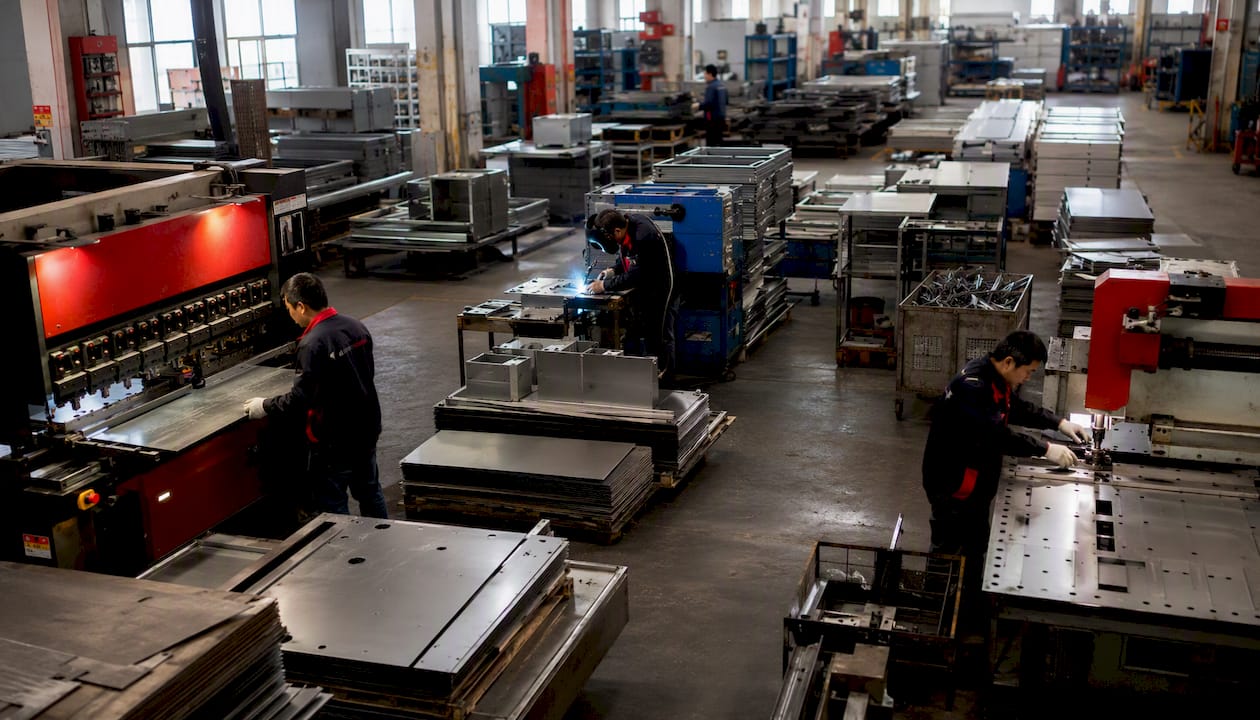
China’s advantage isn’t one thing, it’s a stack of them. Manufacturing clusters mean a single region often has cutting, stamping, welding, and finishing shops within a short drive of each other, which shortens your supply chain instead of scattering it across three countries. Labor and unit costs stay lower at volume than in most Western markets, and mature supply chains mean a factory has already solved problems you haven’t hit yet.
| Factor | China advantage | Main risk |
|---|---|---|
| Cost at volume | Lower per-unit price past prototype scale | Quality drift if QA isn’t enforced |
| Process breadth | Cutting, welding, finishing in one region | Coordination across multiple vendors |
| Capacity | Multi-plant scaling for large orders | IP exposure without contracts in place |
China makes the most sense once you’re past prototyping into real production volume, especially if your enclosure needs multiple process steps completed under one roof. The tradeoff is real: IP protection, consistent QA, and logistics all need active management, not blind trust. Signed NDAs, staged inspections at defined milestones, and third-party quality control audits close most of that gap.
Pro Tip: Build your inspection schedule into the purchase order itself, with named checkpoints and sign-off requirements, so quality control isn’t an afterthought negotiated after parts are already on a boat.
How HLH SHEET METAL Supports International Customers
HLH SHEET METAL runs ISO-certified plants with documented inspection checkpoints at incoming, in-process, and pre-shipment stages, built for buyers in aerospace, medical, and industrial sectors where a failed part isn’t an option.
- Multiple manufacturing plants in China cover both prototype runs and full-scale production without switching vendors.
- Bilingual project managers handle day-to-day communication so nothing gets lost in translation on a spec sheet.
- Process flow moves from DFM review to rapid prototyping to pilot runs to mass production, with the same quality standard at every stage.
Getting a quote starts with a CAD file, target quantity, material spec, and finish requirement. Send those, and HLH SHEET METAL’s team can turn around a working quote fast, backed by the same capability set it applies to every enclosure order.
Pro Tip: Include your target unit price in the RFQ, not just the spec. It helps the engineering team flag design changes that hit your cost target before tooling starts, not after.
Practical Notes From The Field
Managing quality across a Chinese supply chain comes down to staging orders in small batches early, then scaling once a supplier proves consistent. Third-party inspections before shipment catch problems a factory’s own sign-off won’t. On negotiation: state tolerances in writing, confirm lead times in the contract, and never let “should be fine” replace a documented spec.
Ready To Start With A Vetted China Partner
Sourcing on your own means chasing certifications, running your own audits, and hoping a factory’s English-speaking contact answers your emails on time. HLH SHEET METAL removes that guesswork with ISO-certified plants, multi-plant capacity for both prototypes and full production runs, and a bilingual team that manages the project instead of just relaying messages.
Getting started is simple: send your CAD files, target quantity, material choice, finish requirements, and target unit price to HLH SHEET METAL’s China fabrication team for a working quote. If your project involves industrial-grade enclosures, the industrial fabrication page walks through examples closer to your use case. Request your quote today and find out what a properly vetted China partner actually looks like.
FAQ
Where Can I Get Custom Sheet Metal Enclosures Fabricated?
Local contract fabricators, regional contract manufacturers, and Chinese factories or agents all fabricate custom enclosures, with China typically offering the best cost and capacity once volume exceeds prototype quantities.
Why Do Companies Outsource Sheet Metal Fabrication To China?
Companies outsource to China for lower unit costs at volume, dense manufacturing clusters that combine cutting, welding, and finishing in one region, and mature supply chains that support fast turnaround.
What Certifications Should A Chinese Fabricator Have?
Look for ISO 9001 at minimum, with AS9100D for aerospace parts or IATF 16949 for automotive parts, backed by documented inspection reports you can verify.
What’s A Typical MOQ For Custom Enclosures Made In China?
MOQs vary by tooling complexity, but factories that just invested in a custom die typically set minimums to recover that cost; staged orders or shared tooling runs can reduce that pressure.
How Does HLH SHEET METAL Handle Quality Control?
HLH SHEET METAL applies documented inspection checkpoints at incoming material, in-process, and pre-shipment stages across its ISO-certified plants, covering both prototype and production runs.

