




Table Of Contents
Most powder coating jobs land between $180 and $2,300 per item, with the average project running around $724. Budget your quote plus 10 to 15 percent for prep surprises, and add transport if the shop isn’t local. Anything on the small, clean end of that range counts as cheap; large or heavily masked parts push toward the top.
TL;DR:
- Larger items like car bodies or sets of wheels tend to cost more due to higher material and labor demands, with full car coatings reaching $1,000 to $3,000.
- Shops use various pricing methods, including per square foot, per part, per pound, or hourly, which affects how you compare different quotes.
- Surface preparation and masking features significantly influence the final cost, especially when extra features like threaded holes or gasket surfaces are involved.
- Industrial or high-volume runs benefit from full-service fabrication partnerships with ISO-certified processes, ensuring consistent quality and reducing rework costs.
- While powder coating costs more initially than liquid paint, its superior durability makes it more cost-effective for outdoor or heavily used parts over time.
Powder Coating Cost Ranges By Project Type
The national average sits somewhere around $257 to $750 per item, but that figure hides a lot of variation. A single bicycle frame costs nothing like a full car body, and a shop in a rural area often charges less than one in a major metro simply because overhead and demand differ.
Regional pricing swings mostly come down to labor rates and how much competition exists nearby. A shop with a backlog of production work will quote higher on small one-off jobs because you’re competing for oven space against paying commercial clients.
Here’s how common items typically price out:
| Item | Typical Cost Range |
|---|---|
| Standard car wheel | $50–$80 |
| Set of four wheels | $400–$700 |
| Bicycle frame | $70–$125 |
| Patio table or furniture set | $70 to $125 |
| Gate (per sq. ft.) | $6–$8 |
| Full car body | $1,000–$3,000 |
A few things worth remembering when you compare quotes:
- Bigger items don’t always cost proportionally more. A wheel set often prices closer to $400 total, not four times the per-wheel rate.
- Custom colors, textures, or two-stage finishes push any of these numbers upward.
- Shops near industrial hubs sometimes charge less per item because they run more parts through the oven each week, spreading fixed costs across more jobs.
How Shops Price A Powder Coating Job
Shops don’t all use the same pricing model, and understanding which one you’re getting quoted under makes it much easier to compare two estimates fairly.
- Per square foot. Common for flat panels, railings, and gates. Straightforward flat parts typically run $1.50 to $5.00 per square foot, though small or oddly shaped pieces cost more per square foot because setup eats into the total regardless of size.
- Per part. The default for wheels, brackets, and small hardware where measuring surface area isn’t practical. Shops price these off experience and a quick visual estimate of prep time.
- Per pound. Used mostly for high-volume or industrial runs where material usage matters more than shape.
- Hourly. Reserved for custom or repair work, especially jobs that need extensive stripping or one-off masking that doesn’t fit a standard rate card.
- Shop minimum or setup fee. Most shops charge a flat minimum, commonly $25 to $150, to cover oven loading and cleanup regardless of how small your part is.
That minimum is why dropping off one small bracket rarely feels cost-effective. Batching several parts into a single oven run spreads that fixed setup cost across more items, which is exactly how production shops keep per-part pricing down.
What Actually Drives Your Powder Coating Quote Up
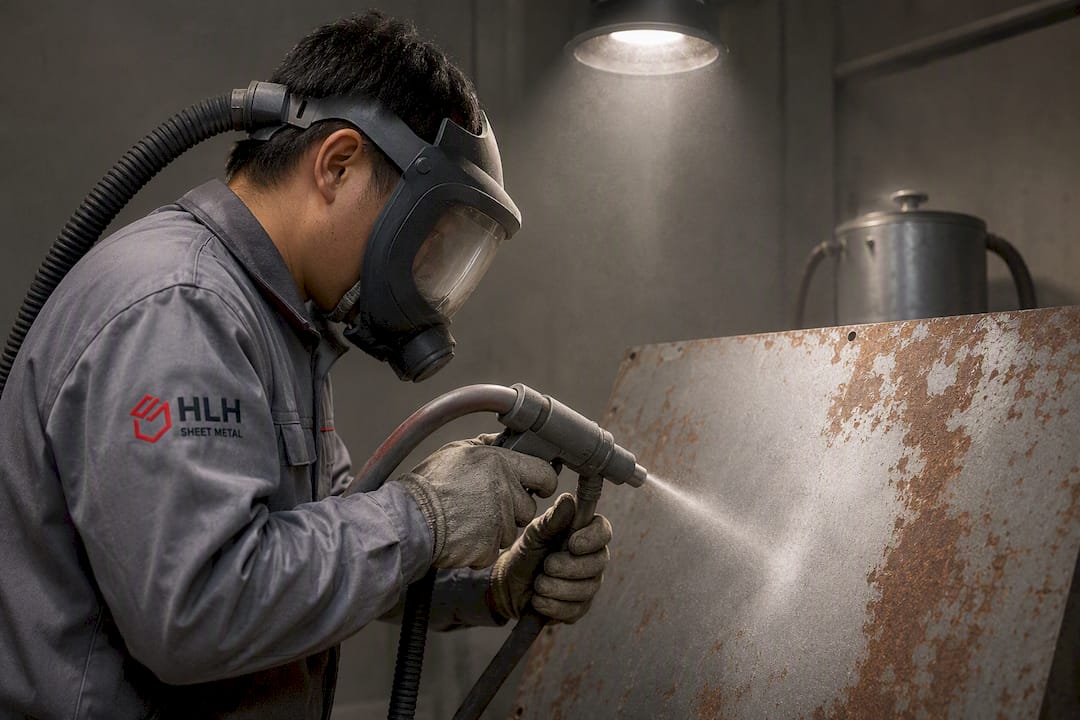
Surface prep is usually the biggest lever. A part covered in rust or old paint needs media blasting before it can take powder properly, and that labor adds up fast compared to a clean, bare-metal piece.
Masking is the other quiet cost driver. Threaded holes, bearing seats, and gasket surfaces all need protection from overspray, and shops often price masking per feature rather than folding it into a flat rate. A part with a dozen threaded holes takes noticeably longer to prep than one with two.
Beyond prep, watch for these key factors in powder coating costs, including how powder chemistry impacts pricing and application.
- Powder type. Standard powders run $10 to $20 per pound, while specialty finishes like metallics, textures, or high-heat formulas add $5 to $10 more per pound.
- Part geometry. Deep recesses and tight corners need more powder and more oven dwell time to cure evenly.
- Material out-gassing. Cast aluminum and magnesium parts can trap air that escapes during curing, sometimes forcing a shop to reseal or refire the piece.
Pro Tip: Ask your shop upfront how they price masking, threaded holes, or gasket surfaces. A quote that looks cheap on the surface can balloon once those per-feature charges get added after inspection.
A Simple Formula To Estimate Your Own Cost
You can rough out a number before you ever call a shop. The basic formula looks like this:
(Surface area × price per sq ft) or (weight in pounds × price per pound) + prep + masking + oven/overhead + transport + contingency
Here’s how that plays out on three common jobs:
- A 100 square foot panel set. At $1.50 to $5.00 per square foot, that’s $150 to $500 in material and oven time alone, before adding any masking or prep labor.
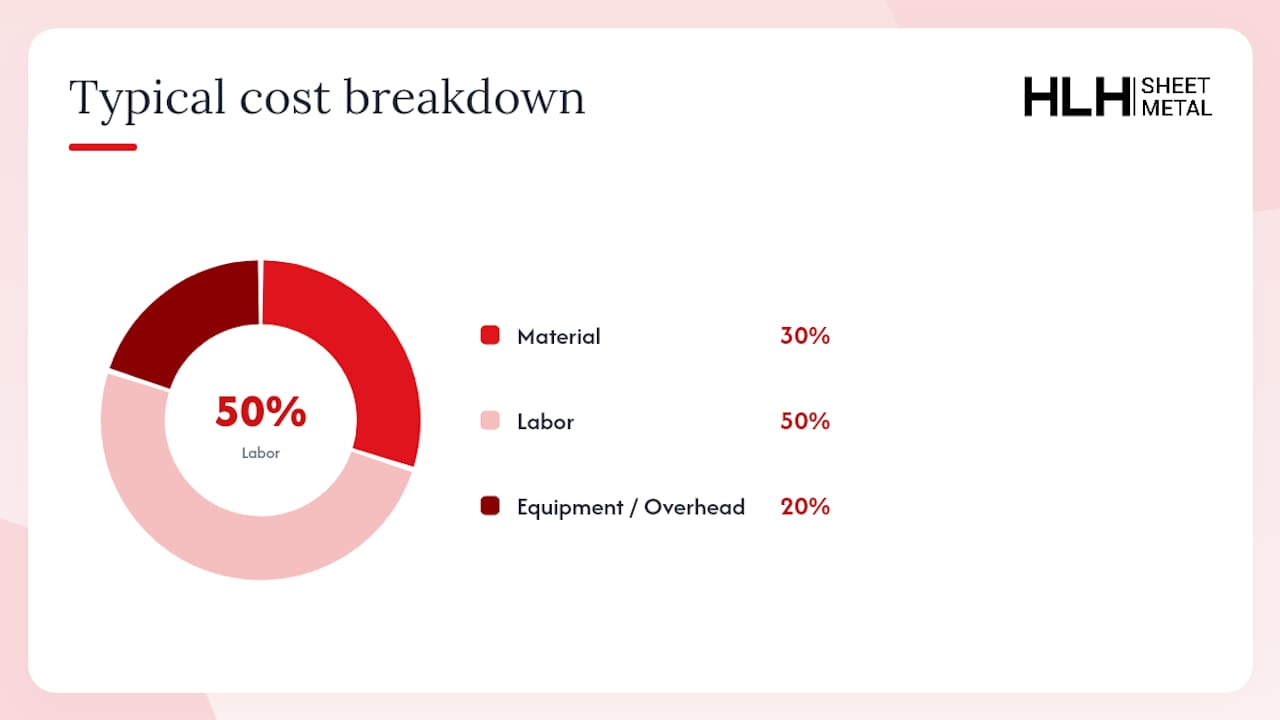
On larger jobs, material typically makes up 20 to 40 percent of the total, labor 40 to 60 percent, and equipment or overhead the remaining 10 to 20 percent. Knowing that split helps you spot a quote that’s out of line. If labor is quoted at 80 percent of total cost for a simple flat part, ask why.
Always tack on 10 to 15 percent for contingency. Hidden rust, an extra masking feature, or a color match that needs a second pass all eat into that buffer fast.
When A Production Fabrication Partner Makes Sense
A single wheel or gate is a job for your local coating shop. A run of 500 brackets destined for a regulated industry is a different problem entirely, and that’s where a full-service fabricator with certified quality processes earns its keep.
Signals you’ve outgrown a one-off shop:
- You need surface finishing integrated with fabrication, not handled as a separate step by a separate vendor.
- Your parts go into aerospace, medical, or other regulated applications where finish consistency and documentation matter.
- You’re scaling from a prototype run to hundreds or thousands of units and need repeatable results across batches.
ISO-certified processes and multiple manufacturing plants reduce rework because inspection catches finish defects before parts ship, not after a customer complains. When you’re ready to quote a production run, send photos, exact dimensions, base material, finish spec, and batch size. That packet is what turns a vague back-and-forth into one accurate number.
Cheap Powder Coating Isn’t Always The Smart Buy
A gate or a set of wheels that lives outside for a decade tells you everything about why upfront price is the wrong number to optimize. Powder coating already costs more than a can of wet paint on small jobs, but its coating typically outlasts liquid paint by years, which changes the real math for anything exposed to weather or heavy use.
Spend where it counts: better prep and a documented cure record on parts that matter, standard finishes on parts that don’t. Before you commit, ask any shop for their adhesion test results. A shop that can’t answer is not tracking quality the way a production-grade job deserves.
— Nash
Get A Clear Quote From HLH SHEET METAL
Comparing per-square-foot rates and shop minimums only gets you so far when your project involves custom brackets, enclosures, or production runs rather than a single wheel. HLH SHEET METAL handles surface finishing as part of the fabrication process itself, with ISO-certified quality checks and multiple plants that keep both prototype and volume orders moving without the back-and-forth delays that stall smaller shops. Masking on threaded features and gasket surfaces handled inline can reduce per-feature cost drivers that inflate quotes elsewhere. If you’re scaling past the DIY-coating-shop stage, send photos, dimensions, material, and batch size, and request a quote for your sheet metal fabrication project to see how a full production packet compares to piecemeal pricing.
FAQ
Is It Cheaper To Paint Or Powder Coat?
Wet paint usually costs less upfront, but powder coating’s longer lifespan often makes it cheaper over time for outdoor or heavily used parts.
How Many Years Does Powder Coating Last?
Well-applied powder coating commonly lasts 15 to 20 years outdoors, though harsh climates and poor prep can shorten that significantly.
What Are The Negatives Of Powder Coating?
It requires specialized equipment and an oven cure, so it’s harder to touch up locally, and materials prone to out-gassing, like cast aluminum, can need extra sealing steps that add cost.
Is It Worth It To Powder Coat Rims?
For most drivers, yes. A $400 to $700 set of four wheels holds up far better against curb rash and brake dust than paint, and the cost gap versus repainting is usually small.

