




Table Of Contents
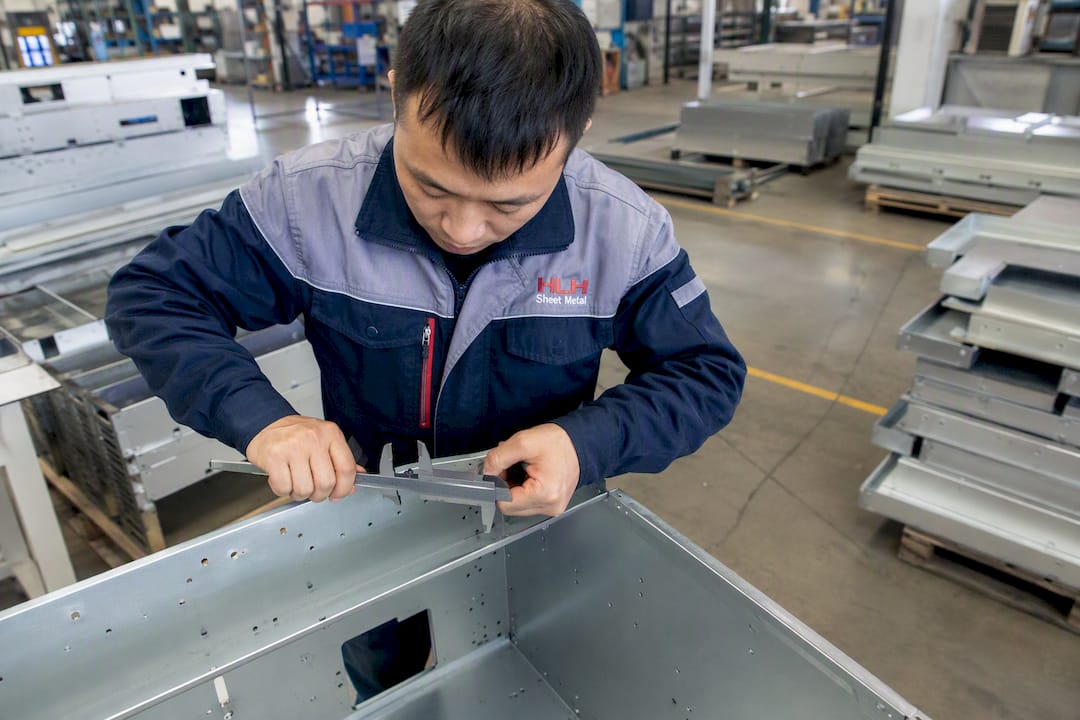
Yes, you can source custom server chassis with integrated rack cable management from China, and for most volumes it’s the most cost-effective route available. The condition is non-negotiable: you need a fabricator that is ISO-certified, supports a real prototype-to-production workflow, and treats cable management as part of the mechanical design, not an afterthought bolted on after the sheet metal ships.
Here’s what to do this week if you’re starting from zero:
- Finalize your technical spec first. Include U height, depth, rail type, and every cable-management detail (D-ring counts, vertical manager width, bend radius minimums) before you send a single RFQ.
- Request a prototype with written acceptance criteria. Don’t approve a sample on looks alone. Define what “pass” means: dimensional tolerance, fit-check of patch panels, cable routing clearance.
- Lock QA and logistics terms into the contract, not a side email. Require first-article inspection (FAI) and pre-shipment inspection as contract line items, not favors.
The main risk is a supplier who nails the chassis but treats cable management as a generic accessory kit rather than an engineered subsystem. The one-line fix: make FAI and pre-shipment inspection contractual, and make cable routing part of the drawing package, not a verbal request.
Key Takeaways
Sourcing custom server chassis with integrated cable management from China works reliably when procurement pairs an ISO-certified fabricator with a documented prototype-to-production workflow and contractual QA checkpoints.
| Point | Details |
|---|---|
| Spec cable management explicitly | Include bend radius, D-ring counts, and manager fill capacity in the RFQ, not a generic mention. |
| Require FAI and pre-shipment inspection | Make both contractual line items tied to payment milestones, not verbal assurances. |
| Match material to environment | Use cold-rolled steel for standard frames, stainless steel where corrosion resistance matters. |
| Plan lead times by stage | Budget 2 to 6 weeks for prototypes and 6 to 12 or more weeks for mass production runs. |
| Vet multi-plant capacity | HLH SHEET METAL operates multiple China-based plants, supporting both prototype runs and scaled production under one ISO-certified process. |
Rack Cable Management: Sourcing Custom Server Chassis In China Starts With Supplier Vetting
Before you evaluate a single quote, you need a way to separate fabricators who can genuinely engineer a rack from ones who can only bend metal to a drawing you already perfected. Most procurement teams skip this step and pay for it later in warranty claims and missed fit-checks.
Here’s the qualification sequence that actually filters suppliers:
- Confirm the credentials that matter. ISO 9001 is table stakes; ask specifically which quality management scope it covers. Request factory photos (not stock images), a written capability list covering laser cutting, CNC bending, welding, and powder coating, plus their stated MOQ and standard lead times.
- Probe tooling and multi-plant capacity. A supplier running one small shop can’t absorb a demand spike or a rush reorder. Ask whether they operate multiple plants in China, and whether accessories like ladder trays and D-rings are made in-house or sourced from a third party. In-house accessory production usually means tighter fit tolerances and fewer shipping delays.
- Get commercial proof, not marketing copy. Material certificates (mill test reports), sample inspection reports, a realistic production schedule, and clear payment terms tell you more than any sales deck. Vendor pages that describe cold-rolled steel construction and OEM/ODM support give you a baseline for what a legitimate Chinese rack manufacturer should be willing to document.
- Watch for red flags. A supplier who won’t provide a paid sample, gives vague answers about QC checkpoints, or can’t produce a documented ISO process on request is telling you something. Walk away before you commit tooling costs.
Pro Tip: Ask for a short video walkthrough of the actual production line, plus a time-stamped photo of your sample run mid-production. Suppliers juggling multiple factories sometimes subcontract quietly, and a dated photo makes that much harder to fake.
Multi-plant capability isn’t a vanity metric. It’s what lets a fabricator run your 200-unit prototype batch in one facility while scaling your 5,000-unit production order in another, without your lead time collapsing when one plant hits capacity.
What Rack And Cable-management Specs Belong In Your RFQ?
Your RFQ needs to specify the mechanical and material details that quietly determine both your final cost and whether the chassis you receive actually fits your data center. Vague specs are the single biggest cause of rework in offshore chassis sourcing.
Start with the frame. Most enterprise racks use standard 19-inch EIA rails, with common heights in typical increments and depths that vary depending on server and switch gear length. State your target U height and depth explicitly. Don’t assume the supplier will default to a size that fits your existing cabinets.
Material choice affects both weight and corrosion resistance:
- Cold-rolled steel is the industry default for structural frames. It’s rigid, inexpensive at scale, and holds up well when properly coated.
- Aluminum cuts weight significantly, useful for mobile or edge deployments, but costs more per unit and needs careful design around load-bearing rails.
- Stainless steel matters mainly in humid, coastal, or industrial environments where corrosion resistance outweighs cost.
Cable management needs its own line items in the spec, not a generic “include cable management” note. Vertical managers come in solid or pass-through configurations across multiple heights, often with movable mid-sections so you can split internal space (say, 50/50 or 40/60) to keep fiber and copper physically segregated. Horizontal panels typically rely on D-ring counts and mounting patterns, and modular D-ring panel specs show how front and rear mounting options change based on your patch density. Ladder trays and mesh baskets handle overhead or under-floor runs where cable bundle weight is significant.
One spec detail gets missed constantly: bend radius. Horizontal panels are often offset roughly 1.5 inches from the rack channel specifically to protect hooded patch cables from binding at that bend point. If your RFQ doesn’t state minimum bend radius for both copper and fiber, the fabricator will guess, and fiber runs are what suffer when they guess wrong.
Finish requirements round out the spec: powder coat thickness, color, and any IP rating requirement all affect both lifecycle durability and unit cost, so state them rather than leaving them to the quote.
How Does The OEM Process Work From Quote To Production?
A clean OEM/ODM workflow protects you from the two most expensive mistakes in offshore sourcing: discovering a design flaw after tooling is cut, and discovering a cable-routing problem after the first container ships.
- Send a complete RFQ package. This means CAD or 2D drawings, a bill of materials covering every cable-management accessory (not just the chassis shell), written acceptance criteria, target quantities, and your delivery window. Incomplete packages get incomplete quotes.
- Move through a real prototype cadence. An engineering sample confirms rough fit and dimensions. A functional sample confirms cable routing, airflow clearance, and mounting hardware actually work together. First-article inspection (FAI) is your final gate before volume tooling.
- Understand how tooling cost scales. Setup costs for custom stamping or bending fixtures are largely fixed regardless of order size, so they weigh heavily on small runs and barely register on large ones. Ask for a cost breakdown separating tooling from per-unit pricing.
- Lock a change control process. Any engineering change after FAI approval, cosmetic or functional, needs a documented sign-off step. Without one, “small tweaks” creep into your production run unannounced.
- Set realistic timeline expectations. Concurrent design reviews, where mechanical, thermal, and cable-routing engineers review the same drawing simultaneously instead of sequentially, are the most reliable way to shorten prototype-to-production timelines without cutting corners.
Full-service fabricators supporting server rack cabinet production typically structure this exact sequence, because skipping steps costs them far more in returns than the sequence costs in time.
What QA Checkpoints Should You Require By Contract?
Verbal QA assurances are worthless once a container is on the water. Every checkpoint that matters needs to be a contract line item with a named deliverable attached.
Before production starts, request material certificates, also called mill test reports, along with weld quality records and documented paint or coating inspection results. These tell you the raw inputs met spec before a single bend was made.
During production, in-line inspection should verify dimensional accuracy on mounting hole patterns, thread quality on rail attachment points, and bend radius on any cable-management brackets. This is where fitment problems get caught cheaply, before the batch is finished.
Before shipment, your checklist should cover:
- Visual inspection for finish defects and coating consistency
- Dimensional verification against the approved drawing
- Functional fit tests, meaning patch panels actually mount and sample cable bundles actually route through vertical and horizontal managers as designed
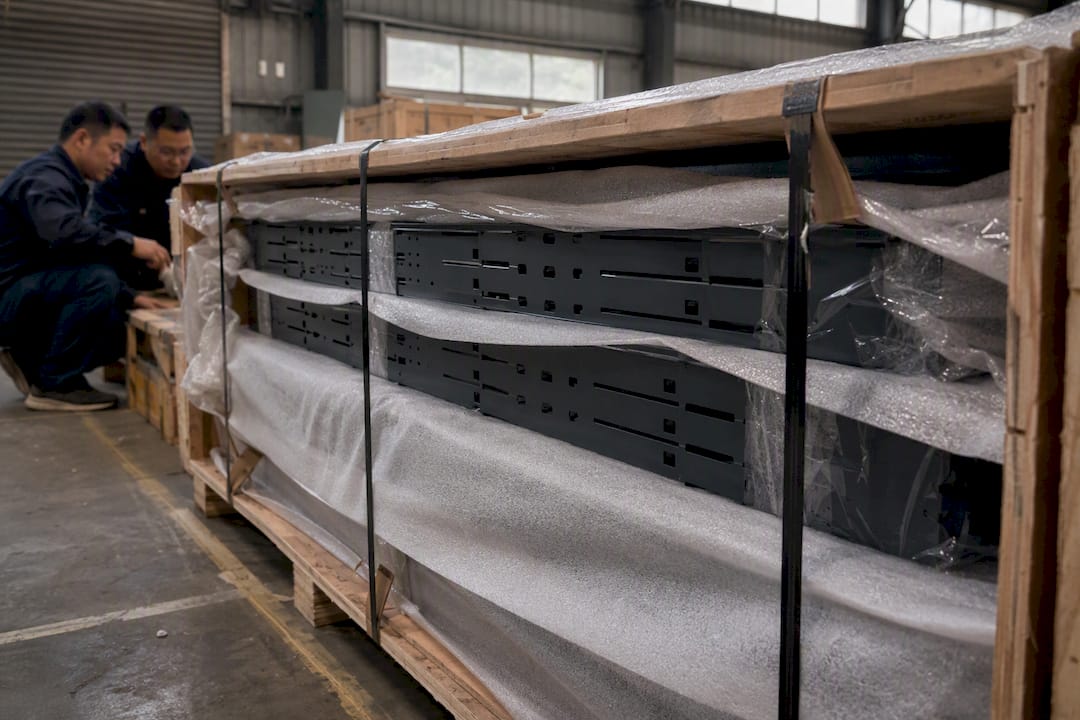
- Packaging verification to confirm the finish will survive transit
First-article inspection paired with pre-shipment checks is standard procurement practice for custom metal enclosures, and it catches the dimensional drift that generic visual inspection misses entirely.
Pro Tip: Specify an AQL (Acceptable Quality Level) in your contract, and consider a third-party inspection firm for orders above a threshold you’re not comfortable auditing yourself. It costs a few hundred dollars and it catches problems before they’re your problems.
Warranty terms and spare parts availability deserve contract language too. A supplier who won’t commit to spare accessory availability (extra D-rings, replacement vertical manager panels) is signaling they don’t expect you to reorder.
What Drives Landed Cost And Lead Time For China-sourced Racks?
Your quoted unit price is never your real cost. Landed cost is what matters, and it’s shaped by variables that don’t show up on the first page of a supplier’s quote.
Metal gauge, cut and bend complexity, surface finish, and the accessory package (trays, D-rings, ladder systems) all move price independently of the base chassis. Tooling cost gets amortized across your order, so small pilot runs absorb a disproportionate share of it.
Lead times vary sharply by stage, and vague promises here are how timelines blow up. Prototype samples typically require several weeks depending on design complexity and revisions, followed by additional weeks for small batch and mass production phases, which depend on tooling readiness and accessory sourcing.
Cable-management accessories add real volume and weight to your shipment, which affects freight cost more than most buyers expect. Packaging needs to protect powder-coat finishes specifically, since scratched panels are one of the most common freight-damage disputes in this category. For smaller orders, LCL (less than container load) consolidation makes sense; full container loads (FCL) become economical once you’re filling more than roughly 60 to 70 percent of a container’s volume.
Incoterm selection changes who owns what risk. EXW puts inland freight and export clearance on your side. FOB shifts export responsibility to the supplier. CIF bundles in insurance and freight, but at a markup you should compare against arranging it yourself. Whatever you choose, confirm your documentation package upfront: commercial invoice, packing list, certificate of origin, and any testing certificates your customs broker requires.
How Should Procurement Structure Contracts And Communication?
A strong RFQ and a strong contract aren’t the same document, and treating them as one is where a lot of sourcing relationships go sideways.
- Attach a complete document package to every RFQ: drawings, fit-test requirements, finish specifications, written acceptance criteria, and packaging standards. Anything left verbal gets reinterpreted.
- Structure payment against milestones, not a flat deposit and balance. Tie a portion of payment to FAI approval, not just order placement and shipment.
- Include penalty clauses for missed delivery windows and explicit spare parts supply terms for post-warranty support.
- Protect your IP with an NDA and clear tooling ownership language. Specify whether tooling built for your project belongs to you or the supplier, since that determines your leverage if you ever need to switch fabricators.
- Set a communication cadence in writing. Define who reports sample status, on what schedule, and require time-stamped photos or video during production runs, not just at final delivery.
An escalation path with a single, English-speaking point of contact resolves disputes faster than routing every issue through a sales rep juggling twenty accounts.
HLH Sheet Metal: Chassis And Cable Management Under One Roof
HLH SHEET METAL runs multiple manufacturing plants across China, giving procurement teams the prototype-to-volume flexibility this article has been describing: small pilot runs in one facility, large production orders scaled across another, without the bottleneck of a single-line shop.
Capabilities worth requesting proof of directly:
- ISO certifications covering the quality management scope relevant to your order
- Sample lead times and a documented first-article inspection process
- Material and finish options spanning steel, aluminum, stainless steel, galvanized steel, and specialty metals
- Assembly support for both vertical and horizontal cable managers, including accessory sourcing rather than shipping a bare chassis shell
Procurement teams sourcing custom enclosures shouldn’t have to choose between fast turnaround and documented quality assurance. Fabricators built around rapid prototyping and ISO-certified processes make that trade-off unnecessary for both small pilot batches and full production runs.
To engage HLH SHEET METAL for a quote, send CAD or 2D drawings, target quantities, and your finish specification. Expect a quote turnaround measured in days, not weeks, and ask specifically for a factory capability packet if you want documentation before committing to a paid sample. Details on rack cabinet manufacturing capabilities are available for teams scoping their first RFQ.
Common Cable Management Problems In Rack Installations
The most frequent installation failure isn’t a defective part. It’s cable bundles that were never given enough physical space to route cleanly, because the original design treated cable management as an accessory rather than a structural requirement.

Overfilled vertical managers are the classic symptom. Once a manager exceeds its rated fill capacity, technicians start forcing cables past their minimum bend radius just to close the door, which degrades signal integrity on both copper and fiber runs over time. The fix starts at the design stage: specify explicit bend radius minimums in your RFQ so the fabricator sizes managers with real headroom, not a bare minimum fit.
Airflow blockage shows up when horizontal cable runs cross front-to-rear airflow paths instead of routing around them. This is a design-review problem, not an installation one. Reviewing cable pathways alongside thermal design, not after it, catches this before hardware ships.
Power and data cables running too close together cause intermittent electrical interference that’s maddening to diagnose after the fact. Dedicated, separated channels for power and data, built into the chassis rather than added on-site, prevent this outright.
Mixed-metal corrosion is a quieter problem. Steel frames paired with aluminum trays can develop galvanic corrosion at contact points if the supplier doesn’t apply proper isolation treatment. If your rack combines materials, request surface-treatment test results confirming isolation was actually applied, not just specified.
Which Standards Govern Rack Cable Management In Data Centers
Compliance in this category is less about a single sweeping regulation and more about a handful of component-level and safety standards your fabricator’s accessories need to meet.
Cable management hardware like D-ring panels is commonly tested against UL 2416 and CSA C22.2, standards covering safety and construction requirements for cable management systems in North America. When a supplier’s spec sheet cites these standards by name, as modular D-ring panel documentation typically does, it’s a genuine signal they’re sourcing accessories to an established benchmark rather than a generic, untested design.
Rack frame dimensions follow the 19-inch EIA-310 interface standard, which governs rail spacing and mounting hole patterns across the industry. Any custom chassis you order should confirm compliance with this interface explicitly, since a rack that’s close but not exact will fail to accept standard patch panels and PDUs.
Beyond hardware standards, most data center operators layer in their own internal requirements around bend radius, fill ratios, and labeling conventions, often drawn from structured cabling guidance like the TIA-568 family. Your RFQ should state which internal standards, if any, your chassis and cable-management accessories need to satisfy, because a supplier working from a generic template won’t know your facility’s specific labeling or fill-ratio policy unless you tell them.
Lessons Learned And Common Procurement Traps
The mistake I see most often isn’t a bad supplier. It’s a rushed spec. Teams skip first-article inspection to save two weeks, write “include standard cable management” instead of specifying bend radius and D-ring counts, and treat finish tolerances as cosmetic when they’re actually functional. Every one of those shortcuts turns into a change order later, at a worse price than doing it right the first time.
Full China production makes sense for the chassis, frame, and integrated cable-management hardware. Final cabling and live connectivity testing usually belong at your local site, where your own team can validate against actual equipment. Don’t ask a fabricator to guarantee a cable plan they’ll never see installed.
For faster approvals: send complete drawings the first time, define acceptance criteria before the sample ships, and never skip FAI to hit an arbitrary date.
— Nash
Get A Quote Or Sample From HLH Sheet Metal
If you’ve read this far, you already know the hard part of sourcing custom chassis isn’t finding a factory willing to bend steel. It’s finding one that treats cable management as engineering, not decoration, and backs that up with ISO-certified process controls instead of a verbal promise. HLH SHEET METAL runs that process across multiple Chinese facilities, handling everything from a single prototype to a full production run without switching vendors mid-project.
To get moving on a quote, send your CAD or 2D drawings, target quantities, finish specification, and written sample acceptance criteria. That package alone lets HLH SHEET METAL return an accurate quote instead of a rough estimate. Start at the sheet metal fabrication page to request a sample or a full factory capability packet before you commit to volume.
Sources
- Cable Management Solutions for Data Centers, Racks, and Telecom Rooms | Chatsworth Products
- Open-Access™ Cable Management System specification (Panduit)
- China Customized Server Rack Manufacturer – Temery
FAQ
Can You Source Custom Server Racks From China?
Yes, custom server racks and chassis with integrated cable management are commonly sourced from China, provided the fabricator is ISO-certified and supports a documented prototype-to-production process with first-article inspection.
What Cable Management Options Should I Specify In An RFQ?
Specify vertical managers (solid or pass-through), horizontal panels with D-ring counts, ladder trays for heavier bundles, and explicit minimum bend radius for both copper and fiber runs.
How Long Does Prototyping Take For A Custom Chassis?
Prototype samples typically require several weeks depending on design complexity, followed by additional weeks for small batch and mass production phases.
What Inspection Should Happen Before Shipment?
Pre-shipment inspection should confirm dimensional accuracy, visual finish quality, functional fit of patch panels and cable managers, and packaging adequate to protect the coating during transit.
Does HLH Sheet Metal Support Integrated Cable Management?
HLH SHEET METAL supports assembly of vertical and horizontal cable managers alongside chassis fabrication across its ISO-certified plants in China, handling both accessory sourcing and prototype-to-volume production.

