



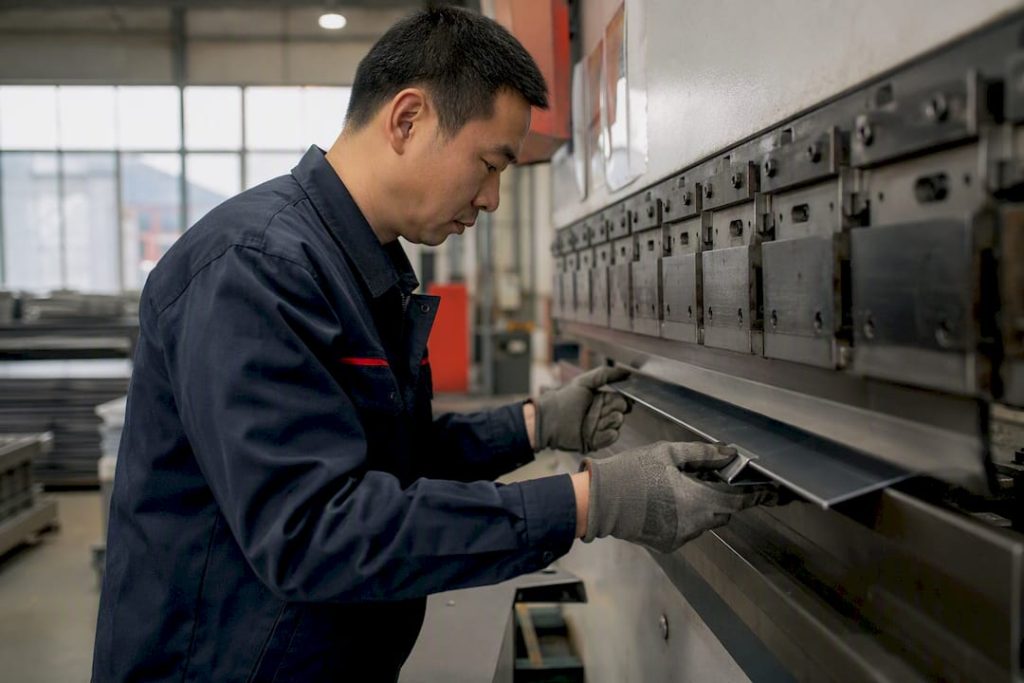

Table Of Contents
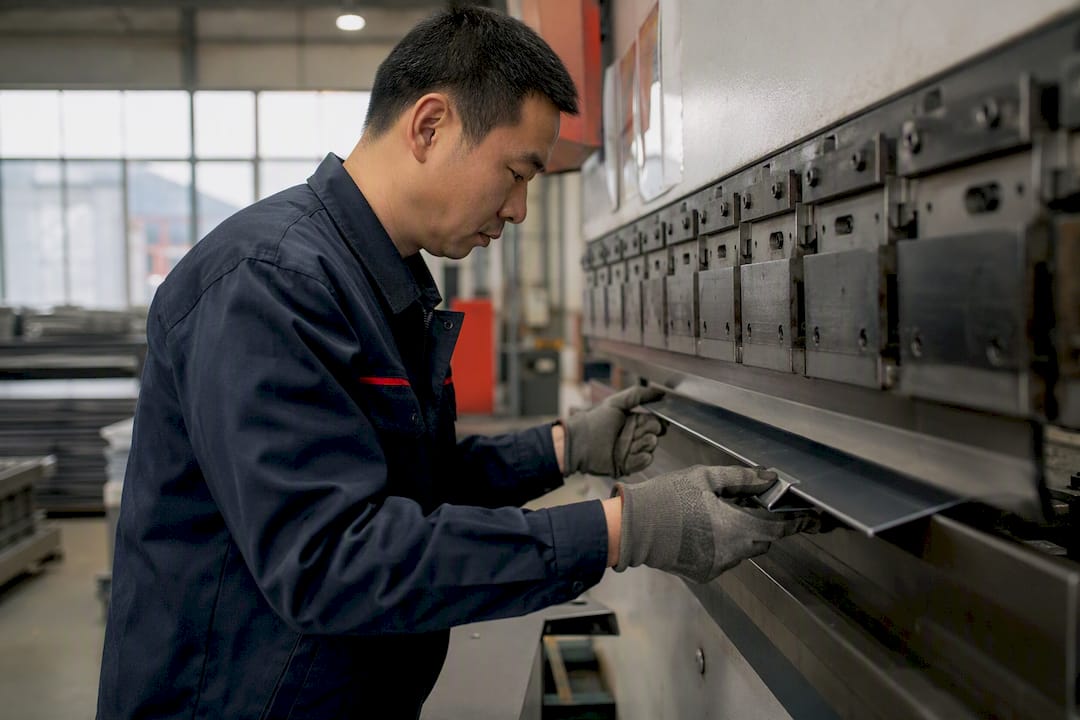
Sheet Metal Hemming In China
Hemming folds a cut sheet metal edge back onto itself, burying the raw, burr-covered edge inside a rounded fold instead of leaving it exposed. That single move solves three problems at once: it removes the cut hazard, adds stiffness along the folded edge, and gives the part a finished, rolled look instead of a raw stamped one. A burr) is the ragged material left behind after cutting, and hemming conceals it rather than grinding it away, which matters because aggressive deburring can eat into tolerances. Much of the world’s hemmed sheet metal work runs through China, where dense tooling shops, high press capacity, and ISO-certified suppliers like HLH SHEET METAL turn hem specs into production parts fast.
- Sheet metal hemming eliminates exposed sharp edges by folding, not grinding
- Adds edge stiffness without extra material or a separate stiffening feature
- China’s tooling density and press capacity make hemmed parts cheaper at volume
- ISO-certified QA (a standard HLH SHEET METAL holds) keeps hem closure consistent run to run
Key Takeaways
Hemming eliminates sharp sheet metal edges by folding the cut edge inward, and the hem type you choose determines whether you gain stiffness, appearance, safety, or all three at once.
| Point | Details |
|---|---|
| Hemming vs. deburring | Hemming folds and buries the burr; deburring grinds it away and can affect dimensions. |
| Match hem type to geometry | Use closed hems for safety and finish, teardrop hems where material stack is limited. |
| Flange length rule | Keep flange length at least 2 to 3 times material thickness for closed hems. |
| Verify closure, don’t assume it | Specify hem closure as a measurable maximum gap and back it with CMM data. |
| Source with documentation | HLH SHEET METAL pairs multi-plant capacity in China with ISO-certified QA and first-article inspection. |
What Are The Main Types Of Sheet Metal Hems?
Four hem styles cover almost every application: closed (flat), open, teardrop, and rolled (rope). Each trades off material thickness, flange length, and how completely the edge gets buried.
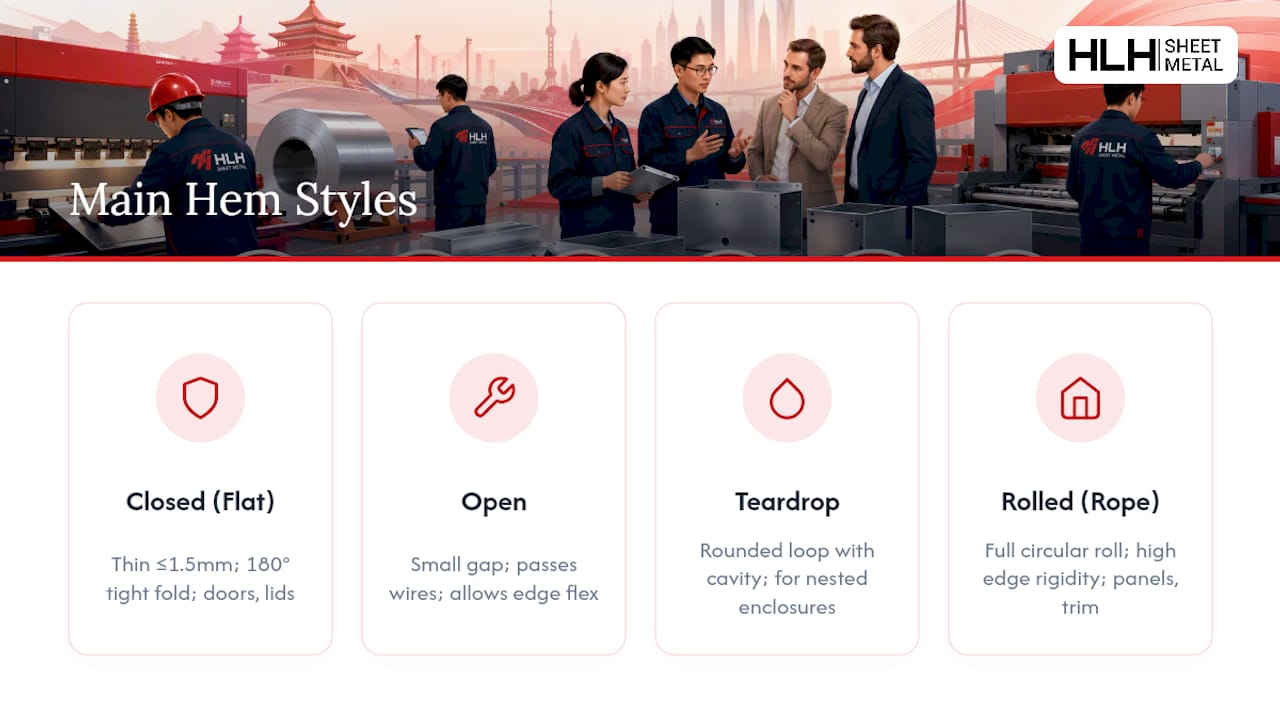
A closed hem, also called a flat hem, folds the edge over 180 degrees and presses it tight against the base metal with no gap. It’s the go-to choice when safety and a clean finish both matter, like door panels, enclosure lids, or anything a technician’s hand will slide across. An open hem stops short of full closure, leaving a small gap between the folded flange and the base material. Designers use it when a wire needs to pass through the fold or when the part needs some flex at the edge. A teardrop hem curls the edge into a rounded, almost-closed loop that leaves a small internal cavity shaped like its namesake. It works well where a full closed hem would stack too much material for the assembly to clear, common in nested sheet metal enclosures. A rolled hem, sometimes called a rope hem, curls the edge into a full circular roll rather than a flat fold. It shows up on parts needing significant edge rigidity, like large panel edges or trim pieces that see repeated handling.
Material thickness governs which hem you can realistically use. Thin gauge steel and aluminum, generally under 1.5mm, handle closed hems without cracking. Push much past that and a closed hem risks fracturing at the bend radius, so teardrop or open hems become the safer call on thicker stock.
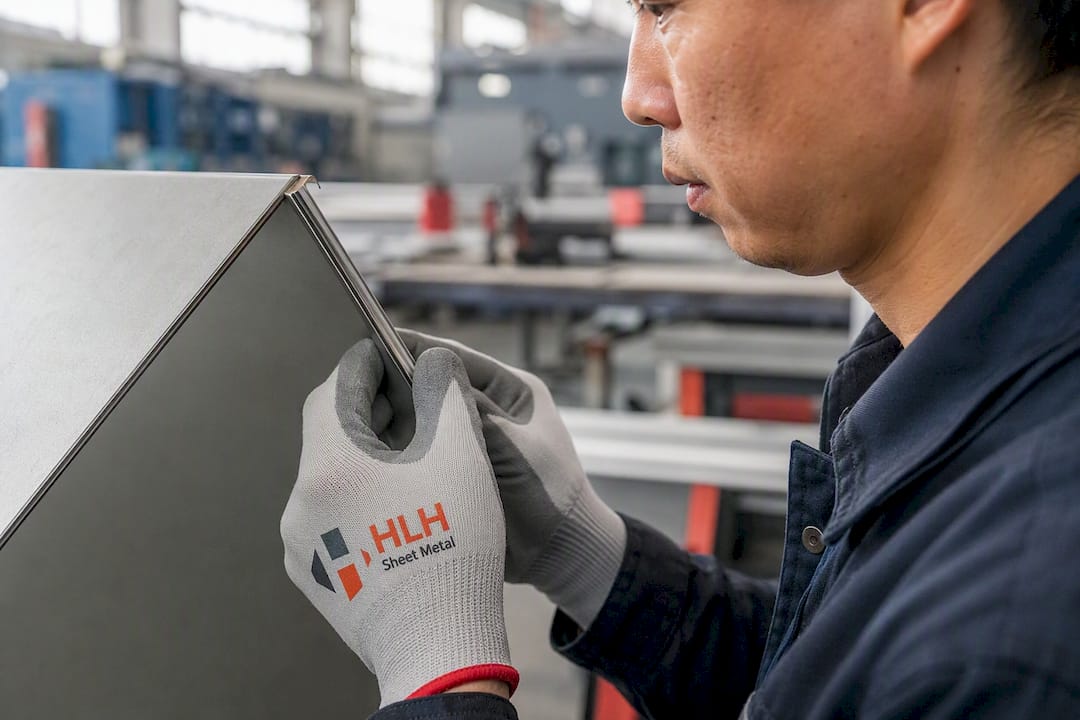
Pro Tip: Add a small flat step at the hem edge on your CAD model before folding. It gives the die a flat reference surface and prevents the fold from drifting off-center during forming.

How Do You Design A Hem That Won’t Fail In Production?
Every hem adds a flange, and that flange needs enough length to fold without tearing. As a rule of thumb, flange length should run at least two to three times the material thickness before the fold, with more margin on higher-strength alloys like stainless steel or spring steel. Bend allowance calculations need to account for the hem fold separately from any other bends in the part, since the metal stretches differently at a 180-degree fold than at a standard 90-degree bend.
Springback is the quiet failure mode here. Stainless steel and aluminum both spring back after a hem fold releases from the die, so tooling often overbends slightly to compensate. Skip that adjustment and you get hems that pop open slightly after forming, which reads as a quality defect even when the process ran correctly.
- Keep flange length at 2 to 3 times material thickness minimum for closed hems
- Specify bend allowance separately for hem folds versus standard bends
- Confirm powder coat or plating thickness won’t wedge the hem open
- Flag any pre-finished or pre-painted stock, since hemming after coating can crack the finish
A closed hem on painted or powder-coated stock deserves extra scrutiny. The coating adds thickness inside the fold, and on tight closed hems that buildup can prevent full closure or crack the finish at the bend line. Specifying the hem before finishing, when practical, avoids that failure mode entirely.
What Tools And Processes Form A Hem?
Three production methods dominate hemming, and picking the right one depends mostly on volume and part geometry.
- Press brake hemming forms the hem in two hits: a partial bend to roughly 30 to 45 degrees, then a flattening hit with a dedicated hemming die. It’s the standard choice for prototypes and low to mid volume runs because it needs no dedicated tooling investment beyond the hemming die itself.
- Roll hemming uses a series of rollers that progressively curl the edge over, common on automotive body panels and larger parts where a press brake’s stroke length can’t reach. It produces very consistent, smooth hems but requires roll-forming equipment that only makes sense at higher volume.
- Progressive die hemming integrates the hem fold into a multi-station stamping die, closing the hem in the same stroke sequence that cuts and forms the rest of the part. This is the high-volume answer: once the die is built, cycle times drop to seconds per part with tight repeatability, but tooling costs mean it only pays off past a few thousand units.
Press tonnage and die radius control both affect hem quality directly. Undersized tonnage leaves hems that don’t fully close, while an incorrect radius on the hemming die can crack brittle alloys or leave a hem that looks closed but has a gap a caliper will catch. Hand hemming with a mallet still shows up on one-off prototypes and repair work, but it has no place in a production spec.
How Do You Verify A Hem Meets Spec?
Four checks catch most hemming defects before a part ships: hem closure percentage, edge radius, visible burr escape, and dimensional conformance against the drawing. A hem that looks closed to the eye can still have a small gap that catches skin or clothing, so closure has to be measured, not eyeballed.
CMM (coordinate measuring machine) inspection is the standard tool for confirming hem radius and closure gap against drawing tolerances, and documented CMM inspection reports give buyers a paper trail instead of a supplier’s word. For high-volume runs, go/no-go fixtures do the same job faster on the shop floor, flagging out-of-spec hems without a full CMM cycle on every part.
- Request hem closure specified as a maximum gap (e.g., ≤0.1mm) rather than a vague “closed” callout
- Ask for edge radius verification, since a hem’s outer radius affects both appearance and touch-safety
- Confirm burr checks happen before hemming, since hemming buries burrs rather than removing sharp fragments entirely
- Ask whether incoming inspection includes photo documentation for hemmed edges, not just dimensional data
Where a hem doesn’t fully solve edge safety, on an open hem with an intentional gap, for instance, secondary deburring or tumbling still has a role. QC should specify which edges get which treatment rather than assuming hemming alone covers every exposed edge on a part.
Why Do Manufacturers Source Hemmed Parts From China?

China’s advantage on hemmed sheet metal comes down to three things: die shop density, press capacity, and how fast a new hem tool gets built and signed off. Regions with concentrated stamping industries carry local die shops that can turn around a hemming die in days rather than weeks, and that tooling speed compounds across every design revision a product goes through before launch.
HLH SHEET METAL operates multiple manufacturing plants in China, which spreads capacity across sites and reduces the risk of a single facility bottleneck stalling a production run. Buyers evaluating any China-based supplier for hemmed parts should ask for three specific things: ISO certification documentation, a first-article inspection report with CMM data, and evidence of a completed sample run before committing to full production tooling.
- Ask for ISO certification numbers and scope, not just a logo on a website
- Request first-article inspection with documented hem closure and radius measurements
- Confirm the supplier runs a sample batch before cutting production tooling
- Check whether English-speaking technical support handles your account directly, or routes through translation
Pro Tip: Never sign off tooling from photos alone. Ask for a physical first-article sample shipped to you, or at minimum a detailed CMM report on the actual hemmed edge, before releasing full production.
How Do You Spec Hemming On A Drawing?
A hem callout that leaves room for interpretation is the single most common cause of rework on hemmed parts. Cover these points on every drawing:
- Name the hem type explicitly (closed, open, teardrop, or rolled), never just “hem edge.”
- Specify material and gauge, since hem feasibility changes with alloy and thickness.
- Call out hem closure tolerance as a maximum gap dimension, not a qualitative “tight” note.
- Note finish requirements and whether hemming happens before or after coating.
- Request a first-article sample and a CMM or go/no-go inspection report before production release.
Before choosing a supplier, ask about their hemming die capability, press tonnage available, and typical tooling lead time for a new hem die. Those three answers tell you more about whether a shop can hit your tolerance than any general capability claim will.
A Practitioner’s View On Sheet Metal Hemming Mistakes
The costliest hemming errors I see aren’t process failures, they’re vague drawings. A closure tolerance left unstated, or a hem type described only as “folded edge,” invites a supplier to guess, and guesses don’t survive first-article inspection.
— Nash
Get Hemmed Sheet Metal Parts Built Right, At Scale
Specifying a hem correctly only pays off if the supplier behind it can actually hold that tolerance run after run. HLH SHEET METAL runs multiple manufacturing plants across China, which means your production order isn’t tied to a single facility’s schedule or capacity ceiling. Every run goes through ISO-certified QA with documented first-article inspection, so the closure gap and radius you specified on the drawing are the ones that show up on the part, not an approximation of them. Prototyping and full production run through the same quality system, which matters when your hem design needs a physical sample before tooling gets cut. If you have a drawing with a hem callout ready, request a quote for your custom sheet metal fabrication project and get a first-article sample scheduled before committing to volume.
FAQ
What Is The Purpose Of Hemming In Sheet Metal Forming?
Hemming folds a cut edge back onto itself to bury the sharp, burr-covered edge inside a rounded fold, which improves safety, adds edge stiffness, and gives the part a finished appearance.
What Are Common Sheet Metal Bending Mistakes That Affect Hems?
The most frequent mistakes are underestimating springback on the hem fold, specifying flange lengths too short to fold without cracking, and failing to account for finish thickness inside a closed hem.
What Is Flanging In Sheet Metal?
Flanging bends a straight edge or hole edge to roughly 90 degrees to add stiffness or create a mounting surface, while hemming folds an edge a full 180 degrees back onto itself to conceal it.
What Is A Hemmed Edge In Sheet Metal?
A hemmed edge is a fold where the cut edge of the sheet is bent back onto the base material, closing over the raw edge so no sharp or burred surface remains exposed.
Why Do Companies Choose China For Hemmed Sheet Metal Parts?
Dense tooling shop networks and high press capacity let China-based suppliers turn around hemming dies quickly and hold competitive lead times at volume, provided the supplier carries ISO certification and documented inspection practices like those HLH SHEET METAL provides.

