




Table Of Contents
China often offers lower unit fabrication prices, but New Zealand buyers must compare landed cost, including 2026 Goods Levies, duties, freight, and iteration risk, before choosing. China tends to win on high-volume, simple parts where tooling amortizes fast. New Zealand often wins on low-volume runs, tight tolerances, and quick design iterations. A landed-cost checklist later in this article helps you make the call with real numbers instead of a single unit price.
TL;DR:
China’s price advantage usually grows from orders in the hundreds, especially for labor intensive bends, finishing, and welded assemblies, while simple brackets show smaller gaps.
For prototypes, New Zealand shops take one to four weeks; China adds two to six weeks, making local sourcing useful when designs are changing.
For low value imports up to NZD 1,000, the April 2026 levy example is NZD 2.21 plus 15% GST, or NZD 2.54 per declaration.
Sea freight can erase much of a heavy enclosure’s unit price advantage, so compare freight, insurance, duties, GST, and levies against the local quote.
Customs valuation includes buyer supplied tooling, engineering, or design work in dutiable value, so an unchanged factory invoice can still produce higher duty.
Illustrative Unit-cost Benchmarks: NZ Vs China By Part Type
Before anyone talks landed cost, it helps to see where the raw unit-price gap actually shows up. Three part archetypes cover most of what New Zealand buyers source: a simple sheet-only bracket, a multi-bend enclosure panel with cutouts, and a welded multi-part assembly.
At prototype volumes (one to ten units), the gap between local and Chinese quotes tends to be small. Setup time and shipping dominate the Chinese quote, while a New Zealand shop can turn a single bracket around without freight or customs involved at all. At small-batch volumes (roughly 100 to 500 units), the per-part price in China starts dropping as setup costs spread across more parts. At production volumes (1,000 units or more), China typically pulls further ahead because labor-intensive steps like deburring, bending, and finishing scale more cheaply there than in a New Zealand shop paying local wages for the same manual work.
The DFMA Global Costing Data Brochure illustrates this pattern with country-profile cost breakdowns by process, material, and tooling, showing that Chinese cost profiles often land lower than higher-wage markets once volume absorbs the tooling investment. Treat these profiles as planning benchmarks, not as a substitute for an actual supplier quote.
What tends to hold across all three archetypes:
Simple brackets show the smallest gap because there is little labor to arbitrage.
Enclosure panels with multiple bends and cutouts show a wider gap as bend count and secondary operations grow.
Welded multi-part assemblies show the widest potential gap at scale, but also carry the highest quality and fixturing risk if drawings are not tightly specified.
Fabrication Cost Drivers That Explain The Price Gap
Unit price differences rarely come down to “China is cheaper.” They come down to specific line items that stack up differently depending on where a part is made.
Material selection and nesting yield. Thicker or heavier materials cost more to buy and more to freight, and poor nesting wastes sheet stock that gets priced into your quote either way.
Cutting method. Laser cutting handles complex contours efficiently, punch presses suit high-volume repeat features, and waterjet suits thick or heat-sensitive materials; kerf width and nesting efficiency both shift scrap rates.
Bend count and special features. Every additional bend adds setup time and the risk of tooling changeovers, and features like louvers, countersinks, or tight internal radii often need dedicated tooling.
Welding and assembly complexity. Multi-part welded assemblies need fixturing, qualified welders for certain alloys, and sometimes certification, all of which raise both cost and lead time.
Surface finishes and secondary operations. Powder coating, anodizing, and passivation each add a processing step, a curing or drying cycle, and a quality check before the part ships.
Design for manufacturability, commonly called DFM, changes nearly every one of these line items. Reducing bend count, standardizing hole sizes, or loosening a cosmetic tolerance that does not matter functionally can lower a Chinese quote more than it lowers a New Zealand one, because labor-rate arbitrage compounds with every hour removed from the process. Our own breakdown of China-specific pricing factors walks through how these levers interact in practice, and our DFM guidance on CAD settings covers specific adjustments that cut cost without changing part function.
Pro Tip: Send your supplier a CAD file before locking the drawing. A five-minute DFM review often finds one or two features that are expensive to make and cheap to change.
How To Calculate Landed Cost To New Zealand
A Chinese FOB (free on board) quote is not what a part actually costs you. Landed cost adds everything between the factory gate and your receiving dock, and skipping this step is the most common reason a “cheaper” China quote turns out to cost about the same as staying local.
The components to collect and line up against a New Zealand quote:
FOB vs CIF pricing. FOB covers the goods to the port of origin; CIF (cost, insurance, freight) adds shipping and insurance to your destination port.
Freight and insurance. Air freight is faster and pricier per kilogram; sea freight is cheaper for heavy or bulky enclosures but adds weeks to lead time.
Duties and Goods Levies. From April 1, 2026, New Zealand applies Goods Levies to most imports. For low-value imports of NZD 1,000 or less, the Customs “Info for importers” pack gives an example levy of NZD 2.21 plus 15% GST, totaling NZD 2.54 per declaration, a small but real line item that is easy to forget when comparing quotes.
GST, customs brokerage, and inland transport. GST applies on top of the customs value, and a broker’s invoice may itemize levies and fees differently than you expect, so ask for a breakdown rather than a lump sum.
Customs valuation rules also matter more than most buyers realize. The Customs valuation guide explains that buyer-supplied “assists,” including tooling, engineering, or design work you provide to a Chinese supplier, must be added to the value for duty, which can increase the duty owed even when the invoice price looks unchanged.
Consider two illustrative examples: a light aluminum bracket shipped by air carries low freight and a low Goods Levy, so its landed cost tracks close to the FOB price. A heavy steel enclosure shipped by sea carries a much larger freight line and a proportionally larger levy, which can close a sizable chunk of the unit-price gap you started with.
Quality, Tolerances, Inspection, And Communication Costs
Tight tolerances and cosmetic specs cost more wherever a part is made, but the extra cost shows up differently depending on supplier maturity. Expect it in three places: setup time (more careful fixturing and machine calibration), scrap rate (parts that fail inspection get remade), and inspection labor itself.
Common inspection practices worth specifying up front:
First article inspection (FAI) confirms the first unit off the line matches the drawing before a full run proceeds.
CMM (coordinate measuring machine) reports verify critical dimensions numerically rather than by eye.
100% visual checks catch cosmetic defects that a dimensional report would miss.
Clear drawings and a shared technical language reduce disputes more than any single inspection step. Suppliers with ISO certification, multiple manufacturing plants to flex capacity, and English-fluent engineering support tend to catch design ambiguity earlier, before it becomes a rework bill. Our comparison of quality outcomes between China and local manufacturers and our list of common quality issues in Chinese fabrication both cover the specific failure points worth checking for.
Pro Tip: Put tolerances and cosmetic acceptance criteria in writing on the drawing itself, not in a separate email thread that can get lost between revisions.
MOQ, Lead Time, And The Prototype-to-production Curve
Minimum order quantities (MOQs) and tooling amortization change the math more than most buyers expect. Punch and die tooling, and especially progressive stamping dies, cost real money upfront, so a supplier needs enough units to spread that cost before a Chinese quote beats a local one.
Prototype stage. New Zealand shops typically turn around one to four weeks; China adds two to six weeks depending on air or sea freight choices, even before customs clearance.
Production stage. Lead times stretch from several weeks to a few months depending on part complexity, finish requirements, and whether tooling needs to be built first.
Iteration-heavy projects. When a design is still changing, local prototyping often saves more in iteration speed than it costs in unit price, since every round trip to China adds weeks.
Volume thresholds. As an illustrative rule of thumb, China tends to become cost-effective once order size climbs into the hundreds of units, where tooling and setup costs are no longer a large share of each part.
A Decision Framework For New Zealand Buyers
Comparing quotes side by side only works if both suppliers are quoting the same thing. Start by locking down what “acceptable” means before any quote goes out.
Write tolerances, cosmetic acceptance criteria, and finish specs directly on the drawing rather than leaving them to interpretation.
Request matched quotes from both a New Zealand and a Chinese supplier for the identical revision, with a validity date on each.
Ask every supplier for a landed-cost line-item breakdown, not just a unit price, so freight, duty, and levies are visible upfront.
Build a simple worksheet that adds a risk multiplier for likely rework or delay, since a cheap quote with a high rework rate is not actually cheap.
Decide on total landed cost plus lead time plus strategic factors like IP protection, responsiveness, and warranty terms, not on unit price alone.
A short checklist to send with every quote request keeps comparisons honest:
| Checklist item | Why it matters |
|---|---|
| CAD and .STEP files | Lets the supplier quote the exact geometry, not an approximation |
| Tolerance table | Removes ambiguity on what counts as a defect |
| Finish specification | Powder coat, anodize, or passivation each change cost and lead time |
| Inspection requirements | Clarifies whether FAI, CMM reports, or visual checks are expected |
| Quote validity date | Protects against currency or material price drift between quote and order |
Comparing Labor Costs And Wage Structures
Labor rates are the single biggest reason a Chinese quote often undercuts a New Zealand one on labor-intensive work. Manual steps like deburring, hand-finishing, and fixture-based welding take roughly the same number of minutes wherever the part is made, so the wage gap between the two countries flows almost directly into the unit price.
New Zealand’s manufacturing sector still carries weight domestically. Stats NZ business financial data shows metal products and transport equipment as significant contributors to the country’s manufacturing output, which supports a real base of local capacity and expertise even where per-hour labor costs run higher than in China.
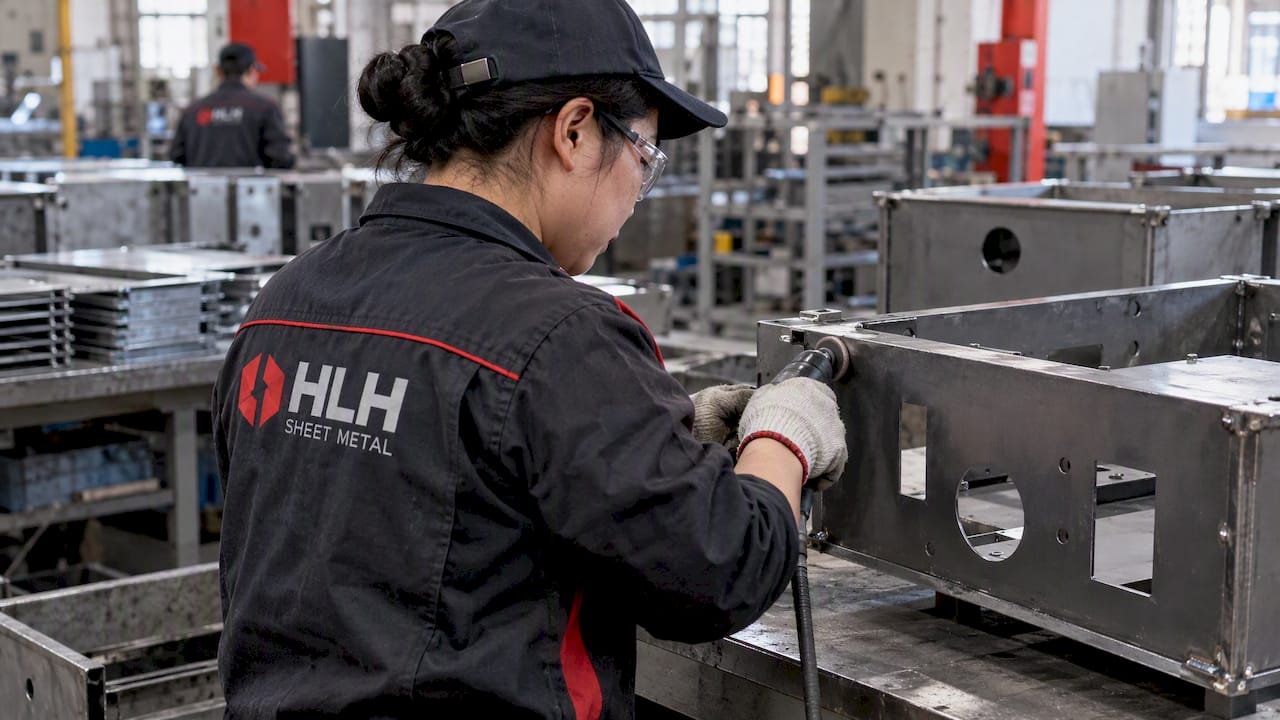
That wage gap narrows for automated or semi-automated steps like laser cutting or CNC bending, where the machine, not the hourly wage, does most of the work. It widens for hand-finishing, manual deburring, and multistep assembly, where Chinese factories can draw on a larger skilled workforce at a lower hourly cost. This is part of why welded assemblies and parts with heavy secondary labor show a wider cost gap than simple, mostly machine-cut brackets.
Currency Exchange Rates And Their Effect On Quotes
A Chinese quote priced in US dollars or Chinese yuan is exposed to currency movement between the quote date and the payment date, and that movement can erase or widen a price advantage without either side changing anything about the part.
A weaker New Zealand dollar against the US dollar makes an identical Chinese quote more expensive in local currency terms, even if the supplier’s price in their own currency never moves. Over a production run that spans months between quoting, tooling, and final payment, that swing can matter more than a modest unit-price difference between two suppliers.
Locking a quote’s validity period, agreeing on the currency and exchange rate basis in the purchase order, and timing large payments around favorable rate windows all reduce this exposure. For buyers running recurring orders, building a currency buffer into the landed-cost worksheet avoids an unpleasant surprise on an invoice that looked settled weeks earlier.
Environmental And Regulatory Compliance Costs
Compliance costs show up differently depending on where a part is fabricated and where it ships. New Zealand manufacturers generally work under local environmental and workplace regulations that are factored into their standard pricing, with less variability from one shop to the next.
Chinese suppliers operate under their own national and regional environmental standards, which have tightened over the past decade, particularly around surface finishing processes like plating and painting that involve chemical discharge. A supplier with established environmental controls and relevant quality certifications, including ISO-certified processes, tends to build these compliance costs into a stable quote rather than passing them on as a surprise later.
For buyers shipping into regulated industries such as medical devices or aerospace, compliance also extends to material traceability and documentation. Confirming a supplier’s certification scope before ordering avoids a situation where a cheaper quote turns out to lack the paperwork a regulated end customer requires.
After-sale Support And Warranty Costs
Warranty and after-sale support costs rarely show up on the initial quote, but they shape the real cost of a sourcing decision once a part ships. A New Zealand supplier sitting a short drive or flight away can usually resolve a defect claim or a fit issue faster, simply because the physical distance for returns or on-site inspection is smaller.
A Chinese supplier’s after-sale cost structure depends heavily on communication quality and responsiveness. Suppliers offering English-fluent support and a documented inspection process, such as first article inspection reports, tend to resolve disputes with less back-and-forth than those relying on email chains across language and time-zone gaps.
Freight for a warranty replacement also adds cost that a local supplier avoids entirely, since a defective part shipped internationally means paying for return freight, a new unit, and the lead time for both legs of that round trip. Factoring a realistic warranty-response cost into the total comparison, not just the unit price, gives a fairer picture of which option is actually cheaper over a part’s working life.
Balancing Cost, Quality, And Time: An Editorial View
Buyers who fixate on unit price alone tend to re-quote the same part twice: once from China, once again locally after a rework cycle burns the savings. The sharper approach treats landed cost, tolerance clarity, and iteration speed as one decision, not three separate conversations.
— Nash
Get An Apples-to-apples Landed-cost Quote
We make this comparison easier by quoting against your actual drawing, not a generic estimate. Our quality processes, multiple manufacturing plants in China, and rapid prototyping turnaround mean we can price both a low-volume prototype run and a production-scale order from the same CAD file, with support handling your questions directly instead of through a translation layer.
Upload your CAD or .STEP file and tolerance table for a quote that reflects your exact part, not a rough estimate.
Ask for a landed-cost worksheet alongside the FOB price so freight, duties, and levies are visible before you commit.
Request a sample or first article inspection report before a full production run to confirm fit and finish.
Our sheet metal fabrication capabilities page covers the full process range, from laser cutting and bending to welding and surface finishing. Get a quote started today and compare it directly against your local numbers.
FAQ
What Is The Average Cost Of Sheet Metal Fabrication?
Cost varies widely by material, thickness, bend count, and finish, so there is no single average figure that applies across part types. A useful comparison requires a matched quote on your specific drawing from more than one supplier rather than a generic per-part estimate.
Is It Cheaper To Manufacture In China Or Mexico?
This depends on the part type, volume, and destination market, since freight distance, duty treatment, and labor costs differ between the two. For New Zealand buyers specifically, the more relevant comparison is China versus local New Zealand fabrication, since Mexico sourcing is typically driven by proximity to North American destinations rather than Pacific shipping routes.
Is Manufacturing In China Comparable To Manufacturing Locally?
Quality outcomes depend more on the specific supplier’s certifications, inspection practices, and communication than on the country alone. Suppliers with ISO certification, documented inspection processes such as first article inspection, and English-fluent engineering support tend to produce results comparable to local shops, while unclear drawings and loose tolerances raise rework risk anywhere.
How Much Do Fabrication Drawings Cost?
Published pricing for drawing and engineering support is not publicly listed, since this work is typically quoted alongside the fabrication project itself. Buyers requiring new drawings or DFM review should request this as part of their fabrication quote rather than as a separate line item.

