



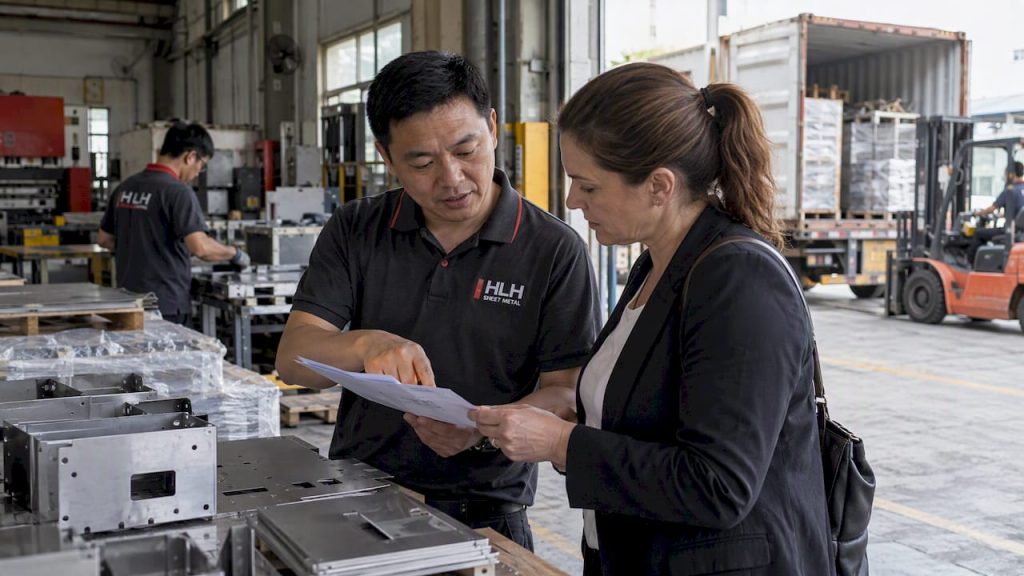

Sheet Metal Fabrication Cost: Can 50% Tariffs Erase China Savings?
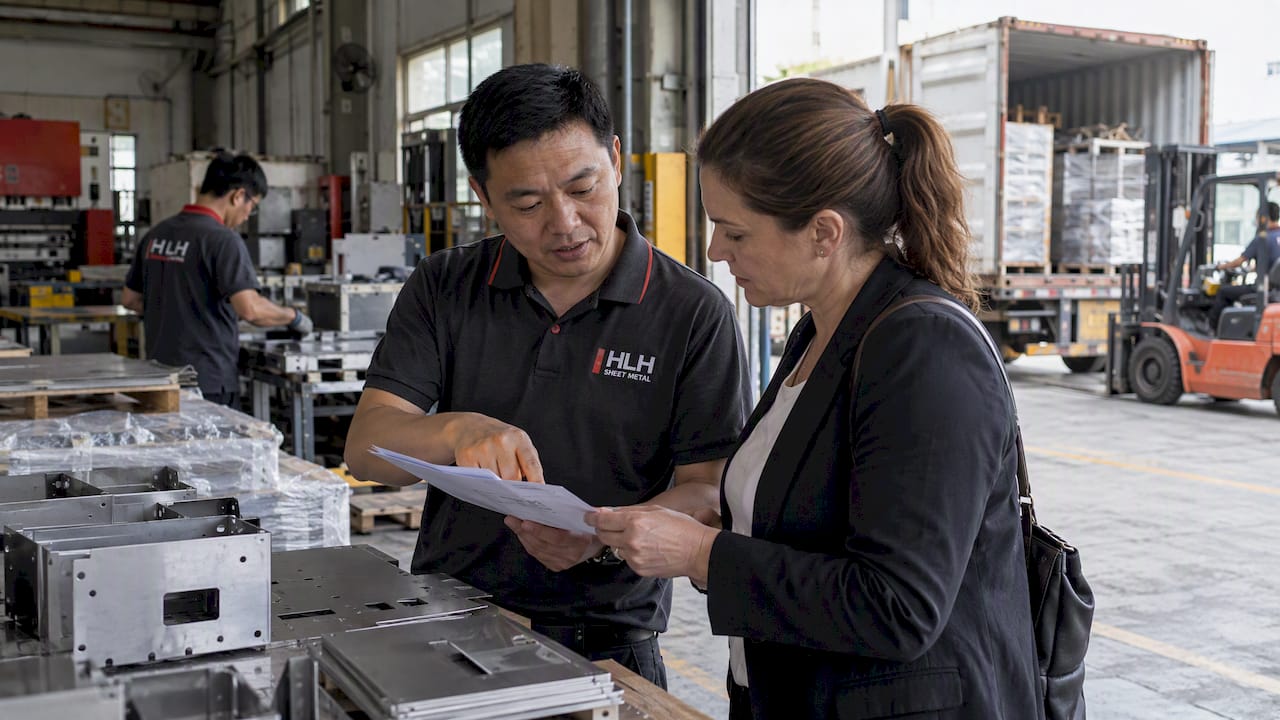
China typically delivers lower unit costs for high-volume, standardized sheet metal parts, while U.S. fabrication often wins on prototypes, rush jobs, and tight-tolerance work despite higher shop rates. The gap narrows once you factor in tariffs, freight, and rework risk. Shop rates for laser cutting commonly run $80 to $180 per hour in U.S. shops, so the right choice depends on volume, timeline, and duty exposure more than headline pricing alone.
TL;DR:
- Choose U.S. shops for prototypes, urgent parts needed within days, or tolerances tighter than roughly 0.005 inch, especially when designs may change.
- Chinese production usually suits orders above a few thousand units when specifications are stable, provided four to six weeks of lead time and duties are acceptable.
- Section 232 duties can reach 50%, depending on metal content and origin, while sea freight often adds six to eight weeks door to door.
- A $3,000 stamping die adds $15 per part across 200 units but only $0.15 across 20,000, so volume changes tooling economics.
- Compare itemized quotes covering material, labor, tooling, finishing, freight, duties, inspection, and documented rework or scrap rates rather than relying on bundled unit prices.
What Makes Up The Total Cost: Materials, Labor, Finishing, And Tariffs
A fabrication quote is never just a price per part. It is a stack of line items, and each one moves differently depending on where the work happens.
Material cost is the first variable. Aluminum sheet of common 1/8 inch thickness runs roughly $4.50 to $11.00 per square foot in 2026, with the range driven by alloy grade, mill finish, and order size. Steel is priced differently: galvanized steel trades at approximately $57 per 100 pounds as of March 2026. Heavier gauge, tighter flatness tolerances, and premium finishes like powder coating or anodizing all push these baselines higher, regardless of which country does the work.
Shop time is the second variable, and it is where labor-cost differences between the U.S. and China show up most directly; exploring cost-saving methods in manufacturing can help boost efficiency and reduce these labor costs. Laser cutting commonly costs $80 to $180 per hour in U.S. shops, while broader CNC and bending work falls in the $90 to $200 per hour range depending on region and machine class. Chinese shops generally quote well below the low end of these bands for comparable operations, which is the main reason high-volume programs gravitate offshore.
Loaded labor rate drives the gap more than any other single line item, because it compounds across every operation a part touches: cutting, forming, welding, and finishing.
- Material grade and gauge: thicker stock and specialty alloys raise cost per part in both countries.
- Finish complexity: anodizing, powder coating, and plating add labor hours and material surcharges.
- Process mix: parts needing laser cutting, bending, and welding stack hourly rates across three operations instead of one.
- Tariff exposure: Section 232 tariffs use a tiered rate structure that can reach up to 50% depending on metal content and country of origin.
Freight adds another layer. Sea freight is cheap per unit but slow, often six to eight weeks door to door, while air freight cuts that to days at a steep premium. A small prototype run can absorb air freight costs more easily than a large production order, where the per-unit freight line becomes significant.
Picture two scenarios: a 20-piece prototype panel run and a 5,000-piece production run of the same part. For the prototype, domestic shop rates and quick turnaround usually outweigh the labor-cost advantage of sourcing overseas, since tooling setup and small-batch inefficiency eat into any savings. For the 5,000-piece run, Chinese labor and scale economics typically produce a lower landed cost per part even after adding freight and duties, as long as tariff exposure on that metal and origin stays moderate. The crossover point depends heavily on tariff classification, which is why checking recent tariff developments before committing to volume production matters.
Hidden Costs That Erase The Headline Labor Savings
The quoted hourly rate or per-part price is rarely the real cost. Several line items tend to hide until they show up on an invoice or a delayed shipment.
Coordination costs climb when fabrication, finishing, and assembly happen at separate vendors. Each handoff introduces a chance for miscommunication on tolerances, finish specs, or packaging requirements, and a mistake caught late costs far more to fix than one caught during design review.
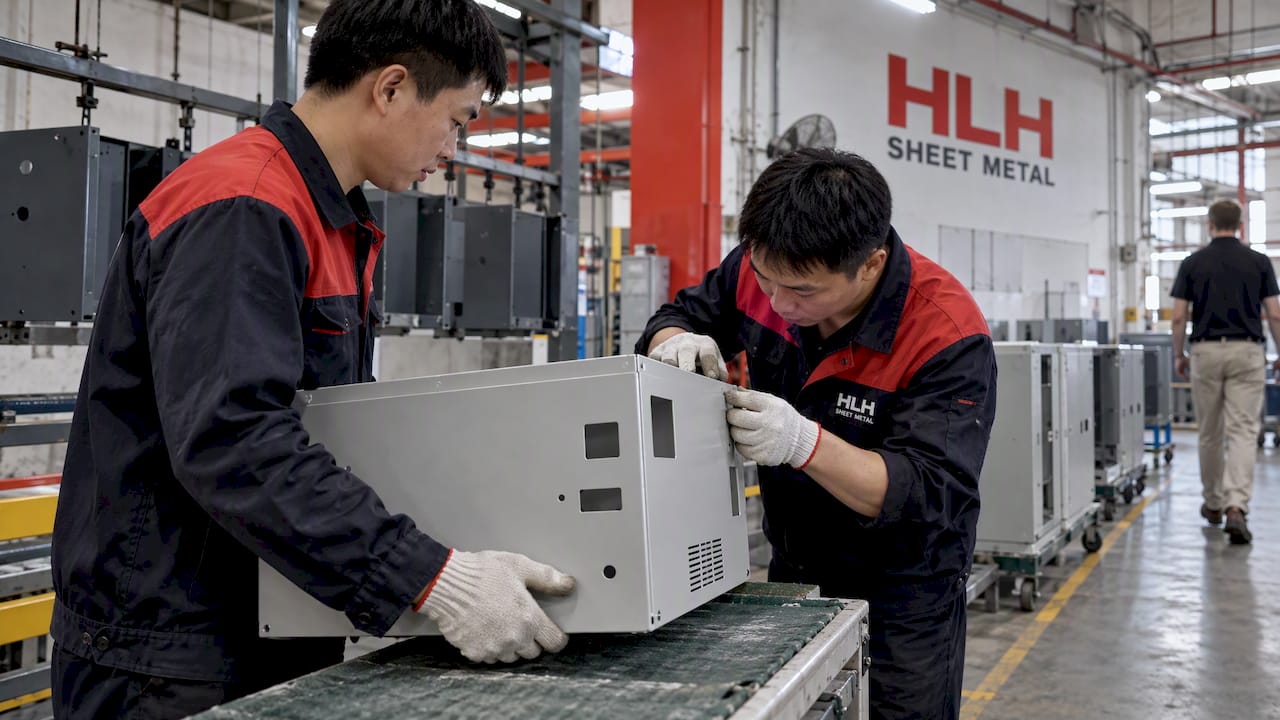
Rework and inspection are the biggest silent costs. ISO-certified suppliers reduce rework risk and can narrow the total cost of ownership gap relative to cheaper, noncertified shops, because consistent quality control catches dimensional drift before it becomes scrapped parts. Ask any supplier directly about their documented rework rate and how deviations are reported, not just whether they hold a certificate.
Tooling and fixture costs amortize differently depending on volume. A $3,000 stamping die spread across 200 parts adds $15 per unit; spread across 20,000 parts, it adds $0.15. This is one reason low-volume runs often favor domestic shops with lower minimum order requirements.
- Vendor handoffs between cutting, finishing, and assembly increase schedule risk and miscommunication.
- Rework rates vary widely between certified and noncertified shops, directly affecting total cost.
- Tooling and fixture costs amortize per part, so volume assumptions change the real unit price.
- Commodity and currency swings can shift a quote between the time it’s issued and when the order ships.
Pro Tip: Ask every supplier for their rework and scrap rate on the last 90 days of comparable orders, not just a general quality claim.
When To Choose U.S. Fabrication Versus Chinese Production
Matching your project to the right sourcing path comes down to a handful of variables: volume, tolerance, schedule, and risk tolerance.
- Choose U.S. fabrication when you need parts in days rather than weeks, especially for prototypes or engineering validation builds.
- Choose U.S. fabrication when tolerances are tight, below roughly 0.005 inch, or when design changes are still likely.
- Choose U.S. fabrication when intellectual property sensitivity or tariff exposure makes offshore sourcing a compliance risk.
- Choose Chinese production when order volumes exceed a few thousand units and specs are stable enough to lock a design.
- Choose Chinese production when price per unit matters more than a four to six week lead time.
- Consider a hybrid strategy: prototype domestically to validate design, then transition to Chinese production once specs are frozen and volume justifies the move.
Run through volume bands, tolerance bands, expected lead time, and duty exposure before requesting quotes. A part that fails even one of those checks, like a tight tolerance or urgent timeline, often makes domestic sourcing the better call regardless of unit price.
How To Compare Quotes Apples To Apples
A fair comparison between a U.S. and a Chinese quote requires the same line items from both suppliers, broken out rather than bundled into a single number.
Require each quote to list material spec and cost, process hours by operation, finishing charges, tooling or NRE fees, packaging, freight, duties, and inspection or rework terms separately. A bundled “per part” price hides which line item is actually driving the difference.
- Confirm ISO or AS9100 certification status and ask for the certificate number.
- Ask about sample policy: how many first-article samples are provided and at what cost.
- Confirm communication protocol: response time commitments and who handles technical questions.
- Ask for turnaround time separately for sample production and full production runs.
Build a simple landed-cost spreadsheet with rows for material, labor, tooling, freight, duties, and inspection, then stress-test it by varying freight mode, duty rate, and expected scrap percentage. Reviewing DFM practices that reduce fabrication cost before finalizing a design can also shrink both the U.S. and Chinese quotes simultaneously.
Why Practical Fabrication Experience Shapes This Guidance
This guide draws on hands-on sheet metal fabrication experience across prototyping and production environments, including direct work coordinating China-based manufacturing for international clients.
- We have manufacturing plants in China that support both small-batch prototypes and large production runs.
- Our quality control processes apply across laser cutting, stamping, bending, welding, and finishing operations.
- We provide English-speaking project support to help reduce communication breakdowns and coordination costs.
- Direct experience handling quality control factors that influence cost and rework rates in China-based production.
What Procurement Teams Should Actually Prioritize
The real question is never which country has the lower shop rate. It’s which total landed cost, inclusive of tariffs, freight, rework, and schedule risk, actually lands lower for your specific part and volume.
A hybrid approach, prototyping domestically and scaling production overseas once specs are frozen, often beats committing fully to either side too early.
— Nash
Get A Quote Built Around Your Total Landed Cost
We handle precision sheet metal fabrication from rapid prototyping through full-scale production, backed by ISO-certified quality control and English-speaking project support that keeps coordination costs down instead of hiding them in your invoice.
- Request a custom fabrication quote covering laser cutting, bending, welding, stamping, and finishing in one workflow.
- Explore our China-based production capabilities for both prototype runs and volume orders.
- Check our custom enclosure manufacturing services if your project involves server racks or disconnect enclosures.
Reach out with your part specs and volume targets, and we’ll break the quote into the line items you need to compare it fairly against any other sourcing option.
FAQ
Is China Better At Manufacturing Than The USA?
Neither country is universally better. China typically offers lower unit costs for high-volume, standardized parts due to labor and scale economics, while the U.S. often wins on speed, tight tolerances, and tariff-sensitive programs.
What Is The Cost Of Sheet Metal Fabrication?
Cost depends on material, gauge, process, and finish, with aluminum sheet running roughly $4.50 to $11.00 per square foot for common 1/8 inch thickness in 2026. Shop time adds to that baseline, with laser cutting commonly billed at $80 to $180 per hour in U.S. shops.
How Much Does It Cost To Manufacture In China?
Chinese shop rates generally undercut the lower end of U.S. hourly ranges for comparable laser cutting, bending, and welding work, though exact pricing varies by vendor and part complexity. The bigger cost driver for China-based orders is often freight, duties, and tariff classification rather than the base labor rate itself.
How Much Does It Cost To Fabricate Metal?
Fabrication cost combines material price, process hours across operations like cutting and bending, finishing, and any tooling amortization, with CNC and bending work commonly billed at $90 to $200 per hour in U.S. shops. Getting an accurate figure requires a full quote broken into these line items rather than a single blended price.
What Should I Check Before Choosing A Fabrication Supplier?
Confirm ISO or AS9100 certification, ask for documented rework and scrap rates, and request a full line-item quote covering material, labor, tooling, freight, and duties. Comparing suppliers on total landed cost rather than headline price per part gives a more accurate picture of which option actually costs less.

