




Table Of Contents
For sealed enclosures, start your shortlist with the Southco E9, Southco E3 VISE ACTION, and Rato quarter-turn series, then pick based on one rule: match grip range and sealing rating to your enclosure spec before anything else. Choose a compression latch when you need a weather seal or vibration resistance, and a simple cam latch when the panel only needs secure, repeatable access.
TL;DR:
- For NEMA or IP sealing, Southco E9 lists 20 N·m mounting nut torque and 5 N·m mounting screw torque; verify values for your exact part.
- The E3 VISE ACTION suits vibration and tighter panel draw, but grip and compression vary by cam and keeper, so confirm exact vendor specifications.
- Rato quarter turn latches suit indoor, low stakes cabinet access, where commodity parts cost less and are easier to source in volume than compression models.
- Test a sample on a prototype panel before fixing cutout dimensions, and confirm keeper allowance because keepers add several millimeters to required grip.
- A latch rating alone does not guarantee enclosure sealing; verify the installed latch, gasket, keeper clearance, and torque against the NEMA or IP rating.
Comparing The Leading Quarter-turn Latch Families
Each of these three families solves a slightly different problem, and the right one depends on how much sealing and draw-in force your enclosure actually needs. The table below lines up the core specification axes so you can narrow the field before checking individual datasheets.
The Southco E9 publishes documented compression values, torque specs, and optional keeper part numbers, which makes it the easier latch to specify with confidence when an enclosure has to pass a sealing requirement. The E3 VISE ACTION family is built around a vise-like compression action for panels that see more vibration or need a tighter fit against the frame, though exact grip and compression figures vary by the specific cam and keeper combination selected, so confirm these directly with the vendor’s catalog rather than assuming parity with the E9. Rato’s quarter-turn series shows up widely in knurled-knob and slotted-head variants sold through general retail and industrial supply channels, including multipacks aimed at commodity cabinet work, as seen in listings for quarter-turn slotted cabinet latches.
A few clarifications worth keeping in mind as you narrow the list:
- If your enclosure needs a NEMA or IP seal rating, the Southco E9’s published compression and keeper data make it the easier spec to defend in a design review.
- If vibration resistance matters more than a weather seal, the E3 VISE ACTION’s stronger draw-in action is the more relevant property to confirm with your supplier.
- If the application is indoor, low-stakes cabinet access, Rato’s commodity parts cost less and are easier to source in volume.
Some quarter-turn assemblies also ship as productized swivel-latch replacements with their own part numbers, which is useful when you’re matching an existing enclosure rather than designing from scratch, as shown in the Acorn 6307-025-001 swivel latching assembly listing.
How Quarter-turn Latches Work And What The Specs Mean
A quarter-turn compression latch operates in two phases inside a single 90-degree rotation. The first part of the turn moves the cam behind the enclosure frame without engaging the door. The remainder of the turn draws the cam into a compression phase that pulls the door tight against a gasket or seal, which is what separates a compression latch from a basic cam latch that only secures the panel without pulling it inward.
An example compression value published for the Southco E9 family shows the cam pulls the door a set distance toward the frame during the final part of the turn, which generates sealing pressure against a gasket.
A few terms worth defining before you read a datasheet:
- Grip range is the panel thickness window the latch is designed to clamp, and adding a keeper typically adds several millimeters to that calculation.
- Compression is the linear distance the cam draws the door inward during the final part of the turn, directly affecting seal pressure.
- Static load is the force the latch can hold before failure, relevant when the enclosure will be handled, shipped, or mounted under stress.
Material and finish choices affect both corrosion resistance and cost. Zinc alloy housings are common and economical, chrome plating adds a harder, more corrosion-resistant surface, powder coating gives better resistance in outdoor or chemical environments, and zinc-plated steel offers a lower-cost option where corrosion exposure is limited. Each of these trade-offs comes directly from the E9 datasheet’s material and finish table.
Sealing ratings matter just as much as the mechanical specs. A latch rated for NEMA 4 or IP66/IP67 service is built to hold compression against water and dust intrusion, which only works if the latch is installed with the correct torque. The E9 datasheet lists a mounting nut torque of 20 N·m and a fixed-grip mounting screw torque of 5 N·m, figures worth confirming against your own part number before installation rather than assuming they carry across the whole family.
Procurement Checklist And Questions To Ask Your Latch Supplier
Before you commit to a part number, run through a short checklist that covers fit, sealing, and sourcing risk.
- Confirm the grip range matches your panel thickness plus any keeper allowance, since keepers commonly add several millimeters to the required grip.
- Verify the published IP or NEMA rating actually covers your enclosure’s exposure, not just a general “weather-resistant” claim.
- Identify the cam type (fixed or adjustable) and confirm it against the mounting cutout dimensions in the datasheet.
- Check keeper and accessory part numbers are available and in stock, not just listed in a catalog diagram.
- Ask whether keyed or lockable variants exist if the application needs restricted access.
- Confirm the material and finish suit your environment, especially for outdoor or washdown applications.
- Get a firm lead time and minimum order quantity before you finalize a design around a specific part number.
When you contact a supplier, ask them to provide the datasheet and exact part number, published test ratings, accessory part numbers, recommended torque values, and whether a sample or sample-fit unit is available before a production run. A supplier that cannot produce a datasheet, cannot state a grip range, or gives a vague answer on sealing and torque is a red flag worth walking away from.
Pro Tip: Order one sample latch and test-fit it on an actual prototype panel before locking the cutout dimensions into your production tooling.
How A Certified Enclosure Manufacturer Helps With Latch Integration
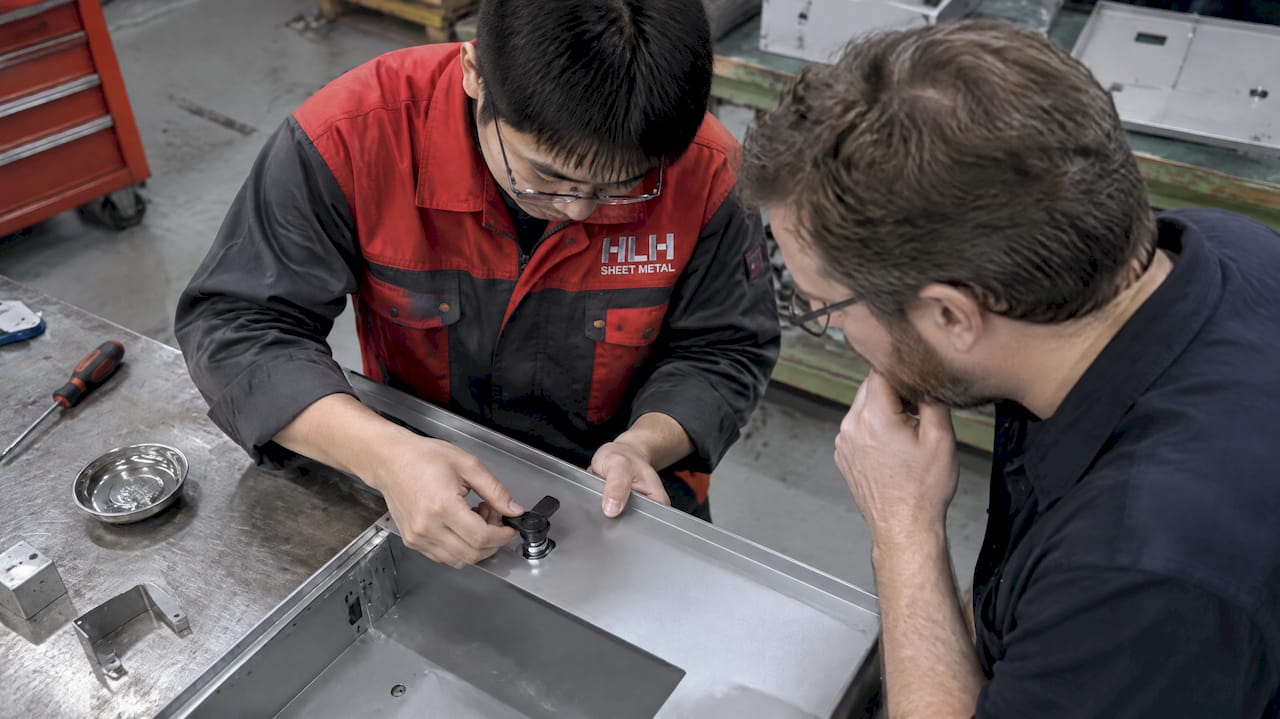
Specifying a latch in isolation often leads to rework once it meets the real enclosure. We design enclosures and latch cutouts together, which is where a manufacturer with design-for-manufacturing experience earns its keep. We have quality assurance backed by ISO certification, offer rapid prototyping, operate multiple manufacturing plants in China, and provide support in English for international clients.
During a design-for-manufacturing review, we typically:
- Recommend a latch family and cam type based on your sealing and load requirements.
- Size and position cutouts and keeper mounts before tooling is finalized.
- Build a prototype for sample fit checks before committing to production quantities.
If you are integrating a specific latch into a custom enclosure, ask for a sample production run and a finish-matching check before the main order ships.
Maintenance And Troubleshooting Common Issues
Quarter-turn latches are mechanically simple, but a few failure patterns show up repeatedly in the field. A latch that feels loose after installation usually means the grip range was undersized relative to the actual panel-plus-keeper thickness, so the cam never reaches full compression. A latch that binds or is hard to turn often points to a keeper that was mounted out of alignment or a cutout cut slightly off the datasheet dimensions.
Loss of seal over time is typically a gasket compression issue rather than a latch failure: if the compression value the latch delivers is correct but the enclosure still leaks, check the gasket material and thickness before replacing the latch itself. Corrosion at the cam or housing points to a finish mismatch for the environment, for example a zinc-plated part installed in a washdown or coastal application where a powder-coated or stainless option would hold up longer.
Routine maintenance is minimal: periodically check that mounting hardware is still at the specified torque, since vibration can back off fasteners over time, and inspect keepers for wear if the latch sees frequent cycling. Replacing a worn cam or keeper is usually cheaper and faster than replacing the whole latch assembly, provided the original part number and accessory codes were documented at installation.
Compliance And Industry Standards Relevant To Quarter-turn Latches
Sealing performance for quarter-turn latches is generally referenced against NEMA and IP rating systems rather than a single latch-specific standard. NEMA 4 and NEMA 12 enclosure ratings are common targets for latches used in HVAC and electronic enclosure applications, and the latch’s contribution to that rating depends on its compression value working correctly with the enclosure’s gasket system.
Because the latch is only one part of a sealed assembly, it’s worth confirming the rating claim applies to the installed configuration, not just the latch in isolation. Our guide to verifying IP-rated enclosures before tooling walks through what engineers should confirm on the enclosure side before production starts, which matters just as much as the latch’s own datasheet numbers.
For most commercial and industrial buyers, treat compliance as a system-level question. The enclosure, gasket, and latch all have to be specified together and tested as an assembly, since a correctly rated latch installed with the wrong torque or the wrong keeper clearance will not deliver the sealing performance on its own datasheet.
Comparing Quarter-turn Latches With Alternative Latch Types
Quarter-turn latches sit alongside several other mechanisms, and the right choice depends on how the panel is used. Slam latches close with a push and require no rotation, which makes them fast for frequent access but generally weaker on sealing than a compression quarter-turn design. Toggle latches and draw latches use a lever action to pull two surfaces together and can deliver strong clamping force, but they tend to sit proud of the panel surface, which matters for flush-mount or low-profile enclosure designs. Flush mount latches, quarter-turn or otherwise, keep the hardware recessed for a cleaner exterior and reduced snag risk, which is often the deciding factor in cabinetry and transportation applications.
Compared to these alternatives, a quarter-turn compression latch offers a useful middle ground: it is fast to operate with a quarter rotation, can be specified with documented compression and sealing performance, and is available in both tool-operated and tool-free actuation depending on the security level needed. The tradeoff is that achieving strong compression generally requires a tool-operated cam rather than a purely tool-free design, since tool-free convenience tends to come at the cost of sealing pressure and security.
Watching Where Quarter-turn Latch Specs Are Heading
We expect to see continued demand for IP66/IP67-rated and stainless-finish quarter-turn latches as more electronics move outdoors, from telecom cabinets to EV charging infrastructure. Tool-free designs will keep gaining ground for low-security applications, but they typically give up compression force and lockability, so they’re a poor substitute wherever sealing or restricted access actually matters. The habit worth building into any procurement process is simple: specify from datasheet values, not catalog marketing language, since grip range and compression numbers are what actually determine fit and seal performance.
— Nash
Get Latches Integrated Into Your Custom Enclosure Design
If you’re specifying a quarter-turn latch for a new enclosure rather than retrofitting an existing one, we build the enclosure and the latch cutouts together so the fit is right the first time. Our fabrication work covers laser cutting, bending, welding, and surface finishing, backed by ISO-certified quality checks and rapid prototyping, so a latch family and cutout design can be validated on a sample before full production runs.
When you request a quote, ask for a design-for-manufacturing review, a sample fit check, a matched finish spec, and recommended latch part numbers for your sealing requirement. Our custom disconnect enclosure manufacturing services page shows the kind of enclosure work where latch integration is part of the scope, and it’s a good starting point for a quote request:
- Request a DFM review before finalizing cutout dimensions.
- Ask for a sample or prototype fit check with your chosen latch family.
- Confirm finish matching between the enclosure and the latch hardware.
Start a sheet metal fabrication quote request with your latch and sealing requirements included, and we’ll scope the enclosure design around them.
FAQ
What Are The Three Types Of Latches?
Latches are often grouped into slam latches, compression (quarter-turn) latches, and toggle or draw latches, each distinguished by how the mechanism engages and whether it pulls the panel into a seal. Quarter-turn compression latches are the group that adds a documented compression phase, which is why they’re specified where a weather or dust seal matters.
What Is An Acorn Quarter-turn Latch?
An acorn-style quarter-turn latch typically refers to swivel or acorn-shaped latching assemblies sold as productized, part-numbered replacements, such as the Acorn 6307-025-001 right-hand swivel latching assembly. These are generally used to match or replace an existing latch rather than as a new design-in part.
What Are The Best Cabinet Latches For An RV?
RV cabinetry generally benefits from flush-mount, tool-free quarter-turn latches that resist vibration during travel without needing a tool to open, since frequent daily access matters more than a sealing rating in most interior cabinet applications. For exterior compartments exposed to weather, a compression quarter-turn latch with an IP-rated seal is the stronger choice.
What Are The Different Types Of Latches?
Beyond quarter-turn compression latches, common types include slam latches, toggle latches, draw latches, and flush mount latches, each suited to different combinations of access frequency, sealing need, and panel profile. The right type depends mainly on whether the application needs a sealed compression fit, fast single-hand access, or a low-profile exterior.

