




Table Of Contents
Tooling amortization is the practice of recovering a mold or die’s upfront cost, usually through a per-unit price adder or a time-based schedule rather than through a lump-sum payment. Most commonly the buyer pays for the tooling, but when a supplier fronts the cost, the recovery runs through the part price. The immediate action: keep that commercial recovery ledger completely separate from statutory depreciation, and insist on contractual ownership and shortfall protections before agreeing to it.
TL;DR:
- Keep commercial tooling recovery separate from statutory depreciation to avoid accounting and budgeting errors.
- Clarify ownership, shortfall handling, and repayment terms contractually before starting production.
- Use per-unit, time-based, or financed schedules based on risk appetite, with each method affecting cash flow and cost recovery differently.
- Ensure detailed, separate tooling cost breakdowns are included in quotes to maintain transparency before signing agreements.
- Operate quality, prototyping, and risk mitigation practices on the shop floor to reduce mid-run modifications and shortfall risks.
What Counts As A Tooling Cost, And What Gets Capitalized
A tooling cost line usually runs wider than the mold or die itself. Before we quote or approve a tooling budget, we break it into its real components, because mixing capital costs with routine servicing distorts both pricing and the books.
- Design and engineering work needed to translate a part into a moldable or stampable tool
- Mold, die, or fixture fabrication itself
- Trial runs and first-article inspection to validate the tool
- Modifications discovered during trial and ramp-up
- Freight, duties, and installation at the production site
- Commissioning and acceptance testing before full production
Design, fabrication, freight, and installation typically meet capitalization criteria because they bring the asset to its working condition. Routine maintenance, consumable wear parts, and minor repairs are usually expensed as incurred rather than added to the tooling’s cost base. Capitalization rules differ by jurisdiction and tax regime, so this split should be confirmed with a qualified accountant rather than assumed from industry habit.
Commercial Recovery Methods: Per-unit, Time-based, And Financed Schedules
Suppliers recover tooling investment through a handful of well-established pricing mechanisms, each suited to a different risk profile.
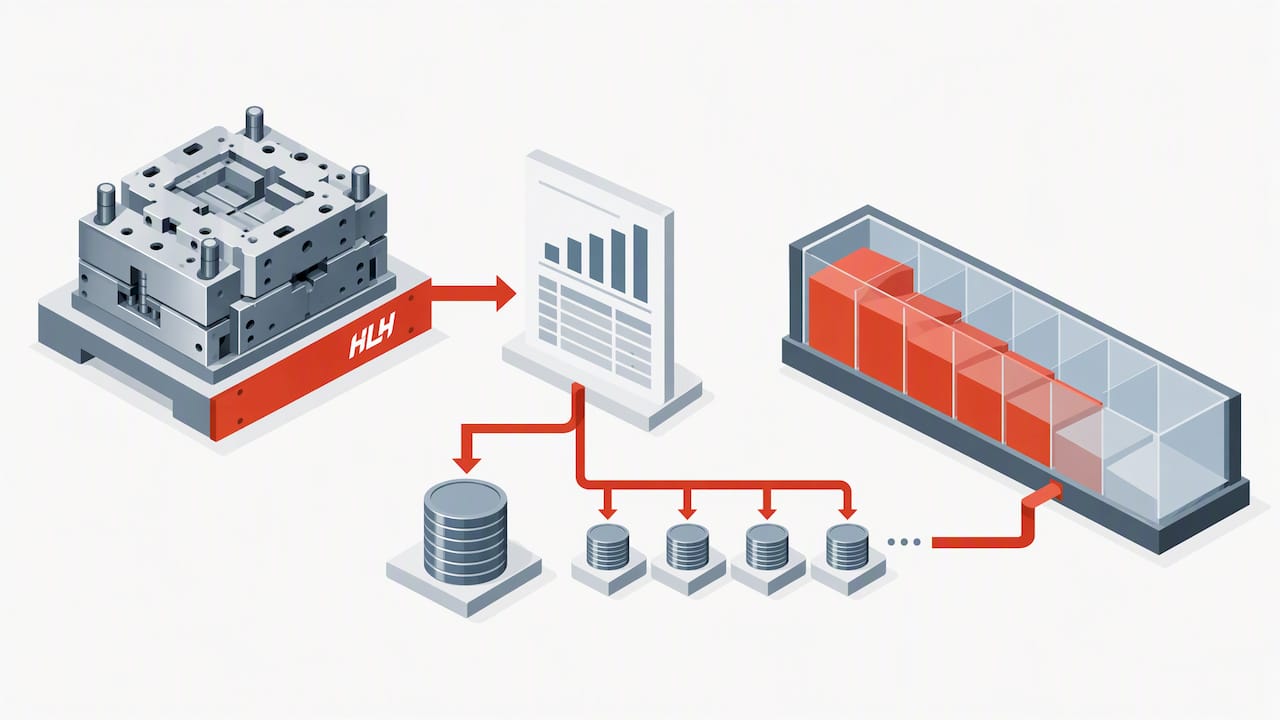
- Per-unit adder: divide the tooling cost by the committed production volume and add that figure to each part’s price; this works best when the buyer has given a firm volume commitment.
- Time-based amortization: spread the cost over a fixed term (12, 24, or 36 months) regardless of actual shipped volume, which gives the supplier predictable cash flow but can overcharge a buyer whose orders slow down.
- Financed schedules: the supplier effectively loans the tooling cost and recovers it with interest, often using an interest-first repayment curve similar to a sum-of-years-digits method, as described in supplier-side tooling amortization guidance.
- Hybrid approaches: a partial upfront payment combined with a reduced per-unit adder, splitting risk between both parties.
Each method trades off differently. Per-unit adders expose the supplier to volume risk if orders fall short. Time-based schedules protect the supplier’s cash flow but reduce the buyer’s pricing flexibility. Financed schedules add interest cost but smooth out large upfront payments, which matters most to buyers managing tight working capital.
Accounting Vs Commercial Recovery: What IAS 16 Actually Requires
Statutory depreciation and commercial tooling recovery answer different questions, and treating them as one schedule is a common and costly mistake. Under IAS 16, Property, Plant and Equipment, molds, tools, and dies qualify as property, plant, and equipment once recognition criteria are met, and depreciation must reflect the asset’s useful life and consumption pattern. In some cases, tooling cost is absorbed into inventory as part of conversion costs rather than carried as a standalone fixed asset.
The economic recovery plan built into part pricing and the statutory depreciation plan on the balance sheet are not the same calculation and should never be merged into a single schedule.
A tooling register that tracks ownership, in-service date, useful life, and impairment indicators is the control point that keeps commercial and statutory schedules reconciled, according to IAS 16’s cost recognition guidance. That register should sit alongside, not inside, the commercial amortization ledger used for part pricing. Initial measurement under the standard includes the purchase price and directly attributable costs such as installation and commissioning, which is why the cost components described earlier need to be sorted correctly before either schedule is built. Finance teams that keep a clean tooling register avoid the more common audit headache: a depreciation schedule that silently absorbed a supplier’s financing interest.
Worked Examples: Per-unit And Time-based Schedules Side By Side
Numbers make the distinction between recovery methods concrete. These are illustrative figures, not quotes from any specific project.
- Per-unit example: say a stamping die costs $120,000 and the buyer commits to 100,000 units. The per-unit adder is $120,000 divided by 100,000, or $1.20 per part, added on top of the base piece price until the tooling balance is recovered.
- Time-based example with interest: the same $120,000 tool, amortized over 24 months at a supplier-quoted financing rate, following an interest-first repayment curve means early-month payments cover more interest and less principal, a structure outlined in industry amortization guidance. Monthly payments stay level, but the principal balance declines more slowly at first.
- Shortfall scenario: if the buyer only orders 60,000 units against that 100,000-unit commitment, $72,000 of the $120,000 has been recovered through the per-unit adder, leaving a $48,000 shortfall. Without a contractual shortfall clause requiring a lump-sum settlement or minimum-purchase makeup, that balance sits as an unrecovered cost on the supplier’s books.
These examples show why the recovery method chosen at quoting time has a direct, calculable effect on both the per-part cost a buyer sees and the cash position a supplier carries until the tool pays for itself.
What To Require Before Accepting A Tooling Amortization Clause
A short checklist before signing protects both sides from the shortfall scenario above.
- Ownership and lien language: who owns the tool, and does the supplier hold a lien until recovery is complete.
- Repayment schedule: the exact term, adder, or financing rate, stated in the contract rather than left to a quote email.
- Shortfall clause: what happens, financially, if actual volume falls below the committed amount.
- Exclusivity stipulation: whether the tool can be used for other customers’ parts if the relationship ends.
- Legal-cost allocation: who pays if a dispute over tooling recovery goes to arbitration or litigation.
Operationally, pair that contract language with a tooling register, a production-volume KPI tracked against the committed baseline, and clear inspection and custody responsibilities so no one is guessing who maintains the tool mid-contract.
Pro Tip: Model the tooling payment’s effect on your credit line before you sign, not after the first invoice lands; a tool that looks small against annual revenue can still strain a monthly facility, a dynamic cost-modeling guidance for factories walks through in more detail.
How Tooling Risk Gets Managed On The Shop Floor
Contract language only works if the underlying tooling process reduces the chance of a shortfall or mid-run modification in the first place. We approach tooling risk operationally, not just contractually.
- Quality assurance protocols applied to every tooling and production stage
- Prototyping before committing to full die fabrication, catching design issues early
- Manufacturing plants in China, giving flexibility between small-batch and large production runs
- Project support for international clients coordinating tooling decisions across time zones
Early design-for-manufacturability adjustments, documented through our DFM guidance for sheet metal CAD work, catch costly modifications before a die is cut rather than after. Progressive die projects benefit from the same discipline, as explained in our notes on progressive die stamping economics.
Three Rules Of Thumb When A Supplier Proposes Amortization
Keep the commercial recovery schedule and the statutory depreciation schedule in separate documents, always. If you accept tooling cost into the part price, require shortfall and ownership clauses in writing before production starts, not after a volume shortfall surfaces. When volume commitments feel uncertain, push for staged payments or supplier financing terms instead of letting the part price absorb all the risk.
— Nash
Get A Transparent Tooling-cost Breakdown Before You Commit
We build tooling-cost clarity into every quote, from early prototype runs through full production, so the amortization math is visible before you sign anything.
- A line-item tooling cost breakdown separate from piece-price and finishing costs
- ISO-certified quality checks at each tooling and production stage
- Flexible capacity across prototype and mass-production volumes
If you want a quote that separates tooling recovery from per-part pricing, start with our sheet metal fabrication capabilities page and request a tooling schedule alongside your part quote.
FAQ
What Is Tooling Amortization?
Tooling amortization is the recovery of a mold, die, or fixture’s upfront cost over a production run, typically through a per-unit price adder or a fixed-term schedule. It is a commercial pricing mechanism, distinct from the statutory depreciation an accounting team records under standards like IAS 16.
What Does Amortization Mean In A Manufacturing Context?
In manufacturing, amortization generally means spreading a cost, such as tooling, over the units or time period it supports rather than expensing it all at once. The term overlaps with depreciation conceptually, but tooling amortization usually refers to commercial cost recovery built into pricing rather than a balance-sheet depreciation entry.
What Is A Tooling Expense?
A tooling expense covers everything needed to bring a mold, die, or fixture into working condition, including design, fabrication, trial runs, freight, and installation. Routine servicing and consumable wear parts are typically treated as separate operating expenses rather than part of the tooling cost base.
How Is Tooling Cost Defined, And Who Usually Pays For It?
Tooling cost is the full upfront investment in a mold, die, or fixture plus the directly attributable costs of getting it production-ready, such as commissioning and first-article trials, consistent with cost components described under IAS 16. Either the buyer pays it directly as a one-time cost, or the supplier fronts it and recovers it through a per-unit adder or financed schedule.
How Does Tooling Amortization Differ From Depreciation?
Tooling amortization is a commercial recovery mechanism built into part pricing, while depreciation is a statutory accounting calculation based on useful life and consumption pattern under frameworks like IAS 16. The two schedules can use different timeframes and methods, so they should be tracked separately rather than treated as one calculation.

