




Table Of Contents
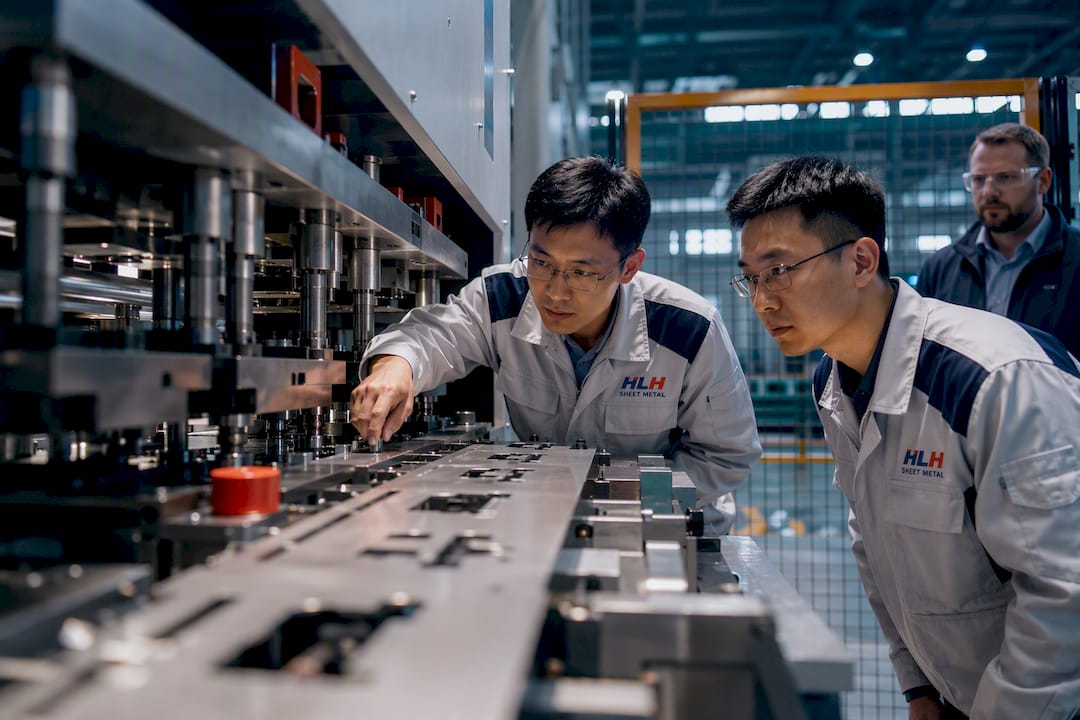
Progressive die stamping is the right call for mid to high volume parts that need several punching, bending, or forming operations completed in one automated pass through a single die. Choose it when annual volumes justify tooling investment, typically tens of thousands of units and up. Watch for two trade-offs: tooling cost and lead time run higher than simpler methods, and very deep draws or complex 3D geometry can push you toward a different process. The sections below cover process mechanics, cost modeling, and how to evaluate a stamping supplier with modern Tekla Structures & BIM: Revolutionizing Structural Steel Design and Fabrication approaches.
TL;DR:
- Progressive die stamping is optimal for high-volume parts with moderate complexity, typically requiring tens of thousands of units annually to justify tooling costs.
- The process involves multiple stations performing piercing, blanking, bending, coining, and cutoff in a continuous, synchronized cycle, with tool wear and maintenance impacting quality.
- Costs are heavily influenced by feature complexity, station count, and material properties, making design simplification crucial to reduce tooling risk and expense.
- Transfer presses are better suited for deep draws and complex 3D shapes, often at lower speeds and higher costs, while compound dies serve low-volume or prototype applications.
- Evaluating a supplier requires understanding tool life expectancy, in-die inspection protocols, and the ability to scale from prototypes to full production within an ISO-certified system.
What Is Progressive Die Stamping?
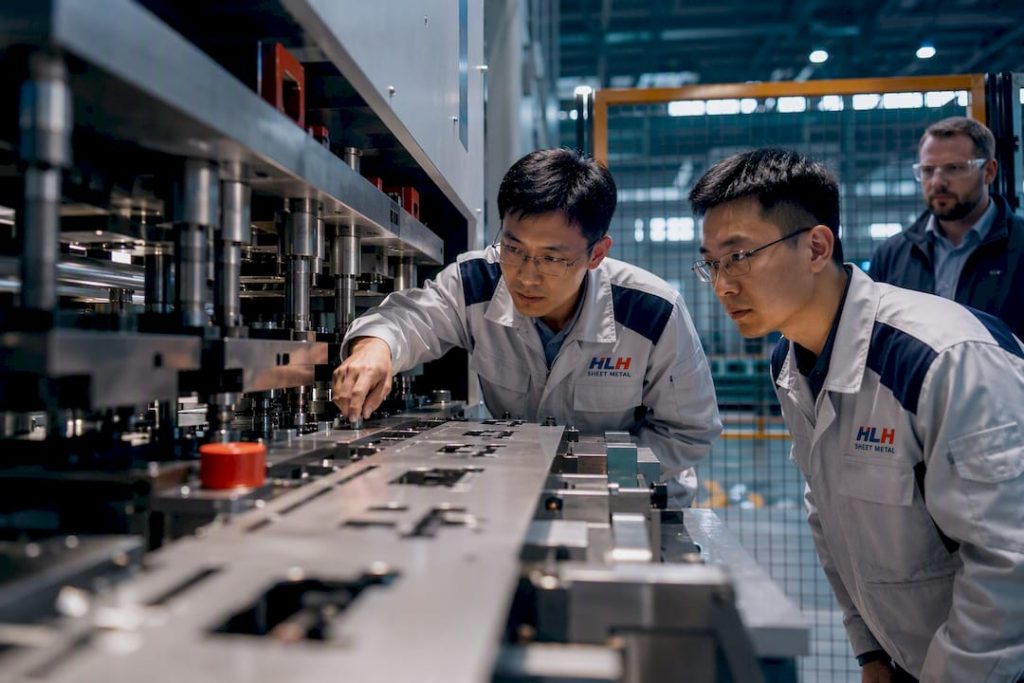
Progressive die stamping feeds a continuous coil of metal strip through a die containing multiple stations arranged in a line. Each stroke of the press advances the strip one step and performs a different operation at each station simultaneously, so a finished part drops free at the last station on every cycle. The name comes from that progression: the part takes shape gradually as the strip moves forward, rather than being formed all at once. This is the mechanic behind most high volume stamping programs running today.
A functioning line depends on several components working in sync:
- Coil and feeder: uncoils and indexes strip material at a controlled pitch
- Pilots: precision pins that correct strip position before each station cuts or forms
- Die stations: individual tooling blocks for piercing, bending, coining, or forming
- Press: mechanical or servo press supplying stroke force and timing
- Scrap handling: chutes or conveyors clearing skeleton scrap between cycles
When you send out an RFQ, specify target strokes per minute, dimensional tolerances, annual volume, and material spec up front. Suppliers price and design differently depending on whether you need 60 strokes per minute or 400.
How Does Progressive Die Stamping Work Step By Step?
The strip enters the press already slit to width, and the feeder pulls it forward by a fixed increment on every cycle. Pilot pins drop into pre-pierced holes to correct any drift before the next operation fires, which is what keeps hole positions and bend lines consistent across a 50,000-part run.
From there, the strip moves through a defined sequence:
- Piercing — punches holes or slots used later for piloting or as final features
- Blanking — cuts the outer profile or separates sections of the part
- Bending — forms flanges, tabs, or angles into the flat blank
- Coining or forming — adds precise features like embossments, ribs, or controlled radii
- Cutoff — severs the finished part from the carrier strip
Each press stroke runs all stations at once, so the part exiting at cutoff was actually started several strokes earlier further back in the strip. Finished parts drop through a chute, often onto a conveyor, while sensors monitor strip position, pilot engagement, and misfeeds to stop the press before it damages tooling. Higher-volume programs favor mechanical presses with servo feeds for consistent timing.
Pro Tip: Ask your supplier whether they use in-die sensors to detect a missed pilot or a double-fed strip. A press that keeps running through a misfeed can destroy an entire tool section in seconds, and that repair cost dwarfs what the sensor package would have cost.
Transfer presses solve a different problem. They move individual blanks between stations with mechanical fingers instead of a connected strip, which allows for deeper draws and more complex 3D shapes. If your part needs a deep cup or a shape that can’t stay attached to a flat strip carrier, a transfer press is usually the better fit, even though cycle rates run slower than a progressive line.
What Are The Advantages And Limitations Of Progressive Stamping?
The economics only work in your favor at volume, and understanding why matters more than the pros-and-cons list itself.
Advantages:
- High throughput once the die is running, since every station fires on every stroke
- Tight repeatability across long runs, thanks to pilot-controlled positioning
- Low per-part cost after tooling is amortized across the production run
- Fewer secondary operations, since piercing, forming, and cutoff happen in one pass
Limitations:
- Tooling cost is front-loaded and substantial before the first good part ships
- Deep-draw geometry and tall vertical walls exceed what a progressive die handles well
- Extreme forming can introduce ovality or concentricity drift on round features
Progressive presses run at very high cycle rates, often well over 800 parts per minute in the right application, though that ceiling drops fast once part geometry demands deep-draw work better suited to a transfer press. When you’re evaluating a supplier, ask about expected tool life in strokes, their preventive maintenance schedule, and what quality checks run during production, not just at final inspection.
Material And DFM Choices That Reduce Tooling Risk
Material thickness, temper, and cold-work history all affect how cleanly a strip feeds and forms. Softer tempers bend more predictably but wear differently at piercing stations than harder, cold-rolled stock, so your material spec should match the forming operations the part actually needs. Thinner gauges feed faster but tolerate less pilot correction error before a hole or bend shifts out of tolerance.
A few design moves consistently cut station count and tooling risk:
- Simplify features that don’t serve a functional purpose. Every extra bend or coined detail is another station, another cost.
- Keep hole-to-edge and hole-to-bend clearances generous enough that piercing punches aren’t fighting tight margins.
- Standardize radii where possible so tooling reuse across part families is realistic.
- Design pilot holes into non-critical areas so alignment doesn’t compromise a functional feature.
Pro Tip: Run a first-article inspection against the full print, not just critical dimensions, then set a periodic dimensional sampling cadence, every few thousand strokes on high-volume jobs, to catch tool wear before it drifts out of spec. In-die checks that flag a missed pilot in real time catch problems long before a batch reaches final QA. For a deeper walkthrough of tolerance management specific to progressive tooling, this progressive die stamping tolerance checklist covers the practical side in more detail, and general sheet metal DFM guidance applies directly to feature simplification decisions.
Progressive Vs Transfer Vs Compound Dies: Which Fits Your Part?
Each method trades speed against forming complexity, and picking wrong shows up as either a blown budget or a part that can’t be made at all.
- Progressive dies: highest speed, moderate forming complexity, lowest per-part cost at volume, moderate to high tooling cost
- Transfer dies: moderate speed, highest forming complexity (deep draws, complex 3D shapes), higher per-part cost, higher tooling cost
- Compound dies: lower speed, limited to simpler blank-and-pierce operations, lower tooling cost, best suited to lower volumes or prototypes
Run through a short checklist before locking in a method: What’s your annual volume, and does it clear the threshold where tooling amortization pays off? Does the part need deep-draw forming that a flat strip can’t accommodate? How tight are your critical tolerances, and does that call for pilot-controlled progressive tooling or the added stability of a transfer line? A compound die often makes more sense for prototype runs or annual volumes in the low thousands, where progressive tooling cost can’t amortize fast enough to matter.
How Do You Model Tooling Cost And ROI?
Die cost scales with feature count, station number, and tool steel grade, so a simple four-station blank-and-form tool costs a fraction of a twelve-station die producing a formed connector with tight coining tolerances. Complexity is the real cost driver, not part size.
Lead time typically breaks into four phases:
- Design and DFM review, where feature simplification either saves or adds stations
- Prototype tooling and first-article samples, often built as a soft or bridge tool
- Tryout and iteration, adjusting pilots, clearances, and press parameters
- Sign-off and production ramp, moving to full-speed cycle rates
A basic break-even model divides total tooling cost by the savings per part versus an alternative process, then compares that unit count against your projected annual volume. If tooling costs a set amount and progressive stamping saves a fixed sum per part over compound tooling, dividing the two gives your break-even unit count directly. High-volume stamping programs lean on this math because per-part cost drops meaningfully once tooling is amortized, which is the entire economic case for the method. When negotiating a quote, clarify tool ownership, who covers maintenance over the tool’s life, and what rework allowance applies if early production reveals a design issue.
What Parts Are Typically Made With Progressive Dies?
Progressive stamping shows up wherever a part needs multiple features formed into a repeatable shape at real volume. Automotive clips, brackets, and terminal tabs are classic examples, often running into the millions of units over a model’s lifecycle. Electronics connectors and contact pins rely on the same tight pilot control that keeps hole positions consistent stroke after stroke.
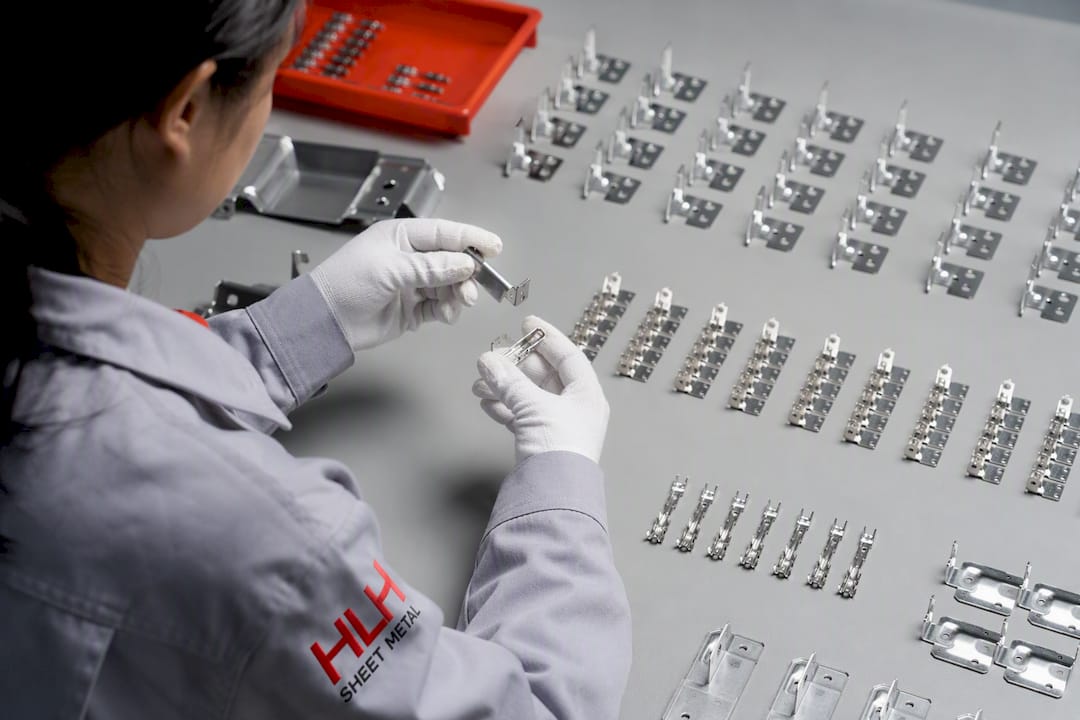
Appliance components like mounting brackets and structural panels, along with shallow medical device housings, round out the common categories. What they share is moderate complexity, flat or shallow geometry, and volume high enough to justify the upfront tooling spend. If your part needs a deep cylindrical draw or highly irregular 3D contouring, another forming method, likely a transfer press or a hydroforming process, will serve you better than forcing it through a progressive line.
What HLH Sheet Metal Brings To Progressive Die Projects
Some manufacturers run progressive-die programs under ISO-certified quality management across multiple manufacturing plants, which can give projects room to scale from prototype runs to full production without switching suppliers. Every project moves through a tolerance checklist and a documented prototype-to-production handover, detailed in our tolerance management guide and prototyping guide. Before committing to any supplier, ask three questions: what’s the expected tool life in strokes, who owns the tooling at program end, and what’s the in-die inspection cadence during production runs.
— Nash
Ready To Move Your Part Into Progressive Tooling?
If you’re comparing progressive stamping against transfer presses or compound tooling for a part that hasn’t been quoted yet, the fastest way to know which fits is a direct design review rather than more research. HLH SHEET METAL runs Sheet Metal Stamping Services alongside prototyping, laser cutting, and finishing under one ISO-certified quality system, so tooling decisions and production runs stay with the same team from first sample to full volume. Submit your part drawing and target volume for a design-for-manufacturability review, and ask for feedback on station count and feature simplification before tooling gets cut. If your project also needs bent brackets, welded assemblies, or finished enclosures alongside the stamped components, browse full Sheet Metal Fabrication capabilities and request a prototype tooling quote to get firm numbers against your production plan.
Sources
Engineers evaluating a stamping supplier should check machine safeguarding requirements under OSHA’s mechanical power press standard, which governs point-of-operation protection on stamping presses. Quality system claims are worth verifying against the ISO standards library, the basis for most stamping QA certifications. The NIST Manufacturing Extension Partnership offers process improvement resources for sourcing teams, and the Wikipedia entry on progressive stamping remains a solid technical starting point for station-by-station process detail.
FAQ
How Does Progressive Die Stamping Work?
A continuous metal strip feeds through a multi-station die, advancing one step per press stroke while each station performs a different operation, piercing, bending, or forming, at the same time. The finished part separates from the strip at a final cutoff station, and pilot pins maintain alignment throughout the run.
Why Are Stamping Dies So Expensive?
Die cost scales with the number of stations, feature complexity, and tool steel grade needed to hold tolerance over the production run. A twelve-station die with tight coining features costs far more than a simple four-station blank-and-form tool, since more stations mean more precision-machined tooling components and longer design time.
What Is The Purpose Of A Stamping Die?
A stamping die shapes flat sheet or coil material into a finished part through controlled cutting, bending, or forming operations under press force. It replaces multiple separate manufacturing steps with one repeatable tool, which is why high-volume programs depend on stamping dies to hold cost and consistency at scale.
What Are The Three Main Types Of Stamping Dies?
The three main types are progressive dies, transfer dies, and compound dies, each suited to different volume and geometry needs. Progressive dies favor speed and flat-to-moderate complexity, transfer dies handle deep draws and complex 3D shapes, and compound dies suit simpler parts or lower production volumes.
How Much Does HLH Sheet Metal Charge For Stamping Services?
Pricing depends on part complexity, tooling requirements, and production volume, so current quotes are available directly through HLH SHEET METAL’s stamping services page. Submitting a part drawing gets you a specific quote rather than a general estimate.
Recommended
- 0.5–3 mm Sheet Metal: When to Specify Spot Welding for Engineers
- Sheet Metal DFM: CAD Settings That Cut China Production Costs
- Sheet Metal DFM: A Practical Design Guide for Engineers

