




Table Of Contents
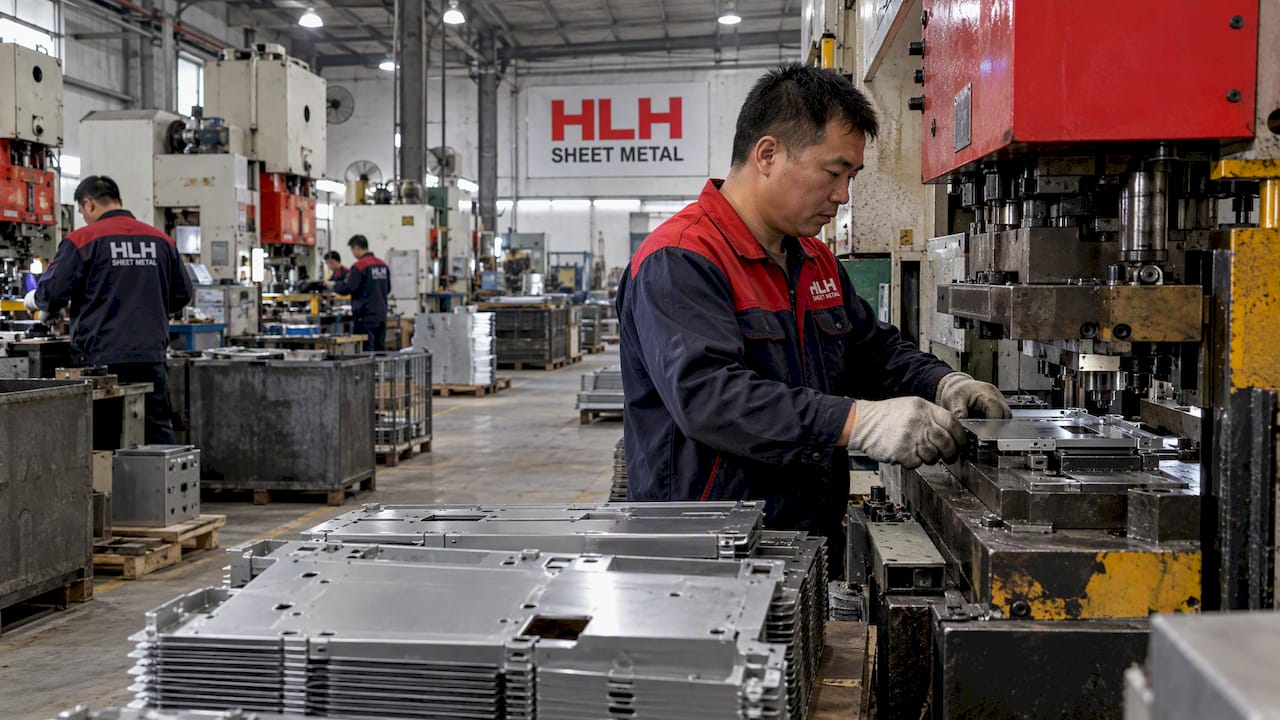
For international buyers needing high-volume sheet metal or stamped parts from China, we recommend starting with HLH Sheet Metal as a single-source partner, then benchmarking against JUSHUN Metal, Foxron Precision Metal Parts Co., Ltd., Dongguan Fortuna Metals Co., Ltd., and Suzhou Gbt Metal Products Co., Ltd. These Chinese Metal Fabricators qualify for large runs because they combine multi-shift press capacity, progressive-die tooling, and documented quality systems with real export experience.
TL;DR:
- Request press tonnage, bed size, shift schedules, and die ownership terms; verify ISO 9001 certificates, plus ISO 13485 for medical device work.
- Request a comparable first article report and process control charts, then inspect the assigned line and sample finished parts against drawing dimensions.
- Allow one to four weeks for prototypes, four to twelve for tooling, two to four for pilots, and four to twelve for full production ramp.
- Higher minimum order quantities can lower unit costs as tooling expenses spread across more parts, while firmer schedules improve negotiating leverage.
- Use one supplier when its equipment covers the part family; qualify a second line only when a stoppage would disrupt downstream schedules.
How HLH Sheet Metal Compares To Other High-volume Chinese Metal Fabricators
Picking a factory for a six-figure unit run is a different exercise than sourcing a one-off prototype. Capacity claims on a vendor’s website rarely match what a plant can actually sustain across three shifts, so the comparison below focuses on the signals that separate real volume producers from shops that only say they handle scale.
We have an operation structured to separate prototyping and mass production to avoid competition for the same press time. That structure lets an OEM move from a sample part to a production order without re-qualifying a new vendor, and our quality processes are built to ISO standards with a support team that works in English across time zones. Among the shops reviewed here, that combination of single-source scale and buyer-facing communication is the clearest fit for procurement teams managing large international orders.
JUSHUN Metal shows up repeatedly in industry roundups of large sheet metal fabricators, with integrated laser cutting, bending, and finishing lines positioned for OEM sheet metal assemblies. Foxron Precision Metal Parts Co., Ltd. leans toward precision stamped and machined components, a narrower niche than full-assembly production. Dongguan Fortuna Metals Co., Ltd. brings genuine tooling depth for progressive-die stamping, which matters for buyers whose parts require high-cavity-count dies and long die life. SL Metalforming (Suzhou) Co., Ltd. concentrates on formed components and assembly work out of the Jiangsu cluster, while Shenzhen Hua Jia Da Sheet Metal Co., Ltd. benefits from the Shenzhen electronics supply chain for enclosures and precision sheet components. Suzhou Gbt Metal Products Co., Ltd. carries factory-level stamping capacity suited to structural and high-volume stamped parts.
A few fields in that table stay blank for most shops because vendors rarely publish them unprompted. When an RFQ reply is missing this information, the gap itself is a signal worth noting:
- Press tonnage and press count are almost never listed on a website; request the actual press list with tonnage, bed size, and shift schedule.
- MOQ and volume pricing tiers are usually quoted only after a drawing and annual volume forecast are shared, not published generically.
- Certification numbers should be verifiable against the issuing body’s registry, not just a logo on a homepage.
- Tooling ownership terms (who owns the die at the end of a contract) rarely appear in marketing copy and need to be asked directly.
Getting these cells filled with verified answers, rather than marketing language, is the actual work of vendor qualification, which the next section walks through step by step.
How To Evaluate, RFQ, And Audit Suppliers For Large-volume Runs
Six criteria separate a shop that can sustain a large-volume contract from one that only looks capable on paper: capacity, tooling, quality assurance, logistics, communication, and IP protection. Each needs a specific proof point, not a verbal assurance.
- Capacity: ask for a press and equipment list with tonnage, model, and current shift utilization, not just a headcount figure.
- Tooling: request the die or mold inventory relevant to your part family, including spare-tooling policy and estimated die life in strokes.
- Quality assurance: request the ISO certificate number and the most recent first-article inspection (FAI) report for a comparable part.
- Logistics: confirm export documentation history, standard Incoterms offered, and packaging specifications for your freight mode.
- Communication: test response time and technical depth during the RFQ stage itself; a vendor’s quoting behavior predicts its production behavior.
- IP protection: ask what NDA terms apply and whether tooling and drawings are segregated from other clients’ production runs.
Before committing to a tooling order, send a structured RFQ that includes drawings with tolerances, annual volume forecast, target unit price, and a request for the documents above. A short checklist keeps this consistent across every vendor you compare:
- Capacity sheet with press list and shift pattern
- Tooling history and spare-die policy for the relevant part family
- Inspection reports (incoming material, in-process, final)
- Export and packaging documentation samples
Pro Tip: Ask for a short video walkthrough of the specific press or line that would run your part, not a generic factory tour; it surfaces real conditions faster than a sales deck.
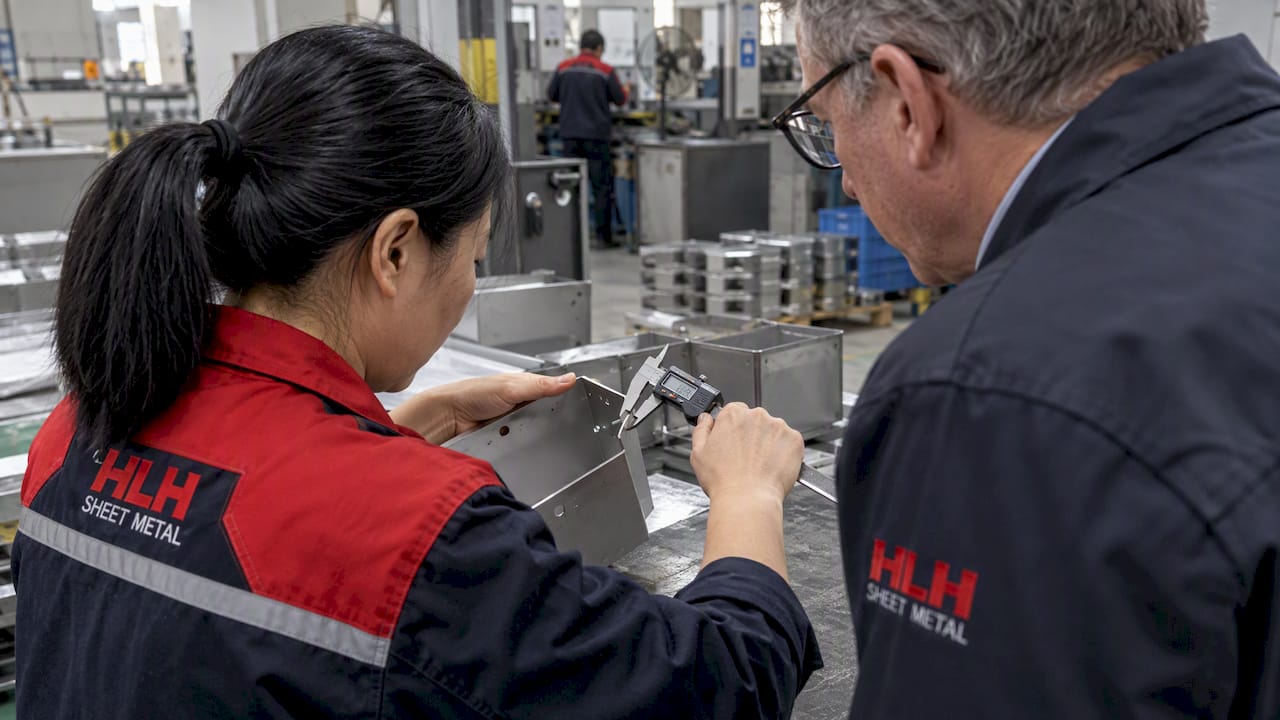
Once a vendor clears the remote review, a brief on-site or third-party audit confirms what the paperwork claims: verify the press tonnage matches the quoted equipment, check that current work orders align with stated lead times, and have an inspector pull a few finished parts for dimensional checks against the drawing.
Services, Tooling, And Capacity Specifics That Indicate Real Volume Capability
Advertised capacity and sustained throughput are not the same thing, and understanding this difference is critical when evaluating metalwork CNC machinery capabilities. Press tonnage determines what a shop can stamp at all, but progressive die complexity, coil-feed setup, and automation determine how fast and how consistently it can do it across a long production run.
A single-station die handles simple blanks; a progressive die moves a part through multiple forming stations in one press stroke, which is what makes high-volume stamping economical. Coil-fed lines remove manual material handling entirely, running sheet stock directly into the press, and they are a strong indicator that a shop is set up for runs in the tens of thousands rather than small batches. Automated secondary operations, such as robotic welding or in-line finishing, extend that same logic past the press itself.
- Press tonnage determines material thickness and part size a shop can stamp in a single hit.
- Progressive dies cut cycle time dramatically versus single-station tooling for complex geometries.
- Coil-fed lines reduce labor variability and support continuous multi-shift operation.
- Shift patterns matter as much as equipment count: a two-shift plant can outproduce a larger single-shift one.
Tooling lead time and die wear are the two constraints that most often derail a ramp schedule. Shops set up for genuine high-volume work plan around both by building spare dies for critical tools before launch and running preventive maintenance schedules tied to stroke counts rather than calendar dates, so a worn die gets rebuilt before it produces out-of-tolerance parts instead of after. Buyers evaluating a shop’s stamping services should ask directly whether spare tooling exists for a part family before signing a volume contract.
Quality Certifications And Traceability For Regulated, High-volume Work
ISO 9001 certification signals that a factory operates a documented quality management system, and ISO 13485 signals the same for medical device manufacturing specifically. Neither certificate alone proves a specific part will meet spec; it proves the process controls exist to catch deviations.
- Incoming material checks confirm certified mill or supplier certs match the specified alloy and temper.
- First-article inspection (FAI) validates the first production-representative part against the full drawing before a run proceeds.
- Statistical process control (SPC) on key dimensions catches drift during a long run rather than at final inspection only.
- Final inspection and packaging checks confirm the shipped lot matches the approved sample.
ISO standards define the quality management requirements that factories worldwide build these controls around, but they do not replace part-level evidence, so buyers should request the FAI report and any SPC charts for a comparable part before committing volume. Parts bound for safety-critical or aerospace applications may also reference ASME standards directly in the purchase contract, and our own approach to aerospace QA standards reflects that expectation.
Planning Lead Times, Moqs, And Export Logistics At Scale
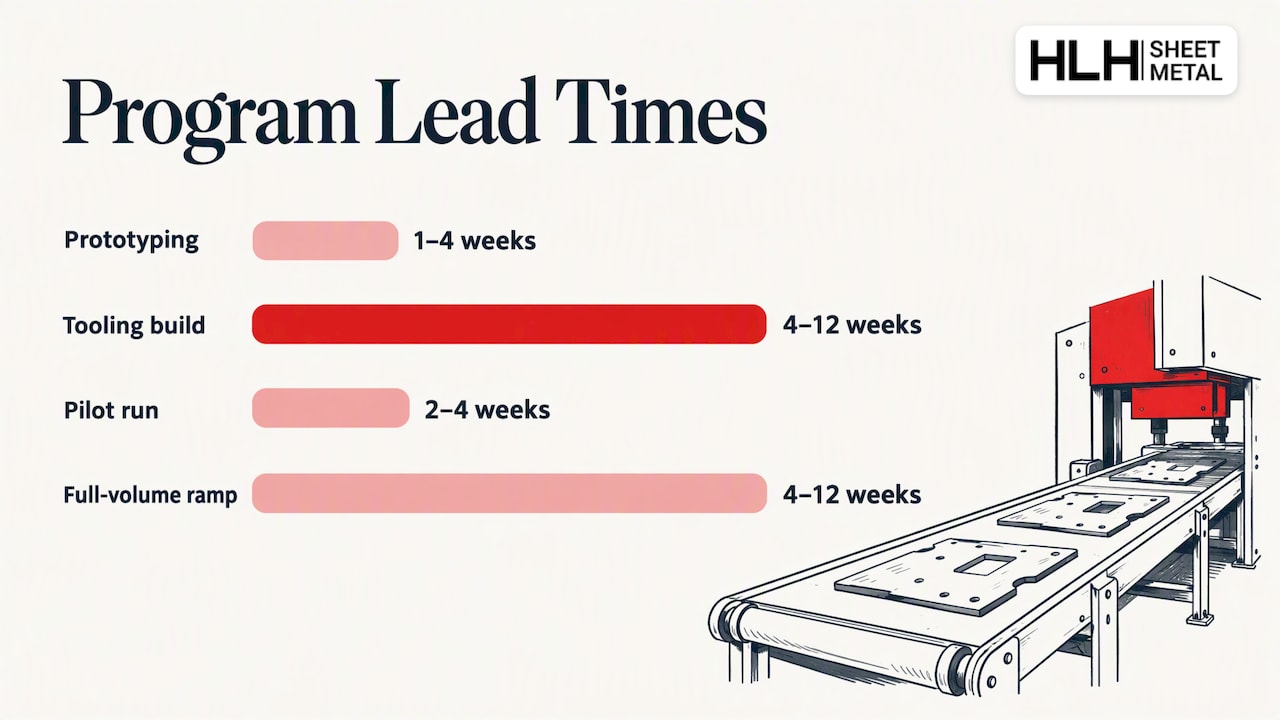
A realistic program timeline runs roughly one to four weeks for prototyping, four to twelve weeks for tooling build, two to four weeks for a pilot run, and four to twelve weeks to ramp to full volume, with variance driven mainly by part complexity and die count rather than the factory’s size.
Tooling cost gets amortized across the ordered volume, so a higher MOQ typically lowers the per-unit price, and buyers who can commit to a firmer production schedule generally gain more negotiating leverage than those requesting the lowest possible MOQ with flexible timing.
- Confirm packaging and labeling specifications match your destination market’s requirements before the pilot run ships.
- Agree on Incoterms (FOB, CIF, DDP) explicitly in the purchase order, not just verbally during quoting.
- Build customs documentation requirements into the schedule, since missing paperwork is a common cause of freight delay.
- Budget separate lead times for sea freight versus air freight when planning the ramp-to-volume milestone.
For materials destined for the EU, REACH guidance covers substances of very high concern and the declaration obligations that fall on manufacturers and importers, so buyers should request material compliance documentation alongside the standard inspection package.
HLH Sheet Metal: What We Provide For Large-volume Projects
Our quality processes adhere to ISO standards, and operations are organized to separate prototyping and production runs. This structure supports clients moving from sample parts to large production orders without switching vendors mid-program.
- Capacity documentation, sample test reports, and client references can be provided upon request during an RFQ process.
- Our project support team communicates in English to facilitate cross-border technical reviews.
- We offer laser cutting, stamping, bending, welding, and finishing services in-house, maintaining quality control throughout multiple processes.
Pro Tip: Request a virtual walkthrough of the specific plant and line assigned to your part before finalizing a tooling order; it confirms capacity claims faster than a written capacity sheet alone.
Single-source Partners Vs. Multi-supplier Strategies At Scale
Centralizing a large program with one high-capacity partner simplifies tooling ownership and quality accountability, and it tends to work best when the part family is consistent enough that one shop’s press and tooling mix covers it well. Multi-sourcing earns its complexity back only when volumes are large enough to justify a second qualified line as a genuine contingency, not just a backup quote. A reasonable starting rule: qualify a second supplier once a single part number exceeds the volume where a production stoppage would meaningfully disrupt your downstream schedule.
— Nash
Get An HLH Capacity Sheet, RFQ, Or Virtual Factory Tour
Our combination of ISO-certified quality processes, multiple manufacturing plants, and a prototyping-to-production workflow is built for exactly the kind of large-volume order this guide covers, backed by an English-speaking project team that keeps technical reviews moving. Request a capacity sheet, submit an RFQ with your tooling specifications through our sheet metal fabrication page, or schedule a virtual tour of the plant assigned to your part before you commit to tooling.
FAQ
What Are Some Major Fabrication Companies In China?
Shops frequently named for large-scale sheet metal and stamping work include HLH Sheet Metal, JUSHUN Metal, Foxron Precision Metal Parts Co., Ltd., Dongguan Fortuna Metals Co., Ltd., SL Metalforming (Suzhou) Co., Ltd., Shenzhen Hua Jia Da Sheet Metal Co., Ltd., and Suzhou Gbt Metal Products Co., Ltd. Each serves a somewhat different niche, from progressive-die stamping to electronics enclosures, so the right fit depends on your part family and volume.
What Are Some Major Metal Companies In China?
Beyond job-shop fabricators, China’s metal sector includes large integrated producers that handle everything from raw material to structural manufacturing and installation, a model illustrated in Shanghai-listed steel-structure company disclosures describing integrated design-manufacture-install services. For custom part fabrication rather than structural EPC projects, buyers generally work with specialized job shops instead.
How Do I Confirm A Factory’s Real Production Capacity Before Committing?
Request the actual press list with tonnage and shift schedule, a first-article inspection report for a comparable part, and a video or virtual walkthrough of the specific line assigned to your order. A capacity sheet alone is not sufficient verification without these supporting documents.
What Certifications Should A High-volume Metal Fabrication Supplier Hold?
ISO 9001 is the baseline quality management certification to expect, with ISO 13485 required specifically for medical device work. Ask for the certificate number so you can verify it against the issuing body’s registry rather than relying on a logo alone.
How Long Does It Typically Take To Ramp A New Part To Full Production Volume?
Programs typically run one to four weeks for prototyping, four to twelve weeks for tooling, two to four weeks for a pilot run, and four to twelve weeks to ramp to volume, though complex tooling can extend these ranges. Buyers who commit to firmer schedules generally gain more pricing leverage during tooling amortization negotiations
Authoritative Standards And Industry Resources
- ASTM International: material and test standards for metals.
- SME: technical resources on sheet metal processes.
- ASME: engineering standards for structural and safety-critical parts.
- ECHA: REACH regulatory guidance for materials sold into the EU.

