




Table Of Contents
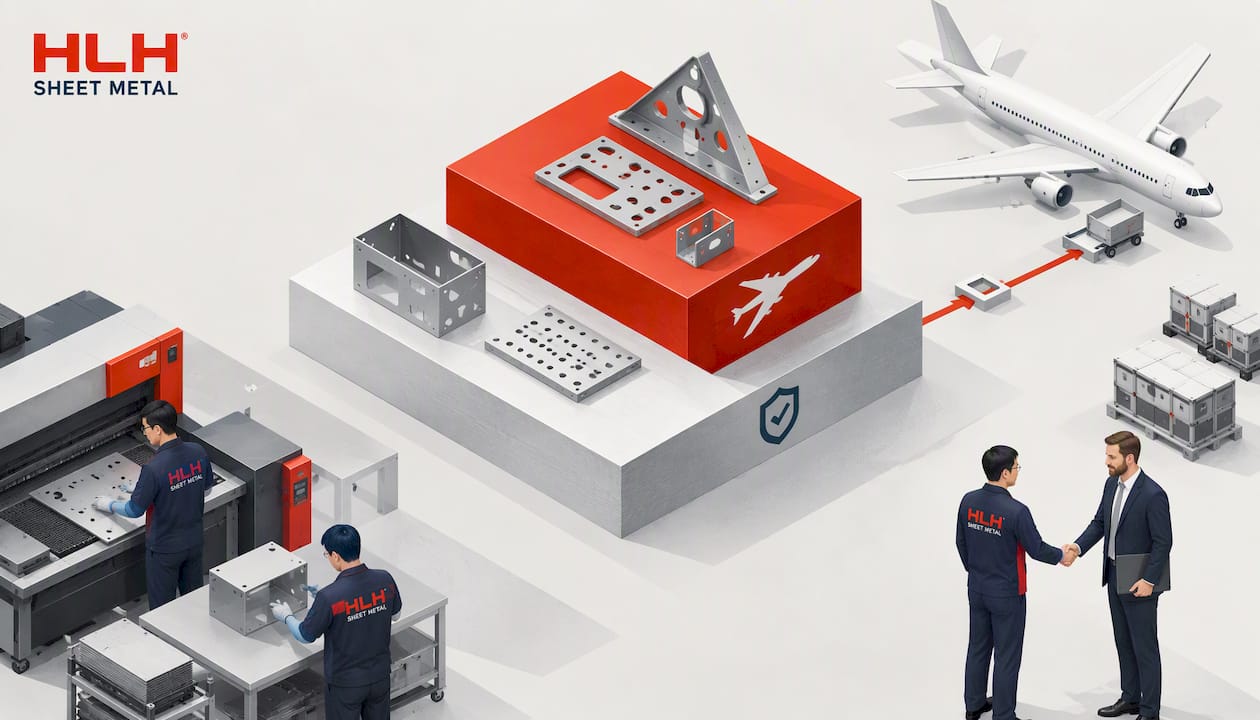
ISO 9001 is the general quality management standard. AS9100 contains all of it and adds requirements for aviation, space and defense. For a bracket in a vending machine, a supplier with a valid ISO 9001 certificate is usually enough. For flight hardware, or for a customer whose contract flows down AS9100, it is not. In either case, the certificate matters less than whether it is real, current and in scope for the sheet metal work you are buying.
This guide compares the two standards, shows which one fits which part, and walks through verifying a China fabricator’s certificate before you place a purchase order.
TL;DR
- AS9100 is built on ISO 9001:2015 and adds aerospace-specific controls: risk management, configuration management, product safety and counterfeit part prevention.
- Choose ISO 9001 for general industrial, enclosure and commercial parts. Choose AS9100 when your customer, your contract or the part’s flight-safety role requires it.
- ISO does not issue certificates. Independent certification bodies do, and you can check them in IAF CertSearch.
- Read the scope line on the certificate. It should name sheet metal fabrication and manufacturing, not only trading or machining.
- A certificate is a starting point. Ask for the documents that prove the system works, such as first article reports and material traceability.
What Each Standard Actually Is
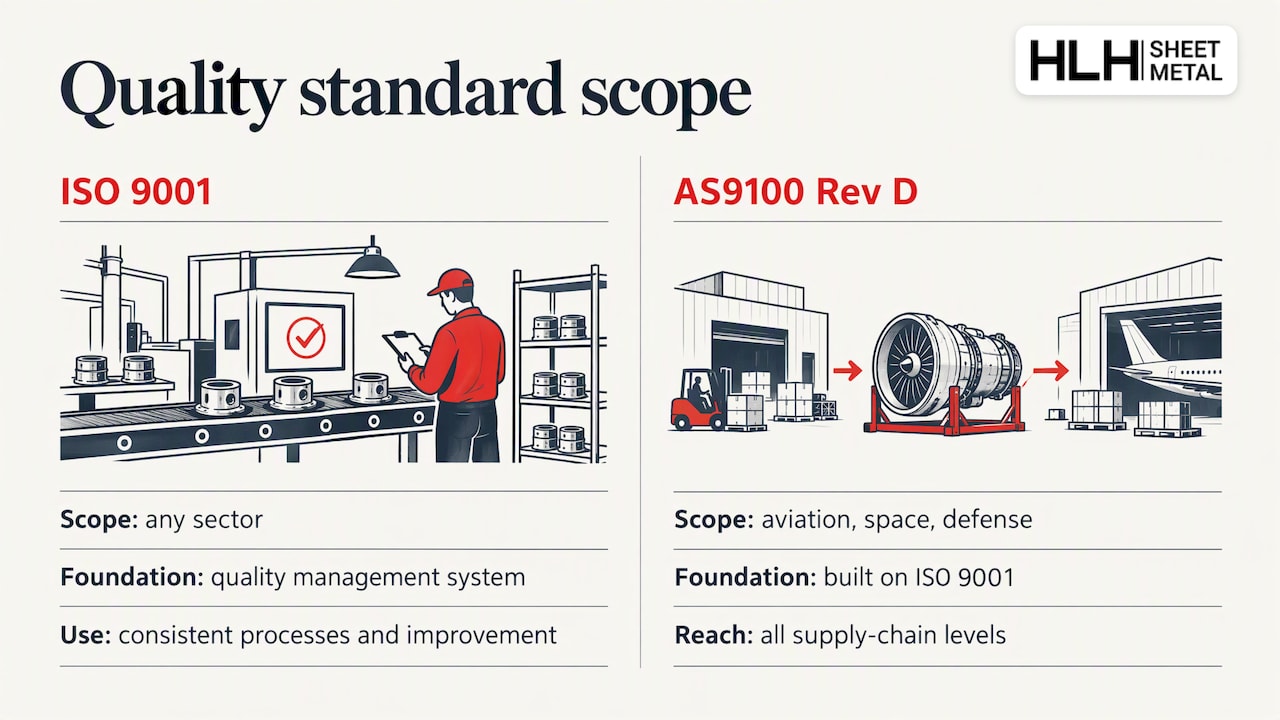
ISO 9001:2015 is the international standard for quality management systems. It applies to any organization in any sector. It gives a framework for consistent products, process control, handling of nonconformances and continual improvement. It does not say how thick your flange must be or which alloy to use. It says the supplier must have a documented system and follow it.
AS9100 is the quality management standard for aviation, space and defense organizations. The current edition is AS9100 Rev D, aligned with IAQG 9100:2016 and built on ISO 9001:2015. The IAQG says the 9100 standard is meant to be used at all levels of the supply chain. That is why a prime contractor can pass the requirement down to a sheet metal shop two or three tiers away.
You may also see EN 9100 and JISQ 9100. They are the regional versions of the same 9100-series requirements. AS9100 is the version used in the Americas.
ISO 9001 Vs As9100 Side By Side
| Area | ISO 9001:2015 | AS9100 Rev D |
|---|---|---|
| Scope | Any industry | Aviation, space and defense |
| Base | Stand-alone standard | Contains the full ISO 9001:2015 structure plus additions |
| Risk | Risk-based thinking | Formal risk management through product realization |
| Configuration | Not required as a system | Configuration management and controlled change |
| Counterfeit parts | Not addressed specifically | Prevention is a stated requirement |
| Product safety and human factors | General | Explicit controls |
| Supplier control | Evaluate and monitor suppliers | Many additional supplier control requirements |
| Typical evidence | Procedures, records, internal audits | Same, plus items such as AS9102 first article reports and traceability to material heat numbers |
| Who asks for it | Broad commercial buyers | Aerospace primes and their supply chains |
The AS9100 research summary we reviewed puts the difference at roughly 100 additional requirements. The AS9100 Store comparison shows where they cluster: planning for product realization, purchasing, production and service provision, and nonconforming product handling. Production is where the standards diverge most, because that is where aerospace differs most from other industries.
What The Extra Requirements Mean On A Sheet Metal Job
The clause numbers matter less to a buyer than the behavior they produce on the shop floor.
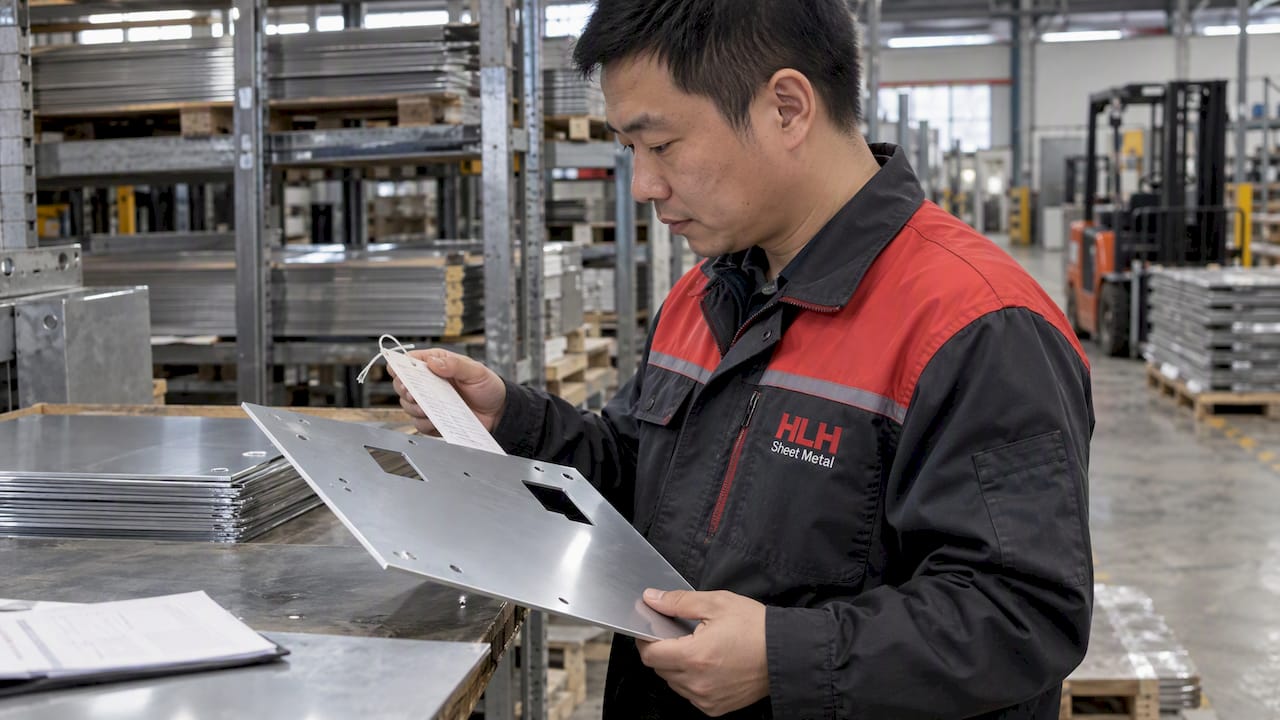
Traceability. Practitioners describe AS9100 as pushing traceability down to the mill heat number of the raw material. For a 2 mm aluminum panel, that means you can tie the finished part back to the sheet it was cut from, and to the mill certificate for that sheet. Under ISO 9001, traceability is required only where you or your customer ask for it.
Change control. Under AS9100, a change to a manufacturing setup goes through a formal change process. A new bend tool, a different laser program or a changed weld sequence is documented and approved before it runs. That can slow a shop down. It is also the reason aerospace parts are repeatable.
First article inspection. The AS9102 first article inspection report is the document aerospace buyers expect with the first parts. If you have fought with Form 3 paperwork errors, our own guide to AS9102 first article inspection covers how to avoid them.
Counterfeit and nonconforming material. The standard requires a way to prevent counterfeit parts from entering the supply chain and tighter control over what happens to nonconforming product. This matters for fasteners, hardware inserts and purchased components that go into a sheet metal assembly.
Risk. ISO 9001 asks organizations to think in terms of risk. AS9100 makes risk management a visible part of how a job is planned and released. Experts quoted in one industry glossary argue that these extra requirements are what actually prevent safety-critical failures, which is why aerospace and medical buyers prefer AS9100 or ISO 13485 over a generic ISO 9001 system.
Which Standard Does Your Part Need?
Start from the end use and the contract, not from the supplier’s brochure.
Choose ISO 9001 When
- The part goes into industrial equipment, telecom or data center hardware, enclosures, brackets, guards or consumer products.
- Your customer has not flowed down AS9100 or another sector standard.
- You need a documented, audited process and consistent output, and you will do your own incoming inspection.
Choose As9100 When
- The part is for an aircraft, spacecraft, drone, missile or ground support equipment, and a prime contractor has flowed down the requirement.
- Your contract requires first article reports, full material traceability or configuration control.
- A failure of the part could affect flight safety.
Consider Other Standards When
Medical device work usually points to ISO 13485 rather than AS9100, as the same industry commentary above notes. Automotive programs typically ask for IATF 16949. Many buyers need a supplier that holds a base ISO certificate and can also meet the program-specific documentation your customer asks for. If you are unsure, read your purchase order terms and your customer’s supplier quality manual first. They state which standard applies.
Why Certificates From China Deserve A Closer Look
China has a very large number of fabricators, and certificates vary widely. The risk is not that the standards are different. ISO 9001 is the same document everywhere. The risks are narrower and more practical:
- A logo on a website is not a certificate. ISO itself does not certify anyone. Certification is done by independent bodies that are accredited by national accreditation bodies.
- A certificate may be real but cover only part of the factory. A shop might hold AS9100 for machining but not for sheet metal.
- The certificate may belong to a trading company, not the plant that cuts your parts.
- Some certificates are expired or were issued by an unaccredited body.
None of this means you should avoid China. It means the verification step is not optional, and it takes about ten minutes.
How To Verify A Certificate In Five Steps
- Get the certificate and the number. Ask for a PDF with the certificate number, the certification body’s name, the issue and expiry dates and the scope statement.
- Check the certification body. Accreditation bodies such as ANAB or CNAS assess certification bodies against international standards like ISO/IEC 17021. The accreditation body should be an IAF member.
- Search IAF CertSearch. IAF CertSearch is the global database of accredited management system certificates. Search by company name or certificate number. A valid result shows the certification body, scope and accreditation status. Certification runs on a three-year cycle with annual surveillance audits, so the dates should fit that pattern.
- For AS9100, check OASIS too. The IAQG runs a certification scheme for the 9100 series. Certified organizations are meant to be listed in its OASIS database, so a supplier claiming AS9100 who does not appear there deserves hard questions.
- Read the scope and the address. The scope should name what you are buying, such as sheet metal fabrication, and say manufacturing. The address on the certificate should be the plant that will make your parts. If it lists only trading, treat the quality claims as unverified.
Our longer walk-through is in how to identify ISO certified metal parts manufacturers.
Evidence Beyond The Certificate
A certificate tells you a system was audited. These items show it working on your parts:
- Material certificates and heat numbers for the lot you receive.
- A first article inspection report before production.
- A dimensional report on a sampled basis, with the measuring method stated.
- A written process for nonconforming parts and corrective action.
- Records of how drawing revisions are controlled.
A supplier that can produce these quickly, without scrambling, has a system that works. One that cannot has a certificate on the wall.
How The Main Options Compare For A China Fabrication Buy
| Supplier profile | What it gives you | Watch for |
|---|---|---|
| No third-party certificate | Lowest quote, no audited system | Inconsistent records, no traceability, hard to defend in a customer audit |
| ISO 9001 certified, sheet metal in scope | Audited, documented process control | Does not by itself provide aerospace-level traceability or configuration control |
| AS9100D certified, sheet metal in scope | Aerospace-grade controls and documentation | Slower changes, higher cost, and only worth it if the scope and site match your parts |
| Trading company with a certificate | Convenience | Certificate may not cover the plant doing the work |
HLH Sheet Metal sits in the second and, for aerospace programs, a conversation-led third category. We are ISO certified, we run multiple manufacturing plants in China, and we handle both prototypes and larger production runs. If your program calls for AS9100 specifically, tell us at the start of the inquiry. We will tell you exactly which certificate, scope and site apply to your parts, so you can check it yourself in the databases above.
Our Perspective: Match The System To The Risk
We talk to procurement managers and engineers who have been burned by one of two mistakes. Some paid an aerospace premium for parts that never needed it. Others accepted a bare ISO 9001 certificate for a part that later failed a customer audit.
Our view is simple. The right standard is the one your end customer will audit you against, applied to the right site and the right process. ISO 9001 is a solid base for most industrial sheet metal. AS9100 earns its cost when traceability, change control and first article documentation are contractual. Neither replaces a good drawing, a clear tolerance call-out and fast communication when a question comes up.
That last point is why we staff an English-speaking support team for international clients. Most quality escapes we see begin as a misread note on a drawing, not a missing certificate. A quick question answered the same day prevents a lot of rework. Our team handles the front end of every job with that in mind, whether it is a five-piece prototype run or a production release.
For more on the aerospace side, see our guides to aerospace metal fabrication in China and the QA standards that matter and the key challenges in aerospace sheet metal manufacturing.
— Nash
Getting A Quote With Your Quality Requirements Attached
To get a useful quote quickly, send the following with your drawings: the standard you need (ISO 9001, AS9100 or a customer-specific requirement), material and finish, quantities, whether you need first article reports and material certificates, and any inspection requirements.
HLH Sheet Metal covers laser cutting, bending, welding, stamping and surface finishing across steel, aluminum, stainless steel, copper, brass, titanium, magnesium and more. Start with our sheet metal fabrication capabilities, or go straight to our aerospace sheet metal fabrication page if your parts are for aircraft. Medical programs can start from our medical sheet metal fabrication page. You can request a quote from hlhsheetmetal.com.
FAQ
Does As9100 Include ISO 9001?
Yes. AS9100 incorporates the full ISO 9001:2015 structure and adds aerospace requirements on top. A company certified to AS9100 meets the ISO 9001 requirements in its scope. Certification is still issued separately, and the AS9100 certificate is the one you should ask to see for aerospace work.
How Do I Know If A Company Is ISO 9001 Certified?
Search the company name or certificate number in IAF CertSearch. A valid entry shows the certification body, scope and accreditation status. If you find nothing, or the scope says trading rather than manufacturing, ask the supplier to explain before you rely on the claim.
Who Can Certify ISO Standards?
Not ISO itself. Independent certification bodies audit and certify organizations, and those bodies are accredited by national accreditation bodies. For AS9100, the certification body must also be recognized under the IAQG scheme.
Is ISO 9001 Enough For Aerospace Sheet Metal Parts?
Only if your customer says so. Many aerospace contracts flow down AS9100, so check your purchase order and your customer’s supplier requirements. Where the part is flight-critical, confirm the requirement with your quality engineer or the prime contractor’s supplier quality team before you choose a source.
Can A China Factory Hold A Real As9100 Certificate?
Yes, but verify it. Check the scope, the plant address and the certification body, and confirm the listing in the databases above. The same checks apply to a supplier in any country.

