




Table Of Contents
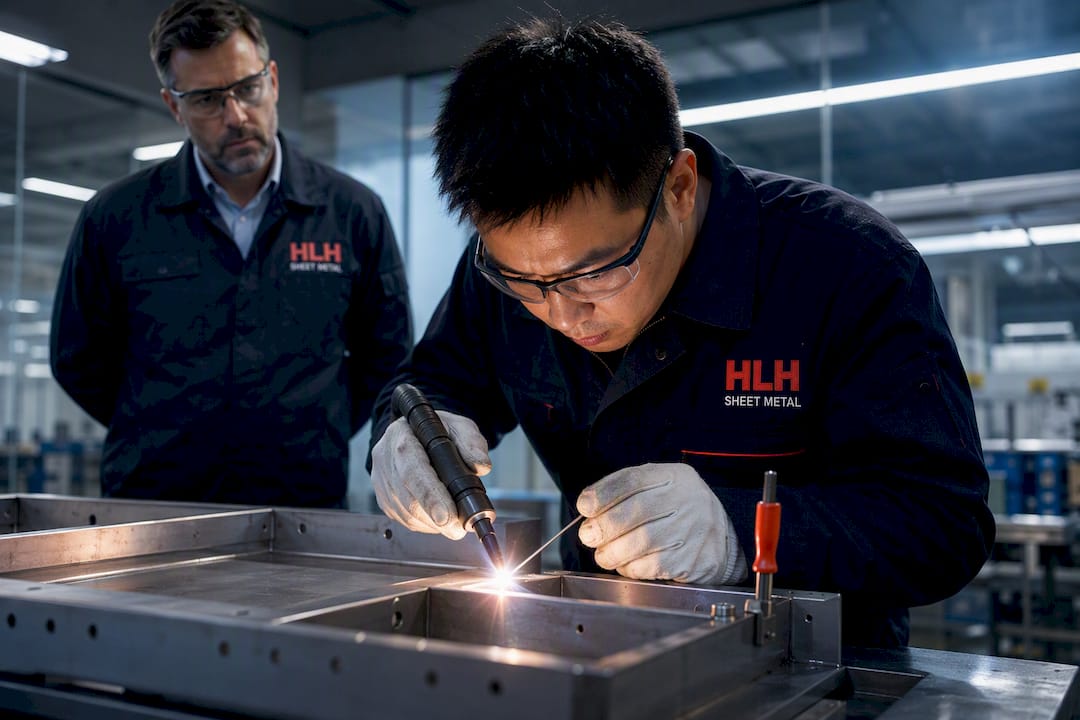
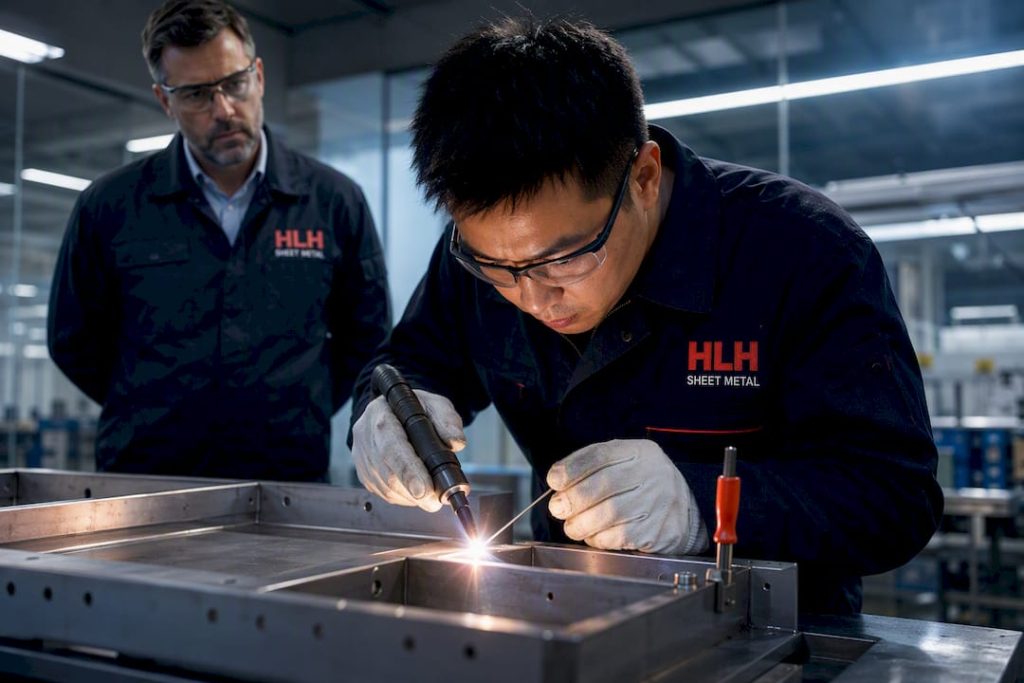
For most high-volume sheet metal fabrication, MIG welding wins on speed and cost; for visible, thin-gauge, or exotic-metal parts, TIG welding earns its higher price with a cleaner, more controlled result. The rule of thumb is to match wire-fed MIG to thicker gauges and production runs, and reserve TIG for cosmetic welds, thin aluminum, or stainless where burn-through risk is high. Both processes fall under AWS welding qualification standards, and a fabricator running ISO-certified QA, like HLH SHEET METAL, should be able to execute either with documented process control.
TL;DR:
- MIG welding offers faster throughput and lower costs, making it ideal for high-volume structural sheet metal fabrication.
- TIG produces superior finish quality and provides finer heat control, which is essential for cosmetic welds and thin, exotic metals.
- Process choice heavily depends on gauge thickness, with MIG best for gauges above 16-18, and TIG preferable below 20 gauge, especially for visible or sensitive surfaces.
- Ensuring proper process execution through sample welds and documented procedures is crucial, as supplier quality varies more than process type.
- A single vendor capable of both MIG and TIG, with proper quality controls, simplifies production and ensures process suitability for each part.
MIG Vs TIG Welding: Comparing Throughput, Finish, And Heat Control
Choosing between MIG and TIG for sheet metal comes down to five variables that pull against each other. MIG wins on speed and cost per part. TIG wins on appearance and control. Nothing about that trade-off is new, but engineers still misjudge it when they spec a process based on habit rather than the actual part requirements.
Here’s how the two stack up on the factors that matter for sheet work:
- Throughput: MIG’s continuous wire feed supports much higher deposition rates and is the standard choice for production-suited fabrication; TIG’s manual filler feed makes it inherently slower per inch of weld.
- Finish quality: TIG produces a tighter, more uniform bead with minimal spatter, often eliminating secondary grinding; MIG welds on thin sheet frequently need finishing to hide spatter or undercut.
- Heat input and distortion: TIG’s concentrated arc and pedal control allow finer heat management on thin sections, while MIG’s higher average heat input raises warping and burn-through risk on gauges under 18.
- Skill and automation: MIG is easier to learn and more forgiving for new operators, and it dominates robotic welding cells; TIG automation exists but is less common because coordinating torch, filler, and pedal doesn’t translate easily to a robot arm.
- Consumables: MIG typically runs argon/CO2 blends with continuous wire spools; TIG uses pure argon shielding, tungsten electrodes, and separate filler rod, adding cost and changeover time per joint.
MIG Welding: Practical Implementation And Quality Controls For Sheet Metal
Gas metal arc welding (GMAW), the formal name for MIG, feeds a continuous consumable wire electrode through a gun while shielding gas protects the weld pool. Transfer mode matters more than most spec sheets admit: short-circuit transfer suits thin sheet because it deposits less heat per second, while spray transfer is better reserved for thicker material where burn-through isn’t a concern.
For sheet metal specifically, MIG performs well on mild steel and carbon steel starting from moderate thicknesses up through heavier structural stock, and it’s the default for medium-to-thick fabrication runs where speed drives the economics. Aluminum sheet is workable but demands a spool-gun or push-pull wire feed setup to prevent the soft wire from buckling before it reaches the arc.
To avoid the most common MIG defects on thin sheet:
- Dial in wire feed speed and voltage together. Mismatched settings cause spatter and inconsistent penetration.
- Use short-circuit or pulse transfer modes on thin gauges to reduce average heat input.
- Fixture the part to control gap tolerance as excessive gaps increase burn-through risk.
- Run a test coupon before full production, then bend or section it to confirm fusion.
Pro Tip: Ask your fabricator whether they run pulse MIG on thin-gauge orders. Pulse control and digital monitoring meaningfully reduce average heat input compared to standard short-circuit MIG, which cuts warping on parts that used to be TIG-only.
QA should include visual inspection for undercut and spatter, plus periodic destructive bend testing on sample welds pulled from the production line, not just first-article parts.
TIG Welding: When The Extra Cost Is Justified
Gas tungsten arc welding (GTAW), or TIG, uses a non-consumable tungsten electrode to hold the arc while the operator manually feeds filler rod with the other hand, controlling amperage through a foot pedal. That three-way coordination is exactly why TIG is considered one of the harder welding processes to master, and why skilled TIG welders command a premium in any shop.
The payoff is precision. TIG delivers the cleanest weld appearance of any common process, with minimal spatter and tight control over heat, which is why it’s the default choice for visible seams, thin stainless, and non-ferrous metals like aluminum, titanium, and copper alloys where oxide removal and AC settings make or break the result.
Where TIG earns its cost on sheet metal:
- Visible enclosure seams on medical or lab equipment where cosmetic finish is a spec requirement, not a preference
- Thin aluminum or stainless under 20 gauge where MIG’s heat input risks warping or blowing through
- Small-lot or prototype runs where setup time for MIG automation isn’t worth it
- Exotic alloys like titanium that demand tight shielding and contamination control
The tradeoff is cycle time. TIG runs slower than MIG on nearly every joint, and surface prep matters more since any oxide or contamination shows up immediately in the weld pool. QA on TIG work should focus on visual cosmetic acceptance criteria alongside standard bend testing, since appearance is often the entire reason the process was chosen.
Material And Thickness Guidance: Matching Process To Metal
Gauge thickness is the single biggest variable in the MIG vs TIG decision, and the thresholds shift depending on the base metal.
For mild steel, MIG handles everything from roughly 16 gauge up through plate with no issue, while TIG becomes the better call below 18 gauge if the weld will be visible or the part can’t tolerate distortion. Stainless steel narrows that window. TIG is generally preferred under 20 gauge because MIG’s higher heat input tends to discolor the heat-affected zone and can warp thin panels. Aluminum requires different handling: TIG with AC current and proper oxide removal is the standard for thin aluminum sheet, while MIG aluminum welding needs specialized spool-gun or push-pull setups to manage the soft wire feed reliably.
A few practical notes worth building into your spec sheet:
- Always call out oxide removal requirements explicitly for aluminum and stainless. Skipping this step is the most common cause of porosity.
- For very thin sheet or high-volume automotive-style joints, resistance spot welding or laser welding often outperforms both MIG and TIG on cost and speed.
- Tight fixturing and consistent gap tolerance matter more on thin sheet than on any other variable in the process.
- When gauge and cosmetic requirements conflict, request a sample weld before committing to a full production run.
Production Economics: Cost-per-part, Rework, And Automation
The cheapest process per hour isn’t always the cheapest process per finished part, and this is where a lot of sourcing decisions go wrong. MIG’s labor cost per inch of weld is lower and it automates cleanly onto robotic cells, which is why it dominates high-volume runs. But if a MIG weld needs grinding, spatter removal, or a cosmetic touch-up pass to meet spec, that finishing labor erodes the speed advantage fast.
Three numbers worth tracking when comparing quotes:
- Cycle time per weld. MIG typically completes a joint faster, but only compare cycle time inclusive of any post-weld finishing.
- Consumable cost. TIG’s tungsten electrodes and separate filler rod cost more per joint than MIG wire and gas, especially on longer runs.
- Rework rate. A shop with a high MIG rework rate on thin or cosmetic parts may actually cost more per finished unit than paying for TIG upfront.
Robotic MIG or resistance spot welding outperforms manual TIG on cost at high volumes where the joint geometry allows automation. On the flip side, a visible enclosure panel that fails cosmetic inspection under MIG and needs rework can end up costing more than if it had been TIG welded correctly the first time. The real comparison isn’t MIG versus TIG in isolation. It’s total cost including rework, finishing, and scrap across the full production run.
How To Choose The Right Welding Process And Vendor In China
Before sending an RFQ, work through a short internal checklist so your spec sheet actually reflects what the part needs, not just what’s cheapest to quote.
Decision factors to nail down first:
- Is the weld visible in the finished assembly, or hidden inside a structure?
- What’s the base metal and gauge, and does it fall in a range where MIG and TIG genuinely compete?
- What’s the lot size? Small prototype runs favor manual TIG flexibility; large runs favor MIG automation.
- How much distortion can the part tolerate before it fails fit-up or cosmetic inspection?
What to ask a supplier before committing:
- Request their welding procedure specification and welder performance qualification records for the specific process and material you need.
- Ask for recent sample weld photos on comparable gauge and metal, not stock photography.
- Confirm their ISO quality documentation covers welding inspection, not just general fabrication.
- Ask what their sampling rate is for in-process weld inspection versus final inspection only.
Pro Tip: A supplier who hesitates to share WPS/WPQ documentation or sample weld photos is a red flag worth taking seriously. Requesting these upfront is one of the fastest ways to screen out shops running informal, undocumented processes.
Before full production, insist on a pilot run of 10 to 25 units with visual and bend-test acceptance criteria agreed on paper. Common defects to check for in supplier communication and quality reports include vague answers about transfer mode, no mention of pulse settings on thin sheet, or an unwillingness to run a documented pilot before quoting full volume.
HLH SHEET Metal’s Approach To MIG And TIG Production
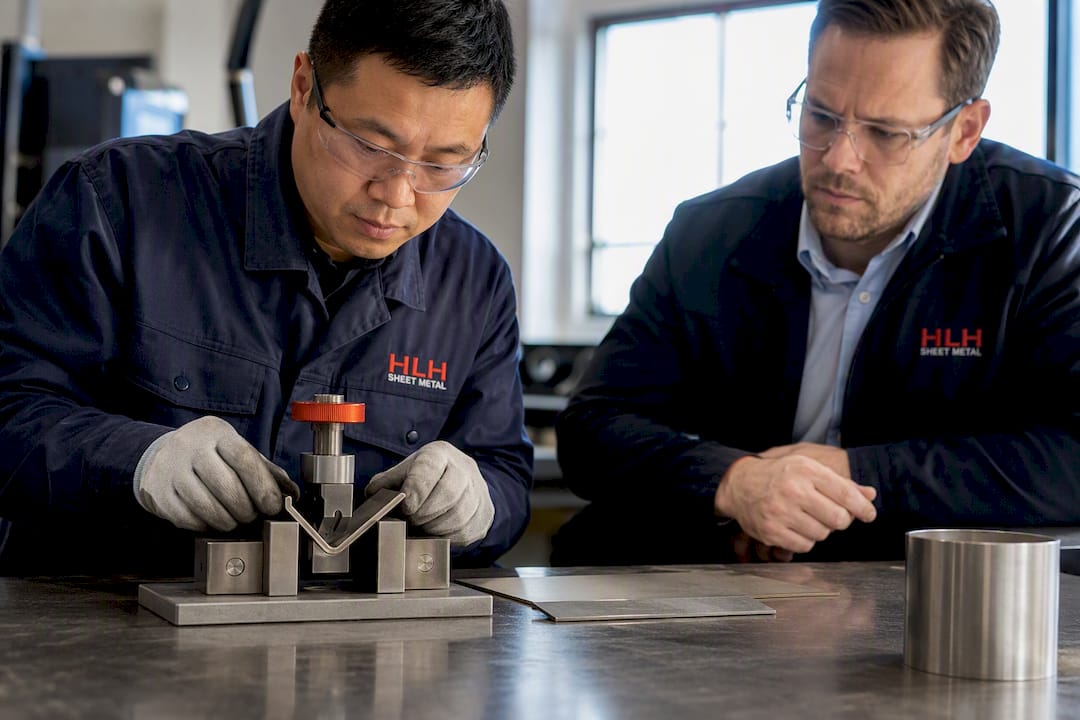
A fabricator running both MIG and TIG welding lines can choose the process based on gauge, material, and cosmetic requirement rather than defaulting to whichever is cheaper to staff at a given time.
- Quality assurance processes covering weld inspection, not just dimensional checks
- Capacity spanning rapid prototyping through full production runs
- Manufacturing capabilities to support both high-volume MIG orders and TIG-finished cosmetic parts
- Support team available for RFQ turnaround and WPS documentation requests
That combination lets engineering teams spec the process the part actually needs, MIG for structural volume, TIG for the seams a client will actually see, without juggling two separate vendors.
Why Sample Welds Matter More Than The Process You Pick
The biggest mistake in this decision isn’t choosing MIG when you should’ve chosen TIG. It’s skipping the sample weld and finding out on unit 500 that the process, as executed by that particular shop, doesn’t meet spec. Process selection matters, but execution quality varies more between suppliers than between MIG and TIG as processes.
If a part’s cosmetic tolerance is genuinely ambiguous, pay for a small pilot run before committing to volume. It costs less than a full production rework, and it forces both sides to agree on acceptance criteria in writing rather than after the fact.
— Nash
Get A Quote For MIG And TIG Sheet Metal Welding
HLH SHEET METAL runs both MIG and TIG welding lines under ISO-certified QA, so you’re not forced to pick one vendor for volume and another for cosmetic finish work. That matters most on mixed orders, a chassis that needs fast structural MIG welds alongside a visible panel that needs TIG’s clean bead, where splitting the work across two shops adds lead time and inconsistent quality control.
When you submit an RFQ, ask for sample welds, WPS references, and stated inspection criteria up front. Start a conversation about your sheet metal fabrication project or check HLH’s industrial fabrication capabilities to see how a pilot run would fit your production timeline.
FAQ
What Is The Rule Of 33 In TIG Welding?
It’s a rough field formula some welders use to estimate amperage settings relative to material thickness, but it’s not an official AWS standard; treat it as a starting-point heuristic, not a substitute for a documented WPS.
What Two Metals Cannot Be Welded Together?
Metals with very different melting points or incompatible metallurgical structures, like aluminum and steel, generally can’t be fusion welded directly without specialized transition materials or alternative joining methods.
What Is The Most Efficient Welding Method For Sheet Metal?
For high-volume structural sheet work, MIG is the most efficient choice due to its continuous wire feed and automation compatibility; for thin, cosmetic, or exotic-metal parts, TIG is more efficient once you count finishing and rework time.
What Is The Hardest Welding To Learn?
TIG welding is widely considered the hardest process to master because it requires simultaneous control of the torch, filler rod, and foot pedal, unlike MIG’s more forgiving continuous wire feed.
Can One Supplier Handle Both MIG And TIG On The Same Order?
Yes, a fabricator running both process lines under one ISO QA system, like HLH SHEET METAL, can pair fast MIG assembly with TIG finishing on visible seams within a single production run.
Recommended
- Spot Welding Sheet Metal: DFM Rules for China Fabrication
- Sourcing Precision Spot-Welded Sheet Metal in China
- Sheet Metal Welding Services – China | Fast, Precise, Reliable
- Common Quality Issues in Sheet Metal Fabrication from China

