




Table Of Contents
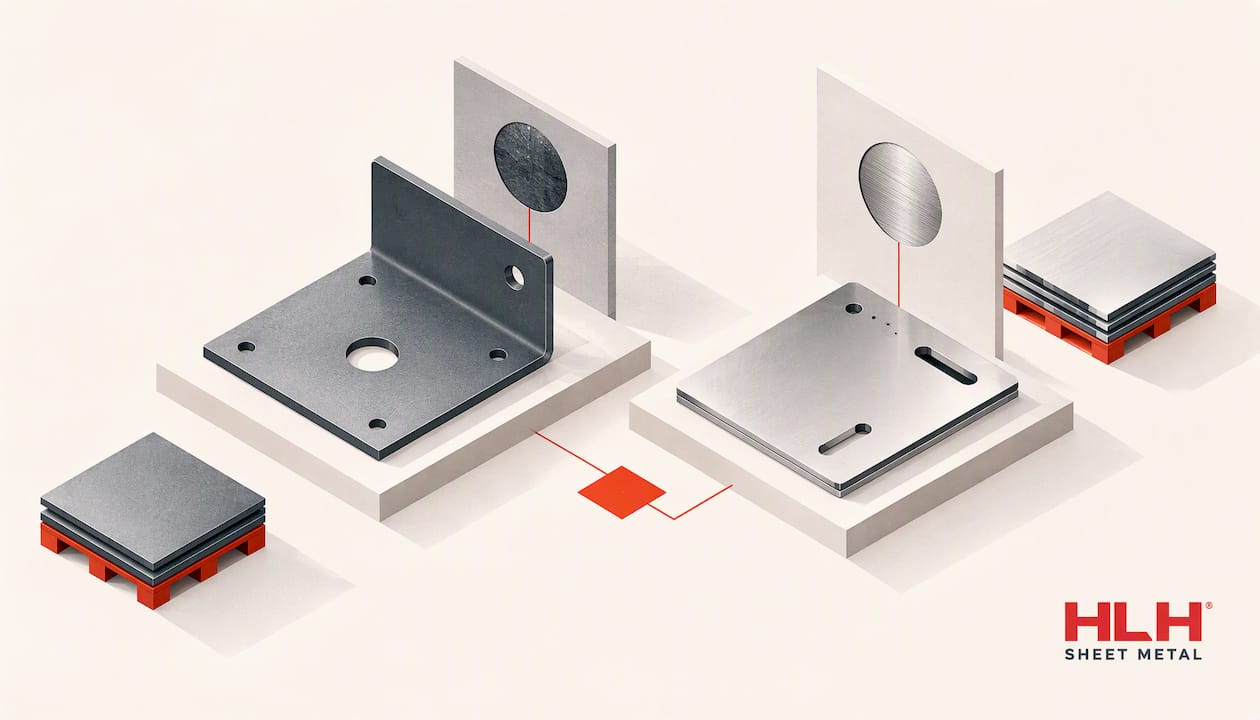
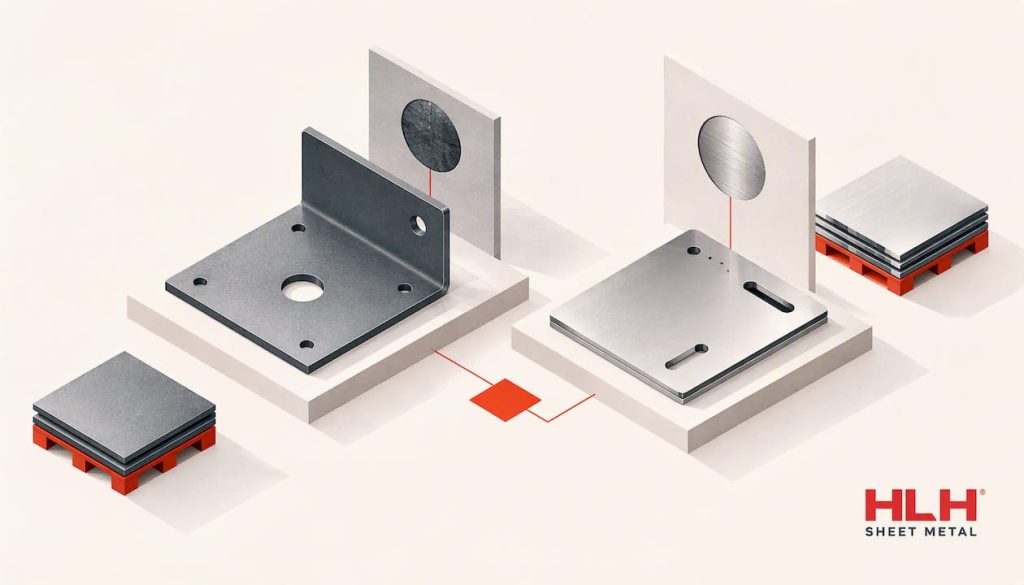
Choose mild steel when the part is structural, cost-sensitive and can be coated or plated. Choose stainless when the part must resist corrosion, meet hygiene rules or carry a medical or food-contact duty. Either way, the drawing has to change with the material. Bend radii, springback allowances, weld callouts and certificates all behave differently, and a drawing that ignores this is the usual cause of quote surprises when you source from China.
This guide covers the design-for-manufacturability (DFM) decisions that matter when you move from one to the other, and what to put in an RFQ so a Chinese fabricator quotes the right part the first time.
TL;DR
- Mild steel is cheaper, bends tighter and forms predictably. It needs a finish (powder coat, zinc, paint) to survive outdoors or in humid environments.
- Stainless resists corrosion without a coating, but it needs a larger inside bend radius (about 1.5T to 2T versus 0.5T to 1T), more springback allowance and more forming force.
- Specify the grade by standard (for example 304 or Q235B/A36 equivalents), not by a generic name, and ask for mill test reports with heat numbers.
- Do not over-specify: 316L or 304L on a non-welded, non-critical part adds cost without adding performance.
- For medical and aerospace work, verify the supplier’s certifications and traceability before you pick the alloy, not after.
What You Are Really Choosing Between
“Mild steel” is the term most buyers in the US use for low-carbon steel. In China, quotes usually name it by a GB grade such as Q235, which is commonly mapped to ASTM A36, S235JR and SS400 as an ordinary structural carbon steel with yield strength near 235 to 250 MPa. That same chart lists 304 stainless as 06Cr19Ni10 in the Chinese GB standard. The chart itself warns that each standard specifies slightly different chemistry and tolerances, so treat equivalence as a starting point and write the actual specification on your drawing.
Stainless is not one material either. Stainless steel is a family of over 200 alloys that all contain a controlled amount of chromium. In sheet metal fabrication you will mostly meet 304 and 316, plus their low-carbon “L” versions.
Side-by-side: Mild Steel And Stainless In Sheet Metal Work
| Factor | Mild steel (e.g. Q235 / A36 class) | Stainless (e.g. 304 / 316) |
|---|---|---|
| Corrosion resistance | Needs coating or plating | Inherent, no coating required for most environments |
| Typical use | Frames, brackets, chassis, enclosures, structural parts | Medical, food-contact, outdoor and washdown enclosures |
| Inside bend radius guideline | About 0.5T to 1T | About 1.5T to 2T |
| Springback | Lower, predictable | Higher, needs overbend allowance |
| Forming load | Lower | Higher, because of work hardening |
| Welding | Straightforward, then finish | Needs procedure control, heat tint cleanup, passivation |
| Raw material cost | Lower | Higher |
| Finishing | Powder coat, zinc, paint, plating | Brushing, passivation, electropolish, sometimes none |
The bend radius and springback figures come from machinist tensile strength guidance, which also notes that mild steel remains the standard for cost-sensitive structural components while stainless is required for corrosion-resistant, food-grade or medical applications. The same source puts mild steel yield strength at roughly 250 to 300 MPa and annealed 304/316 starting at about 220 MPa for 0.2% proof strength. Stainless starts lower in yield but climbs fast under cold work.
DFM Rule 1: Size Your Bends For The Material
The single most common drawing error in a mild-to-stainless switch is leaving the inside bend radius untouched. A 1T radius that forms cleanly in mild steel can crack or leave visible orange-peel texture on stainless. Design to the larger radius from the start, and keep it consistent across the part so the shop bends everything with one punch.
Our minimum bend radius guide walks through how thickness, grain direction and material combine to set the limit. Two habits help in both materials:
- Keep the bend line perpendicular to the rolling direction where you can, or at least call out grain direction on critical bends.
- Place holes and slots at least a few material thicknesses away from bend lines so they do not distort. Confirm the exact distance with your fabricator, since it depends on their tooling.
If you want a shop to run bending on a part, our sheet metal bending services page lists what we cover.
DFM Rule 2: Plan For Springback And Work Hardening
Stainless springs back more than mild steel, so the press brake has to overbend further to reach the final angle. World Stainless notes that strain hardening can allow thinner sections to reach higher final strength, which designers can use for weight reduction. The cost is that forming loads rise, which designers must account for compared with predictable mild steel.
Practical consequences for your drawing:
- Tolerances on bend angles. Do not copy a tight angular tolerance from a mild steel part onto a stainless one without asking the fabricator what they can hold. A tolerance that suits the material is cheaper than one that forces repeated trial bends.
- Flange length. Very short flanges are harder to hold in stainless because the die needs enough material to grip. Ask for the shop’s minimum flange for your thickness.
- Repeat bends. Re-bending hardened stainless is risky. Design a part that bends once, in the right place.
- Prototype first. Springback is the kind of thing a prototype settles in an afternoon. Cut a small batch, measure angles, and adjust the flat pattern before releasing a production run.
DFM Rule 3: Cut Method And Edge Condition
Both materials cut well by fiber laser, but the edge differs. Mild steel cut with oxygen leaves an oxide edge that can interfere with powder coat adhesion or welding, while nitrogen-cut edges are cleaner and often needed for stainless where you want a bright, oxide-free cut. If edge appearance or weld prep matters, say so on the drawing. Our laser cutting services page covers the cutting capability we offer. For high-volume flat parts with simple geometry, stamping can lower unit cost, though stainless wears dies faster, which affects tooling quotes.
DFM Rule 4: Welding And The “l” Grade Question
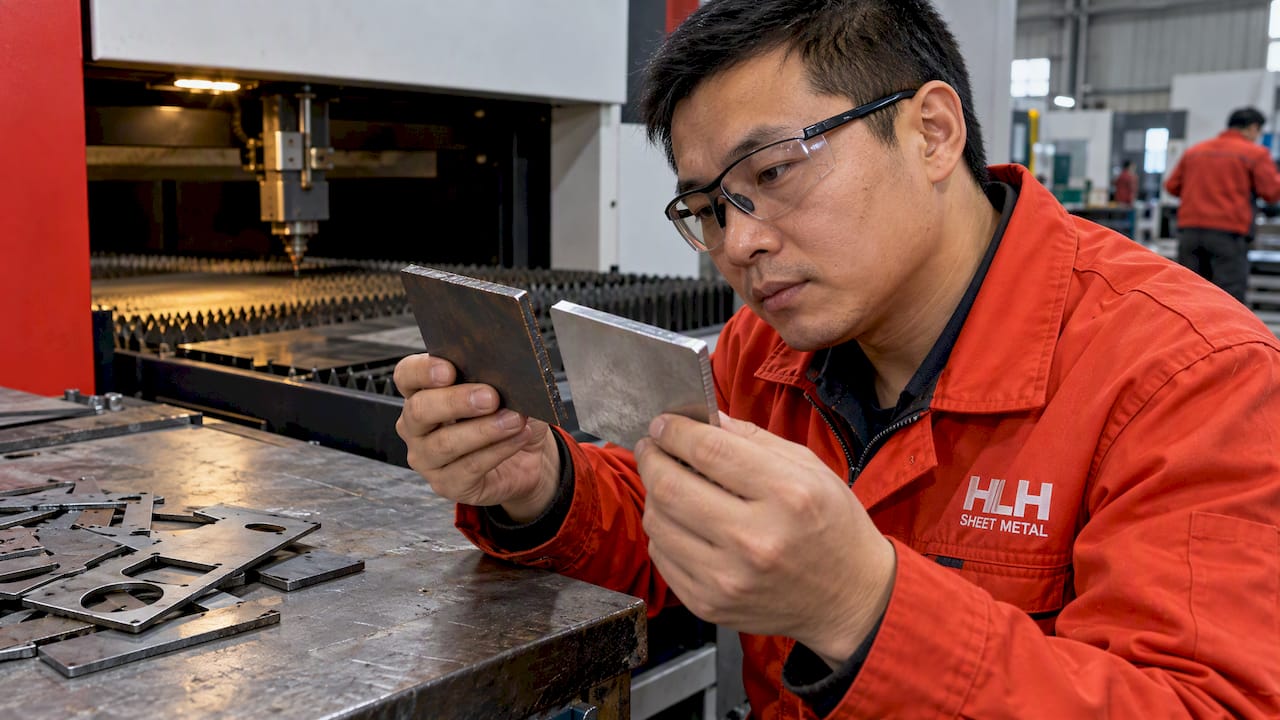
Welding is where buyers most often pay for something they do not need. The low-carbon “L” grades (304L, 316L) exist to prevent carbide precipitation in welded sections. Yet a technical note from Atlas Steels says standard 304 or 316 can be welded safely in thin sections, roughly up to 3 to 5 mm, with correct procedures. In non-welded applications, corrosion resistance is typically identical, so specifying “L” adds cost for no gain.
A sensible rule:
- Welded, heavy section or critical corrosion duty: specify the L grade.
- Thin, lightly welded or unwelded enclosure panels: standard 304 usually does the job. Ask your fabricator to confirm.
- High-temperature exposure: the application, not habit, should decide the grade. Review it with an engineer.
For mild steel, welding is more forgiving, but plan for weld spatter and scale removal before any coating. For stainless, add heat tint removal and passivation to the process notes. See our welding services page for the joining methods we run.
DFM Rule 5: Finish Is Part Of The Material Decision
The cheaper mild steel plate can become the more expensive part once you add finishing. Powder coating, zinc plating or galvanizing all add process steps, handling and lead time. A stainless part may need only brushing and passivation, or nothing at all. When you compare quotes, compare finished part to finished part, not raw material to raw material.
Galvanized steel sits between the two: a mild steel substrate with a zinc layer, useful for indoor enclosures, though cut edges and weld zones lose the coating and need attention. Our surface finishing services page lists the finishes available.
Quick Decision Guide
Pick mild steel when:
- The part lives indoors or will be coated anyway.
- Weight and strength matter more than corrosion.
- Unit cost drives the decision, such as chassis, brackets and general structural parts.
Pick stainless when:
- The part sees moisture, chemicals, washdown or outdoor exposure.
- You need a hygienic, cleanable surface, as in medical or food equipment.
- A coating failure would be a safety or compliance problem.
Consider a third option such as aluminum or galvanized steel when weight or cost pressure rules out both. That is a different comparison, but worth raising with your fabricator at the quote stage.
Sourcing From China: What To Put In The RFQ
A clear package gets a comparable quote. Include:
- 3D model and a 2D drawing with the material grade by standard (for example 304 or Q235B), thickness and finish.
- Bend radii, grain direction notes and critical dimensions marked.
- Weld callouts with the grade of filler if relevant, and surface requirements after welding.
- Annual volume and batch size, so the shop can choose between laser and punch, or between prototype tooling and production tooling.
- Required documents: material test reports, inspection reports, certificates of conformance.
Certificates And Traceability
For regulated sectors, check certifications before you check price. Typical requirements are ISO 9001:2015 for general quality, ISO 13485 for medical devices and AS9100 for aerospace. As of February 2026, the FDA’s QMSR aligns 21 CFR Part 820 with ISO 13485:2016, and it groups its inspection around areas that include Outsourcing and Purchasing, which means your supplier controls are within the inspection scope. Ask any supplier to show the certificate for the standard your sector needs.
Traceability links the finished part back to the raw material. Mill certifications should confirm chemistry, mechanical results, alloy and temper, and heat or lot number against the governing material specification. Our guide on receiving material test reports is a six-step checklist for QA and procurement. For deeper process control reading, see our notes on precision metal parts quality control in China and aerospace fabrication quality standards.
Our Perspective On The Choice
We see the same pattern in RFQs from overseas engineers. The material is picked early, often copied from an earlier part or a competitor’s teardown, and then nobody revisits it once the design changes. A stainless enclosure that never sees moisture, or a mild steel housing that ends up in a washdown room, are both avoidable.
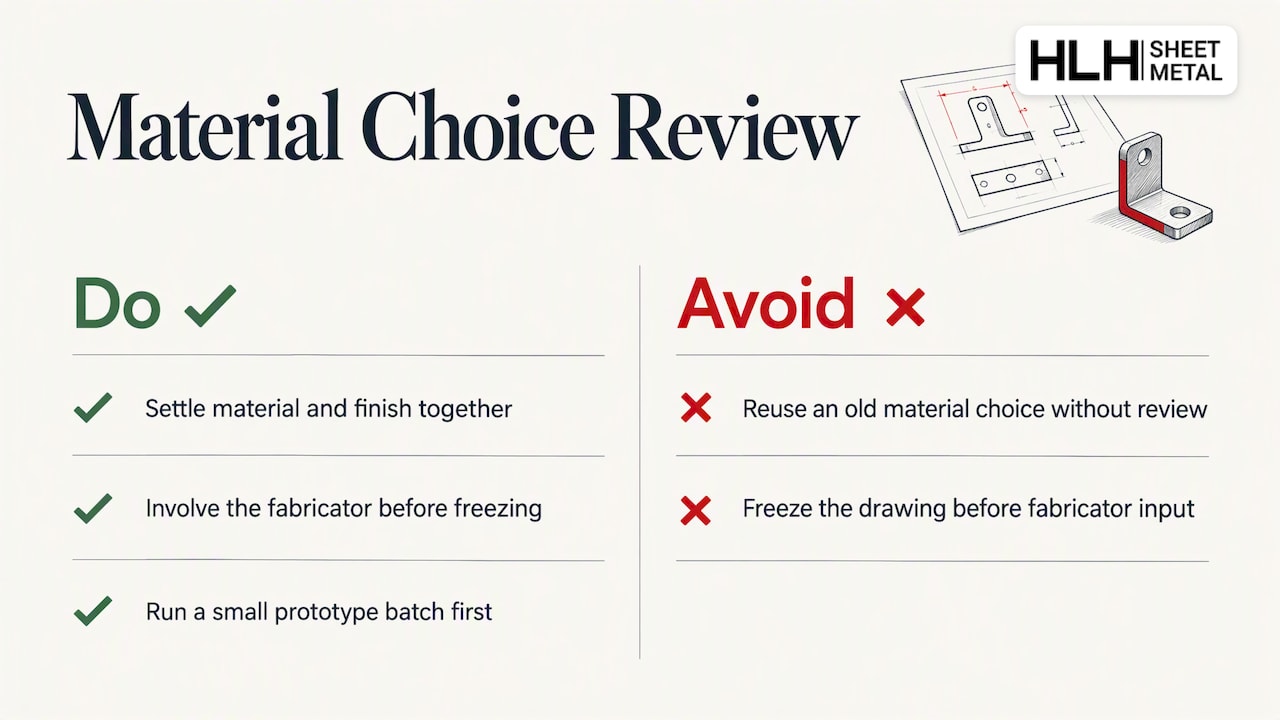
Our advice is to settle the material and finish together, with the fabricator in the loop before the drawing is frozen. We work with steel, carbon steel, galvanized steel and stainless steel, along with aluminum, copper, brass, titanium and other metals, so we can quote the same part in two materials and let you compare the finished cost. Our plants in China handle both small prototype lots and larger production runs, and our English-speaking support team is there to answer drawing questions before they turn into rework. We work to ISO-certified quality processes, and for regulated parts we recommend you ask for the exact certificates you need and confirm them against your own requirements.
If a drawing is going to China for the first time, run a small prototype batch first. It costs little next to a production run built on the wrong bend radius.
— Nash
Get Both Materials Quoted On One Drawing
If you are undecided, send us the drawing and ask for mild steel and stainless options side by side, with finishing included. You can see the full range on our sheet metal fabrication capabilities page, or start at HLH Sheet Metal to request a quote. Industry-specific pages cover medical, aerospace and industrial work.
FAQ
Is Stainless Steel Always Better Than Mild Steel For Enclosures?
No. Stainless resists corrosion without a coating, but it costs more and is harder to form. A mild steel enclosure with a good powder coat is often the right choice for dry, indoor use such as server cabinets and control boxes. Pick stainless when moisture, chemicals or hygiene rules apply.
What Bend Radius Should I Use For Stainless Steel?
A common guideline is about 1.5T to 2T for inside radius, against 0.5T to 1T for mild steel, per machinist reference data. Confirm the final value with your fabricator, because tooling, thickness and grain direction all affect what they can hold.
Do I Need 304l Or 316l Instead Of 304 Or 316?
Only when welded sections or critical corrosion duty call for it. For thin, unwelded parts, the standard grade typically performs the same, and the L grade adds cost. Ask an engineer to review the weld thickness and service conditions before you decide.
What Is The Chinese Equivalent Of A36 Mild Steel?
Q235B is commonly listed as the closest GB grade to ASTM A36, according to a grade equivalence chart. Because chemistry and tolerances differ slightly by standard, state the grade you need on the drawing and request a mill test report.
What Documents Should I Ask For When Ordering Regulated Parts?
Ask for the supplier’s quality certificates for your sector and mill test reports with heat or lot numbers for every order. For medical parts, check ISO 13485 status. For aerospace, check AS9100. Confirm each certificate directly rather than relying on a website statement.

