




Table Of Contents
Welding Cost Estimation
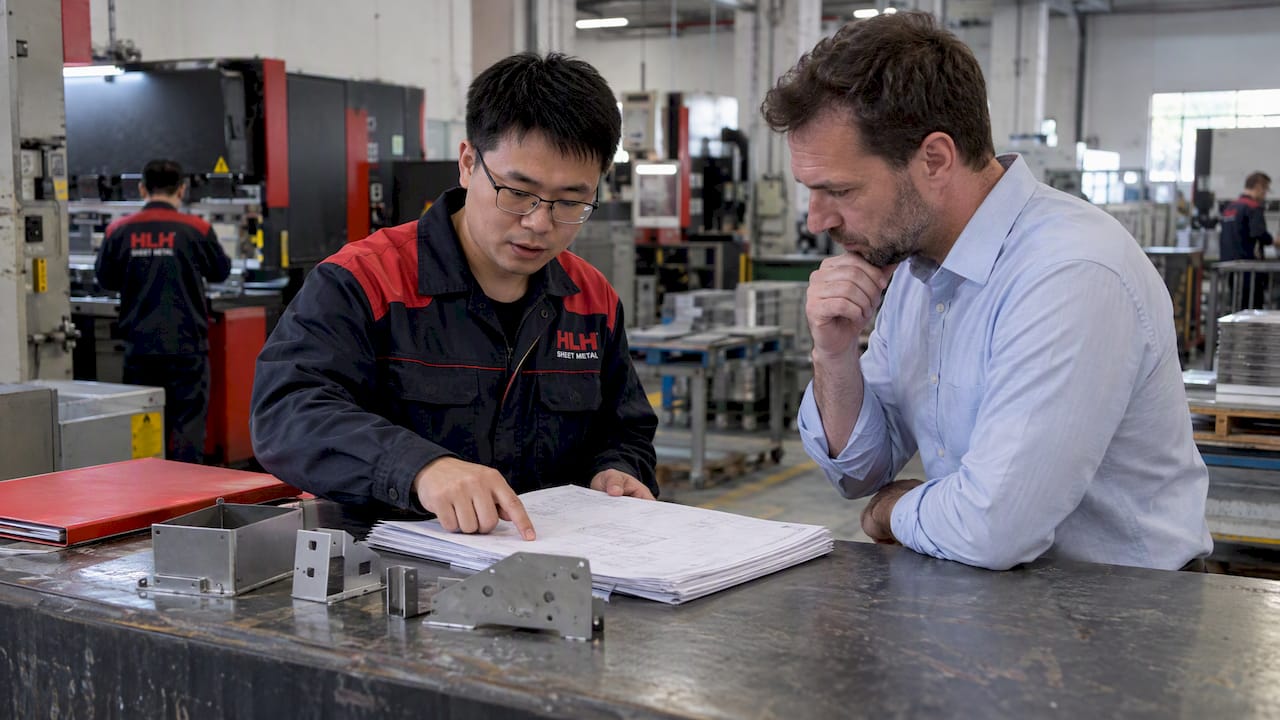
The fastest way to get an accurate welding cost estimate from a contract fabricator is to send a complete request for quote, including drawings or models, weld symbols, quantities, finish specifications, and inspection requirements. “Welding cost estimation” here means pricing outsourced welded assemblies from a vendor, not in-house shop floor costing. A supplier like HLH Sheet Metal can quote faster and tighter when the scope is this clear from the first submission.
TL;DR:
- Complete RFQs with detailed drawings, material specifications, and inspection requirements enable faster and more accurate welding quotes from suppliers.
- Key cost drivers include process choice, joint complexity, materials, setup, consumables, and inspection levels, all influenced by geometry and material specifics.
- Separating one-time setup costs from per-piece expenses helps evaluate quote scalability, especially for large versus small batch orders.
- Reducing weld complexity, consolidating parts, and sharing forecast volumes can lower costs without sacrificing quality.
- Clear, documented scope and collaboration during design phases prevent disputes and lead to more competitive and reliable pricing.
Key Cost Drivers Vendors Include When Estimating Welding Work
A welding quote is rarely just a price per inch of seam. Estimators build a number from several line items, and understanding each one helps you spot why two vendors quoted the same part $8 apart.
- Welding labor: process choice, joint accessibility, and welder skill level required
- Setup and fixturing: jigs, clamps, and positioning work before the first arc strikes
- Consumables: filler metal, shielding gas, electrodes, and wire
- Joint preparation: beveling, cleaning, and fit-up tolerance work
- Post-weld finishing: grinding, blending, and cosmetic cleanup
- NDE and inspection: visual, dye penetrant, radiographic, or ultrasonic testing
- Rework allowance: a buffer for repairs on marginal welds
- Overhead and markup: facility costs and margin
Geometry and material drive most of the variance within these items. Thicker sections need more passes and higher amperage, tight joint access slows travel speed, and dissimilar metals or unusual joint types (lap versus butt versus corner) call for different qualified procedures. Small lot sizes push per-piece price up because setup and fixturing costs spread across fewer parts, while longer lead times give a shop room to batch work with other jobs and often quote lower.
Specified codes matter too. AWS D1.3 sets fabrication, qualification, and inspection requirements for sheet-steel welding, and when a buyer calls it out explicitly, it can raise the documentation and inspection burden a vendor must price into the quote. Production welding cost guidance from AWS’s DPW-99 similarly ties joint design, rework, and NDE directly to the final number, which is why two visually similar parts can carry very different price tags.
How To Prepare An RFQ That Yields Accurate, Comparable Welding Quotes
A vendor can only quote as precisely as the information you hand over. Missing details do not disappear from the price, they get absorbed into a risk premium that pads every estimator’s number to cover the unknown.
- Include 2D or 3D models with weld symbols and callouts on every joint
- Specify base material, thickness, and grade for each part
- State required surface finish and any cosmetic acceptance standards
- Note critical tolerances rather than applying tight tolerances everywhere
- List quantity breaks (prototype, pilot run, production volume)
- Reference any required Welding Procedure Specification or AWS code clause
- Define the NDE level and acceptance criteria expected
- Specify delivery timeline and packaging requirements
A standardized template lets every vendor price the same scope and risk, which is the main reason quotes vary so widely between shops. Estimating practices differ across fabricators: some use activity-based costing that ties price to measured labor and material data, while others price heuristically based on capacity and existing relationships. A complete RFQ narrows that gap by removing guesswork from either method.
For assemblies, attach photos alongside drawings and call out weld access directly, since a joint that looks simple on paper can be nearly unreachable on the shop floor. Ask vendors to separate one-time costs like setup and tooling from recurring per-piece costs so you can compare quotes fairly across different lot sizes.
Pro Tip: Send the same RFQ template to every vendor you bid, word for word, so price differences reflect shop capability rather than gaps in what you asked for.
Sample Line-item Cost Breakdown Buyers Should Expect On Welding Quotes
A well-structured quote separates costs that happen once from costs that repeat with every piece. That split is what lets you judge whether a quote scales fairly as your order size changes.
- Setup and fixtures: one-time, amortized across the full order quantity
- WPS or program qualification: one-time, tied to a specific joint or part number
- Arc time and welding labor: per-piece, driven by joint length and pass count
- Consumables: per-piece, tied to filler metal and gas usage
- Grinding and finishing: per-piece, based on cosmetic requirements
- NDE and inspection: per-piece or per-lot, depending on the sampling plan
- Packaging and shipping: per-shipment, based on weight and destination
- Overhead and markup: built into the per-piece rate
Tooling and setup costs divide across your order quantity, so a $1,200 fixture charge has far less impact on a 500-piece run than a 20-piece prototype batch. Some vendors roll everything into a single all-in piece price, which makes it hard to see what changes if your quantity or finish requirements shift. Asking for separated line items, a practice procurement teams use broadly to standardize cost tracking, gives you a clearer basis for negotiating or re-quoting later.
Practical Levers Procurement Can Use To Reduce Welding Costs Without Lowering Quality
Cost reduction in welded parts rarely means cutting corners. It means removing cost drivers that do not serve the part’s actual function.
- Reduce the number of discrete welds and simplify joint types where the design allows
- Standardize part orientation across similar assemblies to cut handling time
- Apply tight tolerances only on features that truly require them
- Increase lot sizes or consolidate similar parts into shared production runs
- Allow flexible lead times so a shop can batch your job with others
- Limit NDE to the items your governing code actually requires, using sampled inspection where acceptable instead of testing every weld
- Bring your fabricator in during design, not after drawings are locked, so they can flag costly features early
- Share forecasted volumes so a vendor can plan capacity and quote more aggressively
Automation helps most on long, stable runs where tooling amortizes across thousands of pieces. On short or variable runs, the same automation investment can raise your per-piece cost rather than lower it.
Pro Tip: Ask your fabricator which single design change would save the most on your next quote. Estimators usually know exactly which feature is driving the price.
Author Nash’s Perspective: Treat Quotes As The Start Of A Partnership, Not Just A Price
A quote is a data point, not a verdict. Before committing to a full production run, I’d rather see a small prototype order or a technical trial that tests fit, finish, and weld quality against the drawing. That exercise tells you more about a vendor’s real capability than any line-item price ever will.
Documented RFQs and clear acceptance criteria also cut down on disputes later. When the scope is in writing, a change order is a conversation about a defined gap, not a negotiation over what was implied. Vendors with ISO-certified quality assurance, multiple manufacturing plants, and English-speaking support make that documentation process easier for buyers working across time zones.
— Nash
Request A Quote From HLH Sheet Metal
We offer custom sheet metal welding alongside laser cutting, bending, stamping, and finishing, with quality assurance and production capacity across multiple plants. Send us your drawings, weld callouts, quantities, finish requirements, and inspection criteria, and our English-speaking support team responds with a quote built on your actual scope rather than assumptions. Start your request through our welding services page.
FAQ
What Does A Welding Cost Estimate From A Vendor Typically Include?
A vendor quote usually breaks into setup and fixturing, per-piece labor and consumables, finishing, inspection, and packaging or shipping. Ask for these as separate line items so you can see what changes if your quantity or finish requirements shift.
Why Do Welding Quotes Vary So Much Between Fabricators?
Quote variance often comes from incomplete RFQs that force estimators to add a risk premium for unknown scope. Standardized RFQs with complete specifications reduce that guesswork and bring quotes closer together.
Does Specifying An AWS Welding Code Increase My Quote?
It can, since codes like AWS D1.3 add documented qualification and inspection requirements that a vendor must price into the job. Being explicit about which clauses are mandatory versus advisory keeps the vendor from quoting conservatively for ambiguity.
How Can I Lower Welding Costs Without Sacrificing Quality?
Simplify joint designs, apply tight tolerances only where needed, and consolidate similar parts into larger production runs. Limiting NDE to code-required items and sharing forecasted volumes with your fabricator also tend to bring per-piece pricing down.
Can HLH Sheet Metal Quote Both Prototype And Production Welding Runs?
Yes, we quote welding work across prototype and production volumes. Submitting drawings, weld callouts, and quantity breaks through our welding services page gets you pricing across both scales.

