




Table Of Contents
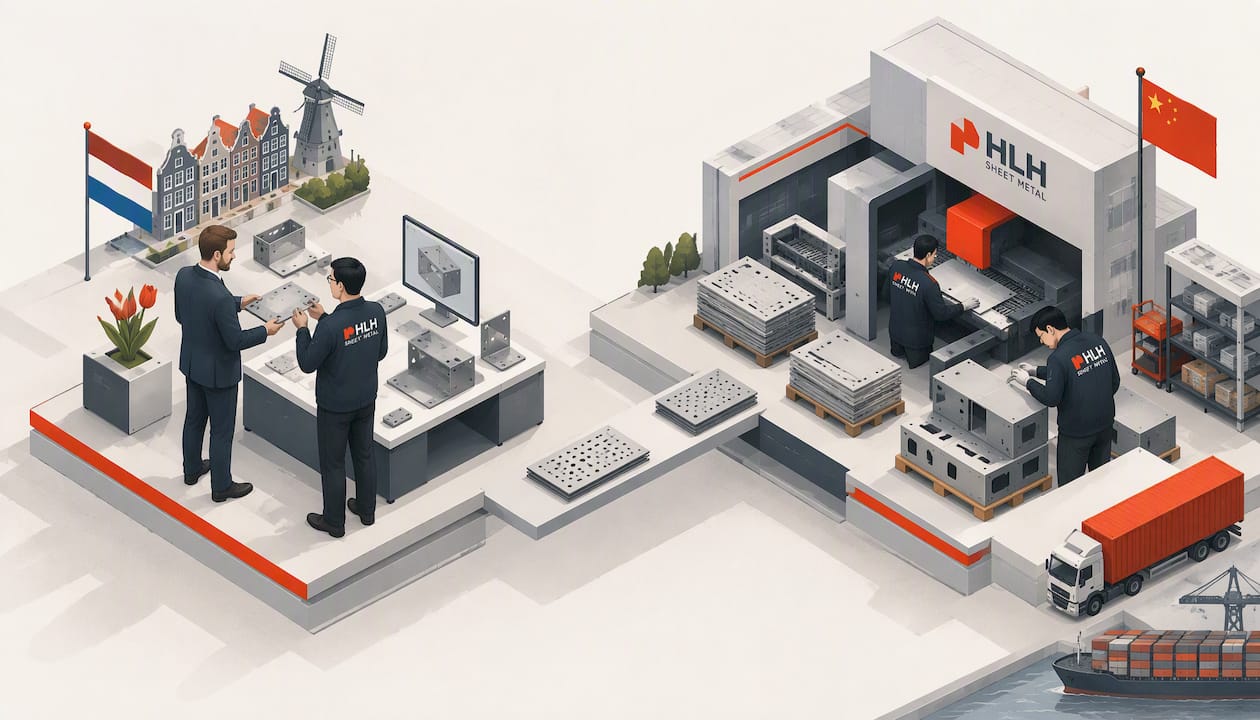
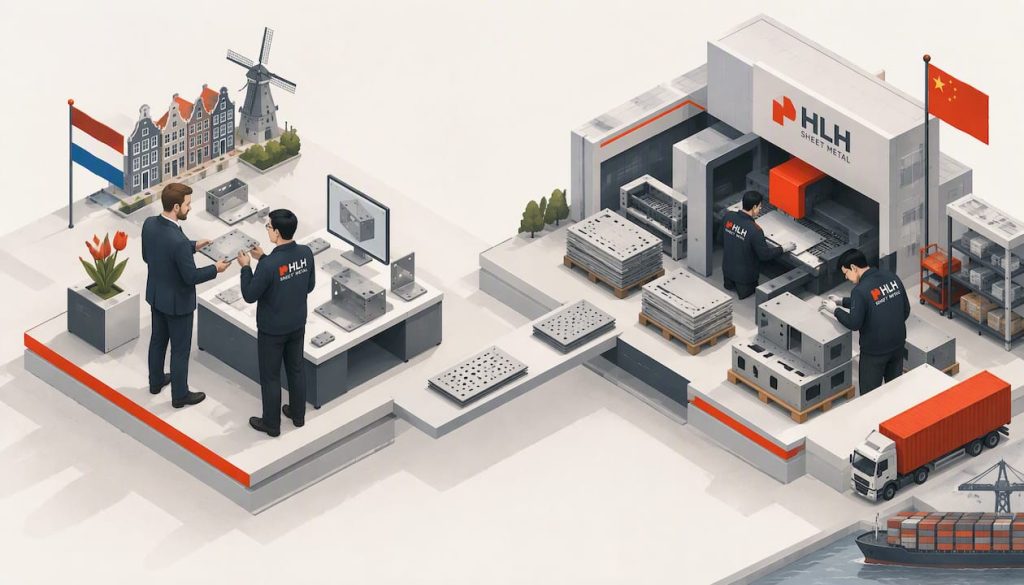
For the same drawing and the same quantity, a Chinese fabricator will usually quote well below a Dutch shop on labor-heavy and repeat work. The honest comparison is the landed cost, though: the ex-works price plus freight, insurance, import duty, VAT cash flow, inspection and the stock you carry while parts are at sea. This guide walks through each layer so you can compare a quote from the Netherlands with one from China line by line.
TL;DR
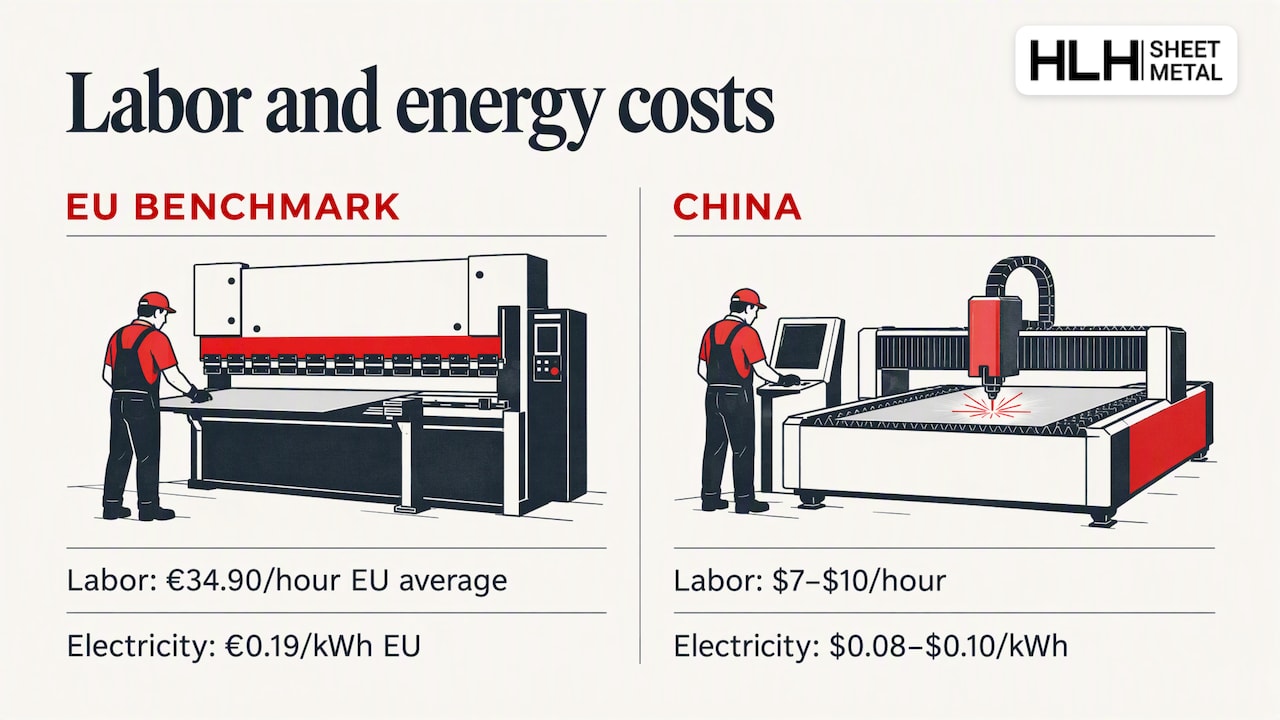
- Labor and energy are the biggest structural gaps: EU hourly labor costs averaged about €34.90 in 2025, while one 2026 analysis puts fully loaded Chinese manufacturing labor at $7 to $10 per hour.
- Material, thickness, process, complexity and batch size drive price in both countries. Setup and tooling are one-off costs, so larger batches shrink the per-part price faster than any country choice.
- Compare landed cost, not the quote: add freight, insurance, import duty, import VAT cash flow, inspection visits and the working capital in transit stock.
- Sea freight from China to the Netherlands typically takes 2 to 3 months door to door, so China fits planned production and prototypes by air better than urgent top-ups.
- For aerospace, medical and automotive parts, verify certifications and traceability before you compare prices.
Why The Same Part Gets Two Very Different Prices
A sheet metal quote is built from the same ingredients everywhere: raw material, machine time, labor, finishing, setup, overhead and margin. The Netherlands and China differ mostly in how much each ingredient costs, not in what the shop does.
The two ingredients that differ most are labor and energy. Eurostat estimated the average hourly labor cost across the European Union in 2025 at €34.90. That is an EU-wide average, and Dutch hourly costs sit in the upper part of the range, so treat it as a floor for a Dutch skilled-trades comparison rather than a Dutch figure. On the Chinese side, one 2026 analysis estimates fully loaded manufacturing labor at $7 to $10 per hour, based on National Bureau of Statistics data. The same analysis puts industrial electricity at roughly €0.19 per kWh in the EU against $0.08 to $0.10 per kWh in China, which matters for laser cutting and press brakes that run all day.
Those gaps explain why the price difference is largest on jobs where operator time is high: welding, manual finishing, assembly of enclosures with many parts. On a simple flat laser-cut bracket in thick steel, material is a larger share of the price and the gap narrows.
What Actually Drives Sheet Metal Price
Whatever country you buy from, six things set the number. Knowing them lets you tell whether a quote difference comes from geography or from a design choice.
Material And Thickness
Steel is cheaper than aluminum, and stainless, copper, brass and titanium cost more again. A thicker sheet costs more per part because you pay for more metal and because cutting and bending take longer. Guides from fabricators list material first for good reason: on many parts it is the largest single line. Material prices are set largely on global markets, so this is the line where the Netherlands and China differ least.
Process And Design Complexity
Laser cutting is priced by cutting length and machine time, bending by the number of strokes and setups, welding by seam length and operator time. A part with many small features, tight tolerances or multiple bend directions costs more because each adds handling. Tolerances tighter than the function needs are the most common avoidable cost.
Batch Size And One-off Costs
Good quotes separate one-off costs such as programming, fixtures and tooling from per-unit production costs, as Uptool’s quoting guide recommends, so you can see how the price per part falls as the batch grows. If a quote shows only one total and one hourly rate, ask for the split. Without it you cannot compare a 50-piece Dutch quote with a 500-piece Chinese one.
This is also where tracking tools help buyers who import often. If you move several containers a year, a transport management system with cost and currency tracking, such as these freight forwarding TMS plans, shows what each shipment really cost per part.
Finishing
Powder coating, anodizing, plating and passivation add cost per part and often a minimum batch charge. Ask whether finishing is done in-house, because outsourced finishing adds handling days and margin.
The Costs That Are Not On The Quote
A China quote is typically ex-works or FOB. A Dutch quote is usually delivered. Putting them side by side without adjustment flatters China. The checklist for a fair comparison, as one 2026 comparison lists it, includes freight, insurance, import duties, VAT deposits, working capital tied up in inventory, and potential rework, inspection-visit and scrap costs.
Import Duty And VAT In The Netherlands
The EU is a customs union: duties are paid once on entry at the first point of arrival, while VAT is paid in the country of final sale. The Dutch Chamber of Commerce explains that duty is calculated on the customs value, which includes transport and insurance to the EU border, and that import VAT is normally due on top. Its worked example uses 21% VAT, the standard Dutch rate.
For a VAT-registered Dutch business the VAT is a cash-flow item, not a cost: companies registered for VAT in an EU country can reclaim import VAT as input tax. Still, you fund it until you reclaim it. Duty rates depend on the product’s TARIC code, so ask your customs broker to classify the finished part, because an enclosure, a chassis and a loose bracket can fall under different codes.
A Worked Landed-cost Example
The figures below are illustrative, not a quote. They use the Dutch Chamber of Commerce method with an assumed 5% duty rate, which you must replace with the real rate for your code.
| Line | Amount |
|---|---|
| Ex-works price of parts from China | €10,000.00 |
| Freight and insurance to Rotterdam (assumed) | €1,200.00 |
| Customs value | €11,200.00 |
| Import duty at an assumed 5% | €560.00 |
| Customs value plus duty | €11,760.00 |
| Import VAT at 21% (reclaimable if VAT-registered) | €2,469.60 |
Here the real cost to compare against a Dutch delivered price is about €11,760, plus inspection, any rework and the cost of carrying the stock. The VAT of €2,469.60 leaves your account for a while but returns through your VAT return. Run the same table with your own numbers before you decide.
Inspection And Rework
Budget for first-article inspection and, on critical parts, a pre-shipment check or a visit. A scrapped batch is far more expensive when the remedy is a second ocean shipment. The cheapest protection is a clear drawing, stated tolerances and an agreed inspection report format before production starts.
Lead Time And Delivery Risk
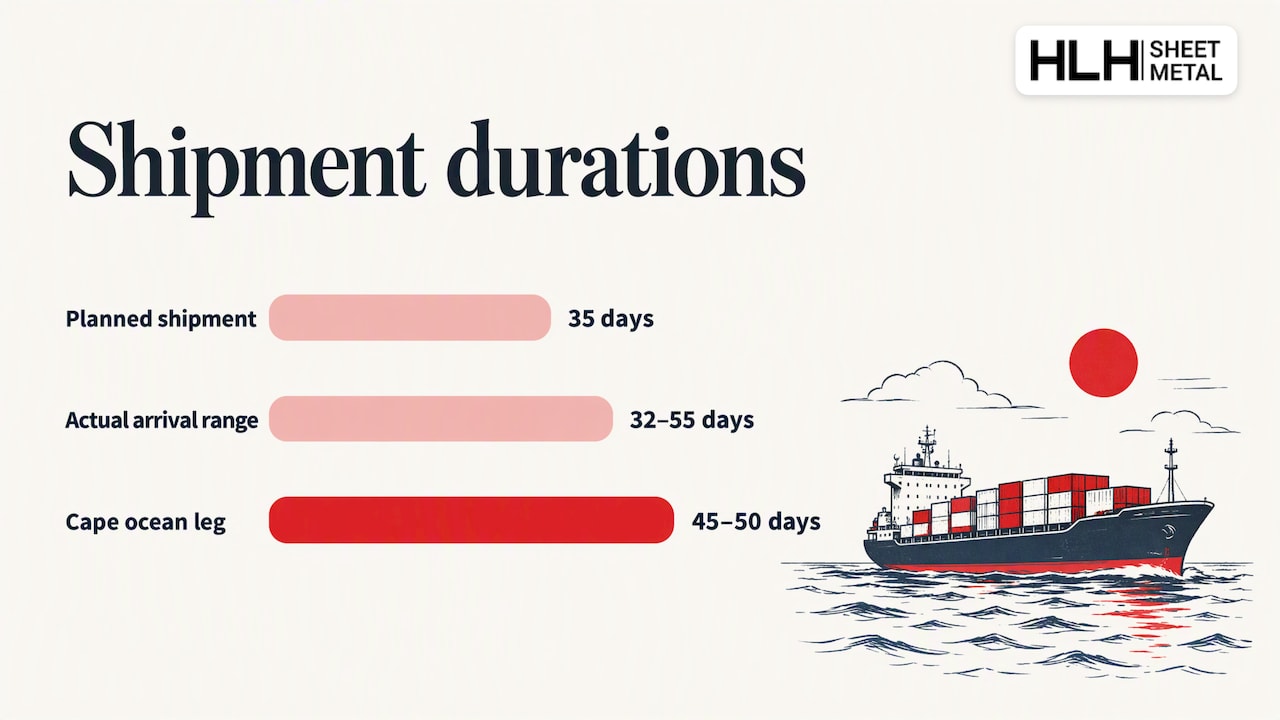
A Dutch shop can often deliver in days or a couple of weeks and you can visit. From China, sea freight to the Netherlands typically takes 2 to 3 months door to door, with the ocean leg via the Cape of Good Hope taking about 45 to 50 days. Transit can also vary: one logistics analysis describes a planned 35-day shipment arriving anywhere from 32 to 55 days because of rerouting, weather and port congestion.
What this means in practice:
- Planned production runs: order early, hold safety stock, and the lead time becomes a planning issue rather than a cost problem.
- Prototypes and urgent parts: ship by air. Freight then rises, but a prototype is usually light, and fast sample turnaround at the factory matters more than shipping speed.
- Mixed strategy: many buyers keep a Dutch supplier for urgent repairs and short runs, and move repeat volume to China.
Why China Is The Better Value For Most Repeat Work
Cost is the headline, but the case for Chinese fabrication rests on more than a lower hourly rate.
- Scale and range under one roof. Large clusters of fabricators mean cutting, bending, welding, stamping and finishing are available close together, which shortens the chain and keeps handling cost down.
- Flexibility on volume. The same supplier can run a handful of prototypes and then scale to production without you re-qualifying a new vendor.
- Material choice. Steel, aluminum, stainless, galvanized steel, copper, brass, titanium and magnesium are routinely handled, so one supplier can cover a whole assembly.
- Machine time at lower energy cost. Lower electricity prices help on laser and press work that runs long shifts.
- Savings that grow with volume. Because setup is amortized, the larger the batch, the more labor-and-energy savings show through to the part price.
For related regional breakdowns, see our comparisons of Germany vs China and the UK vs China, which share the same logic with different freight and tax rules.
Quality And Certification Checks Before You Compare Prices
A lower price only counts if the part passes your incoming inspection. ISO 9001 sets basic quality management system requirements, while sector standards such as AS9100 and EN 9100 apply in aviation, space and defence. Ask each supplier, Dutch or Chinese, for the current certificate, the scope it covers and the certifying body, and check that the scope names sheet metal work. Our guide to ISO 9001 vs AS9100 for China sheet metal explains which one your sector expects.
On top of certificates, ask for:
- Material certificates and lot traceability for each batch.
- A first-article inspection report against your drawing.
- The tolerance and flatness the shop can hold on your material and thickness.
- A written process for non-conforming parts, including who pays for rework and reshipment.
How To Lower The Price In Either Country
- Use standard sheet thicknesses and common alloys.
- Keep bend radii consistent so one tool serves every bend.
- Apply tight tolerances only where the part functions.
- Nest parts efficiently and combine orders to cut scrap and setups.
- Specify one finish, not several, and mask only what must be masked.
- Ask for tiered quotes at several quantities to see where the price curve flattens.
- Share a 3D model and a 2D drawing together to avoid questions that delay quoting.
Our Perspective
We see the same mistake from European buyers again and again: they compare a Chinese ex-works quote with a Dutch delivered quote and conclude either that China is a miracle or that it is a trap. Neither is true. The right question is what each part costs once it sits on your dock, passes inspection and is ready to assemble.
Our view is that China wins decisively where repeat volume, labor content and multi-process assemblies meet, and that it wins more reliably when the buyer treats the supplier as a partner in design. Send us the drawing early and we will tell you where a bend, a tolerance or a finish is adding cost without adding function. Responsive English-speaking support is part of that, because most overruns start with a question that waited a day too long.
— Nash
Get A Quote You Can Compare Line By Line
If you are weighing a Dutch supplier against a Chinese one, send us your drawings and target quantities. We fabricate in several plants in China, covering laser cutting, bending, welding, stamping and surface finishing, with ISO-certified quality control, and our English-speaking team can quote with one-off and per-part costs shown separately. Start from our sheet metal fabrication capabilities or request a quote through HLH Sheet Metal.
FAQ
Is Sheet Metal Fabrication Cheaper In China Than In The Netherlands?
On ex-works price, usually yes, mainly because labor and energy cost less. Once you add freight, insurance, duty, inspection and carrying cost, the gap narrows but typically remains meaningful on repeat runs and labor-heavy parts. Small urgent jobs often favor a local shop.
Do I Pay Import VAT On Parts From China?
Yes, import VAT is normally due when the goods enter the Netherlands, at the standard 21% rate in the Chamber of Commerce example. If you are registered for VAT, you can reclaim it as input tax, so it affects cash flow rather than final cost. Confirm your situation with your accountant or customs broker.
How Long Does Delivery From China Take?
Sea freight to the Netherlands typically takes 2 to 3 months door to door, and transit times can swing by weeks. Air freight is the usual route for prototypes and urgent parts. Plan production orders around the longer lead time.
What Should I Check On A Chinese Fabricator Before Ordering?
Current ISO 9001 certification and its scope, plus AS9100 for aerospace where required. Ask for material certificates, a first-article inspection report and a written process for non-conforming parts. Order a small prototype batch before committing to volume.

